CloudshinePro

Blog

  • Workday Training: Compare Courses, Bootcamps & Paths

    Workday Training: Compare Courses, Bootcamps & Paths

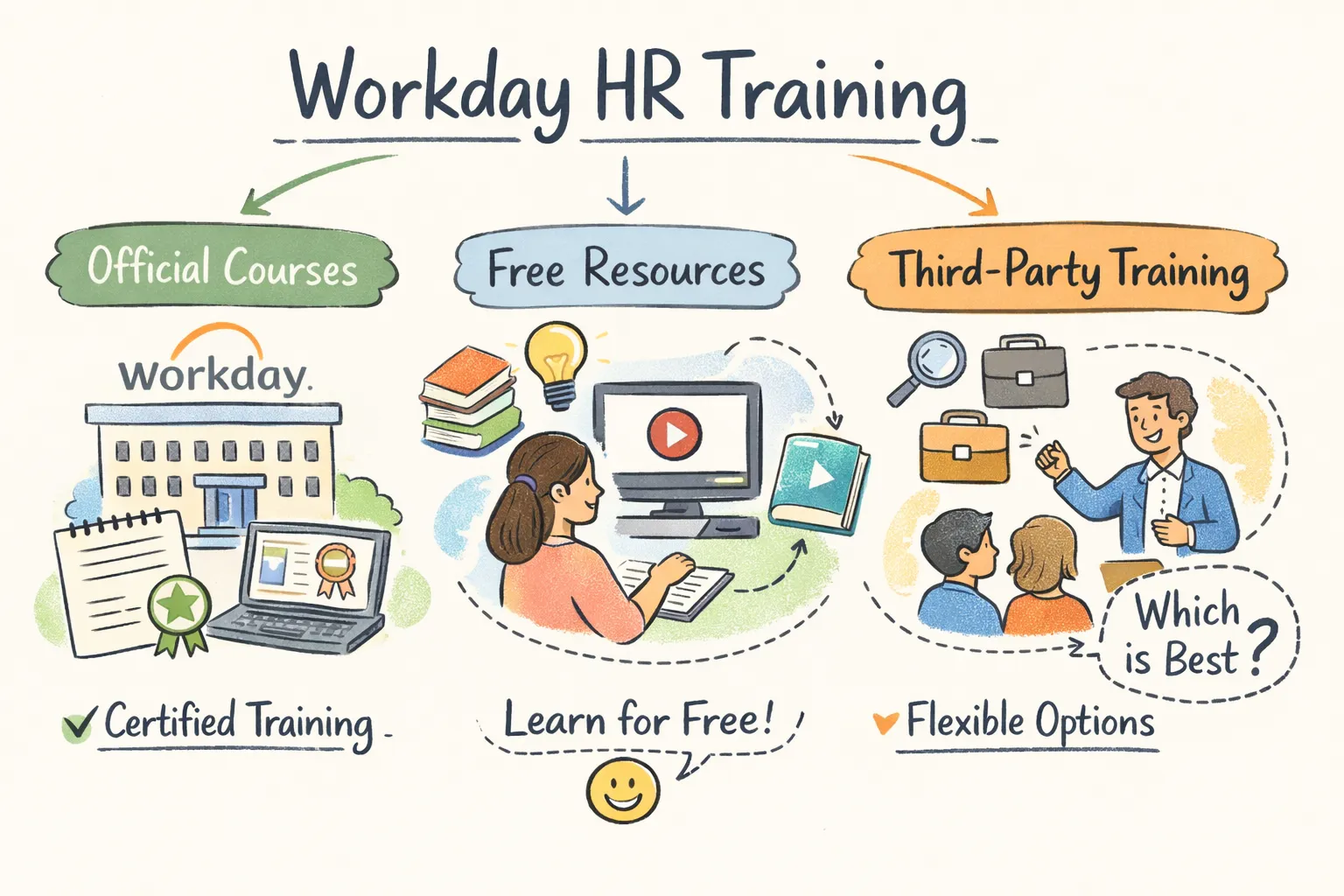
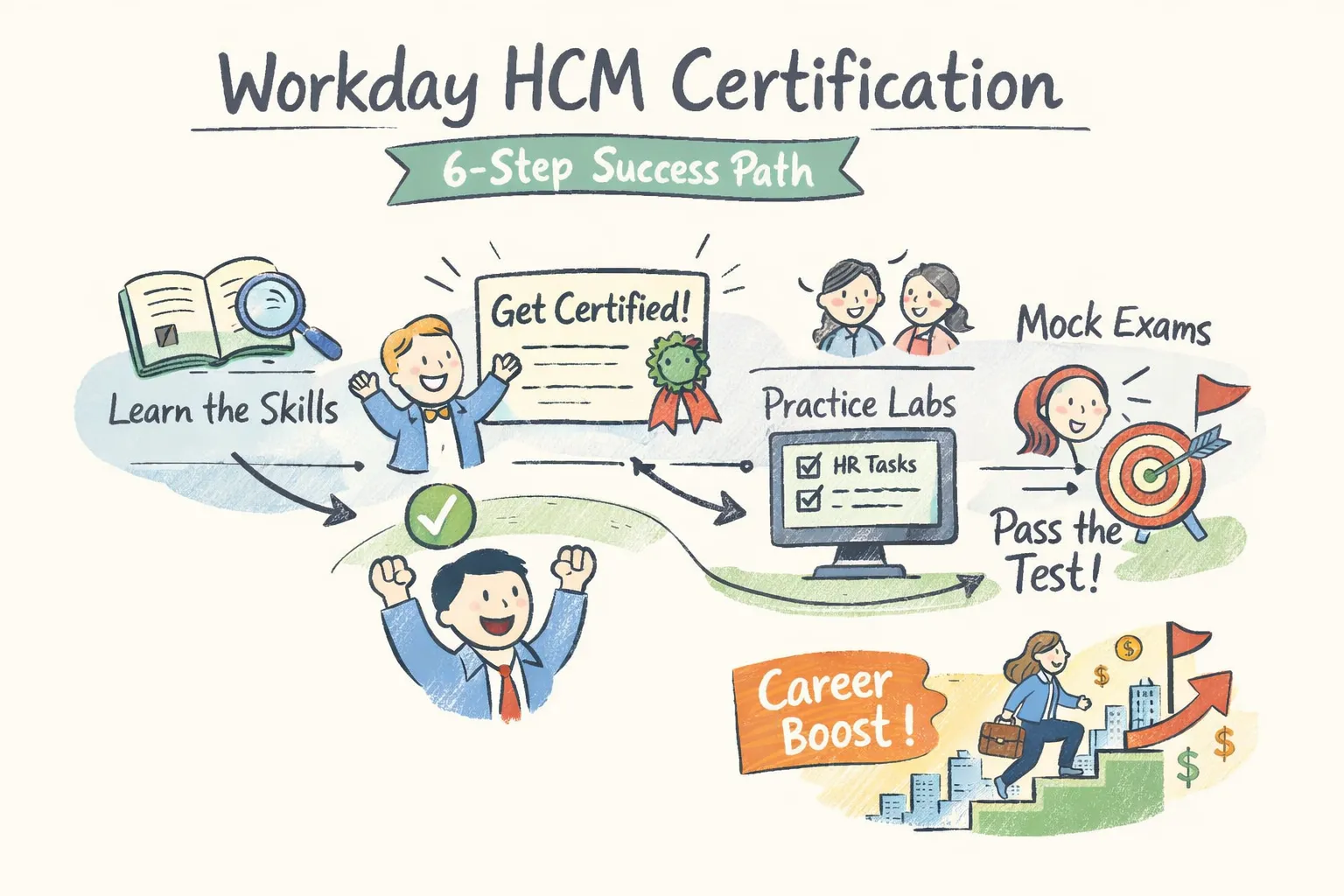
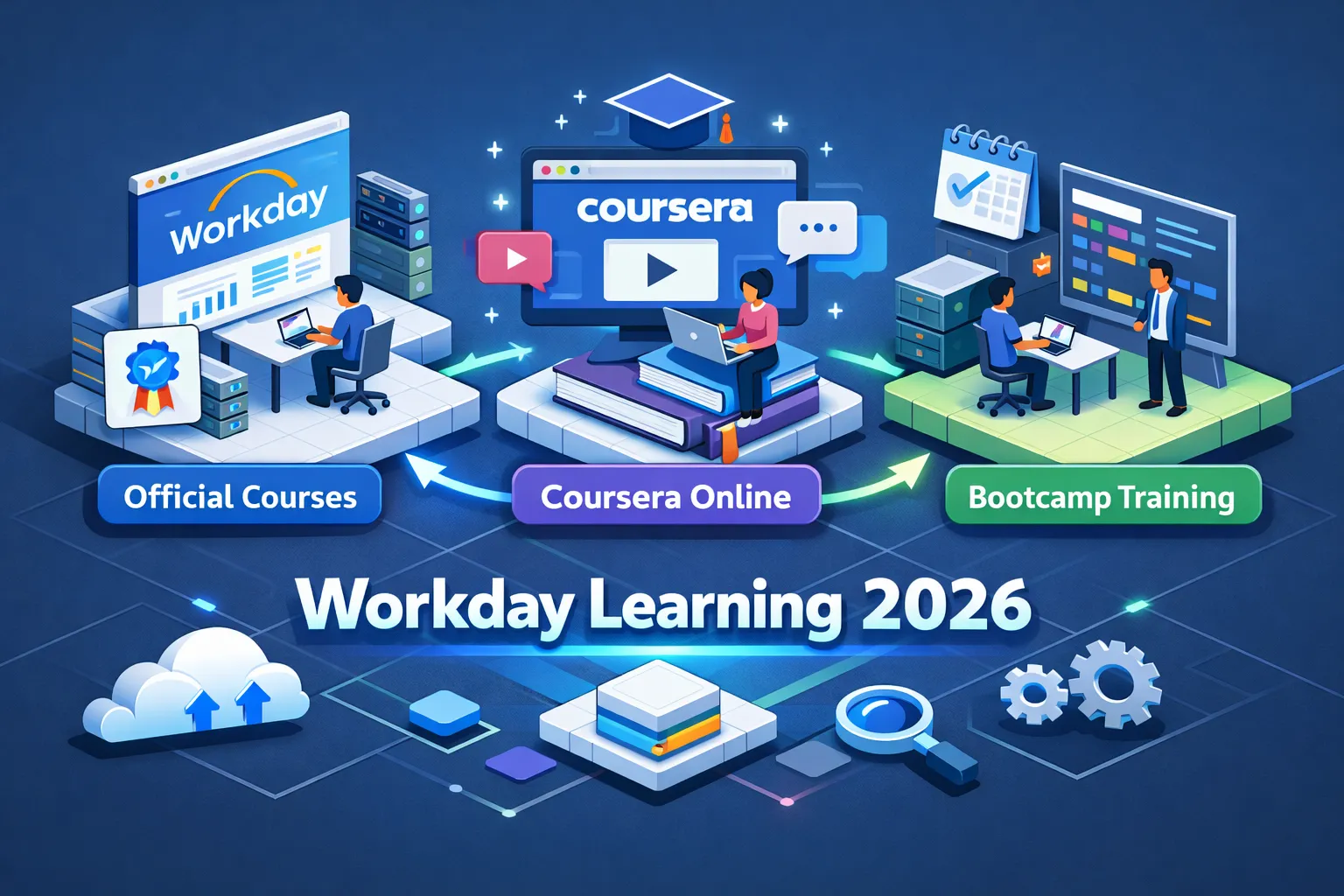
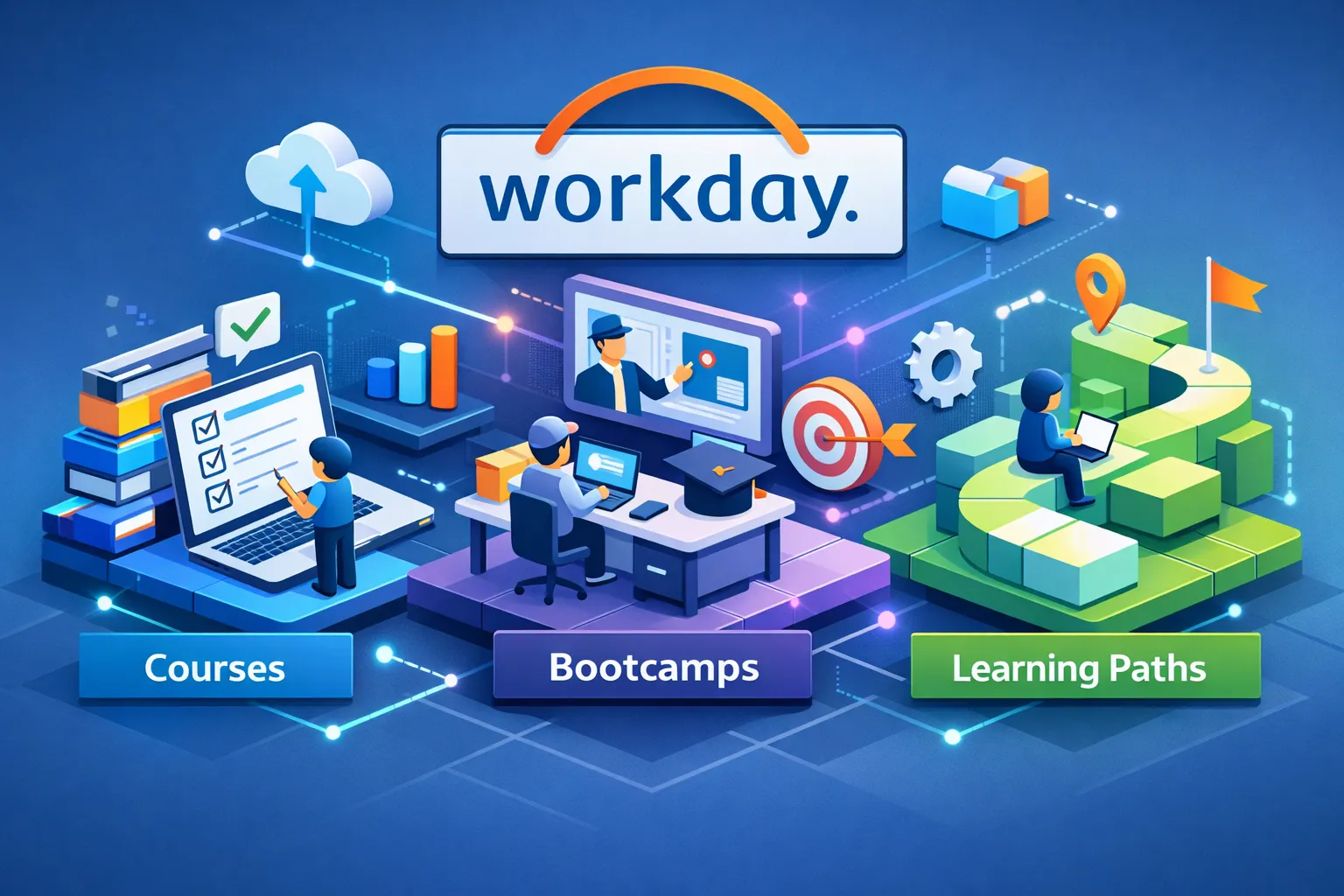
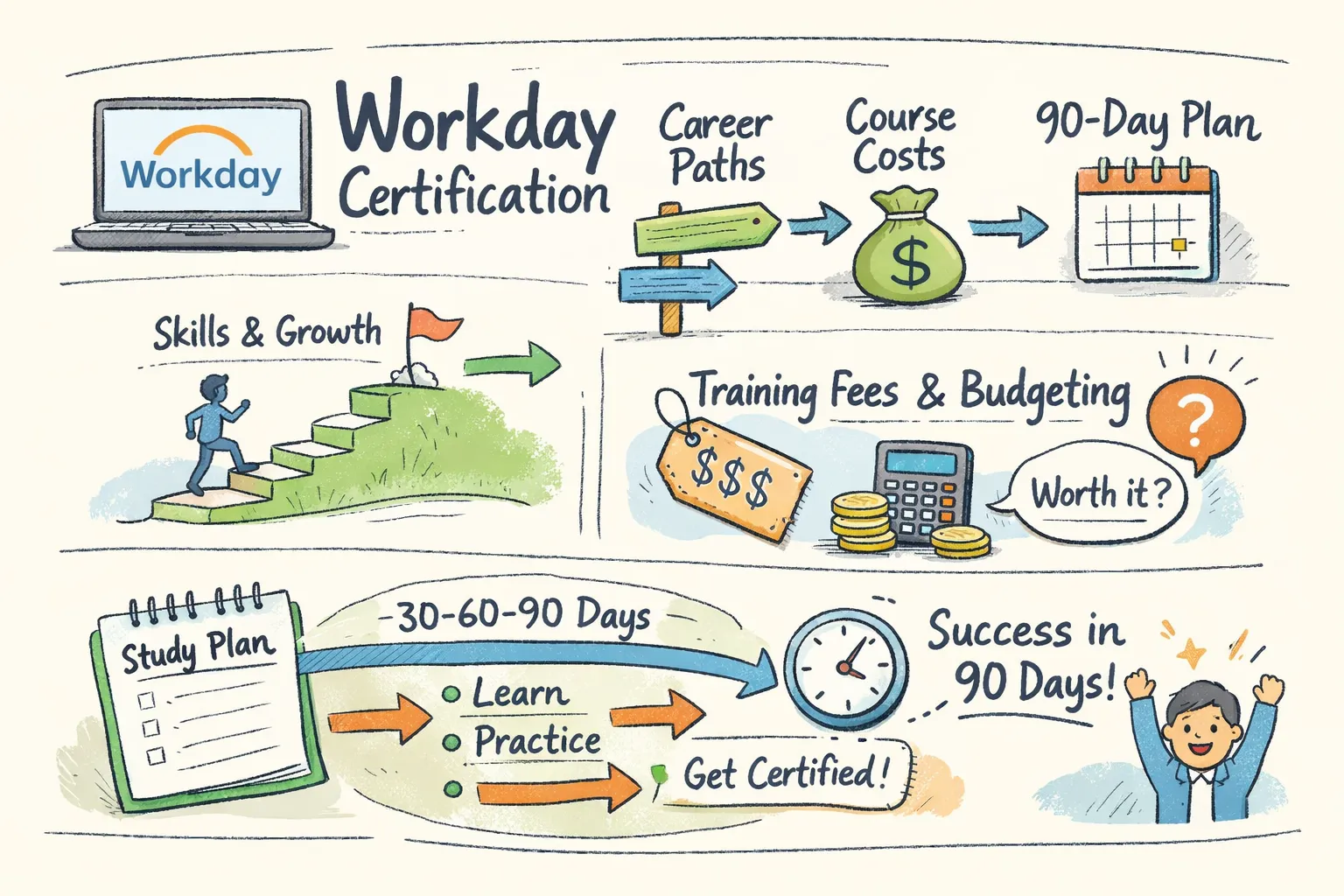
    Workday training follows four practical routes: official Workday Learning (best for employer‑recognized certification), partner bootcamps (best for rapid, hands‑on readiness), MOOCs/self‑paced courses (best for low‑cost orientation), and employer programs (best for immediate deployment). If your goal is a recognized credential and the highest hiring ROI, aim for Workday Pro; if you need interview‑ready configuration skills in weeks, choose a partner bootcamp with sandbox access — CloudShine is one provider that combines live tenants, practitioner mentors and placement support.

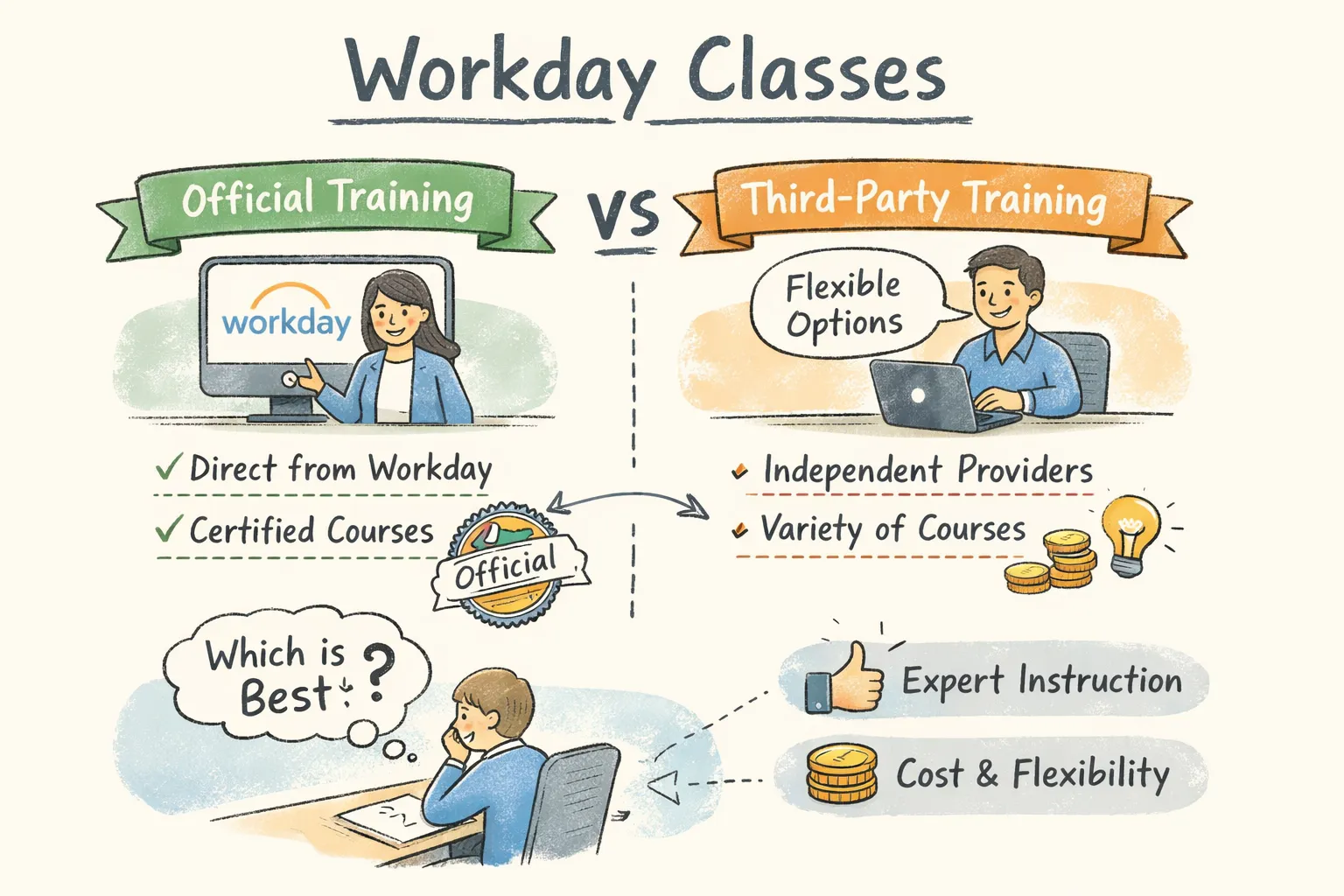
    Official Workday Learning vs partner bootcamps — what you get and who should pick each

    Direct takeaway: Official Workday Learning gives employer‑recognized badges and deep module coverage; partner bootcamps deliver condensed, practical experience useful for consultant and interview readiness.

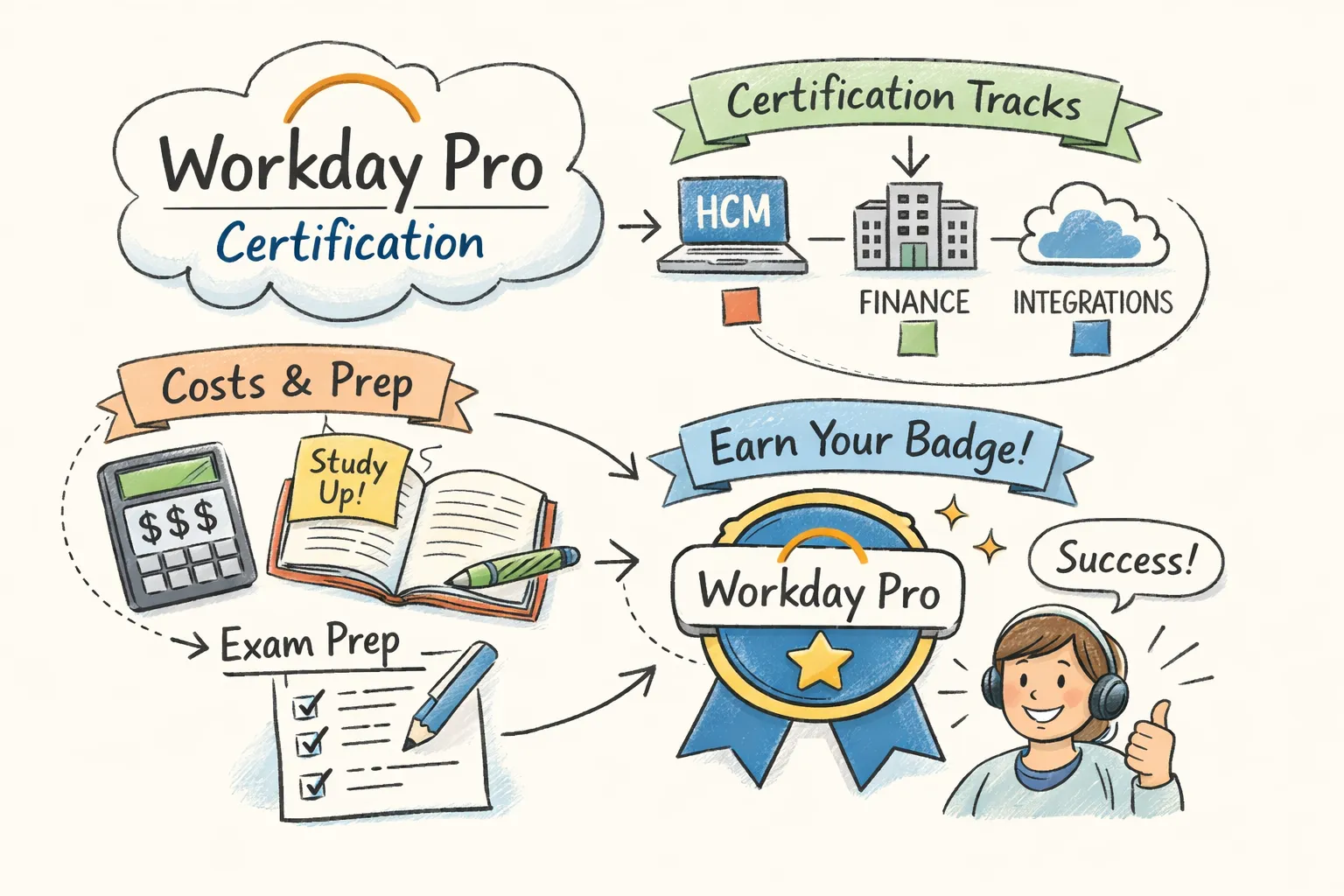
    Official paths (Workday Learning / Workday Pro) cover module‑level topics — HCM Core, Financials, Payroll, Integrations and Platform Admin — and validate knowledge through proctored exams (about 50 questions, ~100 minutes, typically ~80% pass). These tracks are designed for customers and partner employees and often require partner affiliation for some implementer credentials. Expect a multi‑week learning curve and costs ranging from a few hundred for badges up to a few thousand for full certification bundles, often sponsored by employers. (If you’re comparing role expectations across platforms, see Oracle Fusion Finance Important Roles | Roles in Fusion Applications | CloudShine for a comparable finance role breakdown.)

    Partner bootcamps compress that learning into 1–6 intensive weeks with a heavy focus on labs, configuration workflows and interview scenarios. They’re typically led by ex‑consultants who teach real‑world artifacts you can show employers. Bootcamps rarely grant official Workday Pro credentials by themselves, but they make you deployable fast.

    Choose official learning if you need a recognized corporate badge or will work on vendor teams; choose a reputable bootcamp if you need practical tenant experience in 4–8 weeks to pass consultancy interviews.

    Self‑paced courses and MOOCs — smart uses and clear limits

    Direct takeaway: Short online courses are a low‑cost way to confirm interest and learn navigation and reporting basics, but they won’t replace sandbox practice or the hiring signal of an official cert.

    Platforms like Coursera, LinkedIn Learning and Udemy are useful for building foundational understanding: navigation, business process concepts and basic reporting. They’re excellent for non‑technical end users or for someone deciding whether to commit time and money to a deeper path. For a focused business‑user introduction, consider the Workday Human Capital Management course on CloudShine as a low‑cost way to validate interest and learn core navigation.

    Limits are clear: most MOOCs don’t include tenant access, they rarely qualify for official Workday certification credit, and they’re a weak signal for technical hiring. Use them as pre‑work: complete a short course to confirm interest, then upgrade to a bootcamp or an official path that includes labs and exam prep.

    Certifications and employer value — what hiring managers actually look for

    Direct takeaway: Certifications materially improve hiring odds and pay, but employers want both a badge and evidence of hands‑on tenant work.

    Common certs—Workday Pro HCM, Financials, Payroll, Integration and Platform Admin—map directly to roles. Certified candidates commonly see a 15–35% salary uplift (roughly $10k–$30k annually in many markets) and access to higher‑value roles like Workday consultant, HRIS analyst or system administrator. In practice, employers screen for certification first and then require tangible sandbox artifacts: configured business processes, reports, or an integration mapping you built. (For a sense of finance‑side pitfalls to avoid when presenting artifacts, you may find the Common Errors in Oracle Fusion Cost Accounting, CloudShine article a useful reference.)

    To align your effort with hiring outcomes, pick the certification that matches your target role (HCM for HR roles, Financials for FP&A/accounting, Integrations for middleware/technical positions), secure exam vouchers or partner sponsorship, and plan for 3–6 months of demonstrable sandbox projects to present in interviews.

    Why hands‑on labs and tenant hours are non‑negotiable — and how to verify them

    Direct takeaway: Sandbox access and graded labs separate “knows Workday” from “can implement Workday.”

    Hands‑on practice lets you build and test hire‑to‑retire business processes, run integrations, and validate reports safely. Real tenants have operational constraints (weekly refreshes, limited retention windows, and integration test limits) — trainers who know these constraints teach you how to plan realistic test cycles and produce artifacts employers will accept. Also review common approval hierarchies and purchasing workflows when you build sample labs (for a primer on approval methods, see Understanding Fusion Purchasing Approvals Hierachy | Know about Oracle Fusion Approval Methods | CloudShine).

    When evaluating providers, insist on seeing a sample lab, a tenant demo and a clear retention policy. Ask for deliverables you can use in interviews: screenshots, configuration notes, a short walkthrough video and a reconciliation report. Review providers’ lab formats against known challenge‑style exercises such as the hands‑on challenge labs model to ensure you’ll get graded, practical tasks rather than passive demos.

    CloudShine’s practical edge is factual: we focus on 100% practical labs, provide direct instance access, and assign mentors with 15+ years of implementation experience. For learners aiming for placement, CloudShine pairs tenant work with resume polishing and mock interviews so your lab portfolio becomes part of the hiring narrative. If you plan to include procurement or self‑service examples in your interview portfolio, a short sample lab on procurement tasks can be useful (see Oracle Fusion Self Service Procurement Important Roles | Oracle Fusion Self Service provider | CloudShine for role examples and artifacts you can adapt).

    How to choose: match your role, budget and timeline

    Direct takeaway: Match the training route to your persona, then verify five provider questions before you enroll.

    A quick persona map helps decide the route. An Aspirant (recent graduate) should start with a MOOC, move to a bootcamp with sandbox and join a placement program (8–12 weeks). A Pivoter (ERP/SAP or HR pro) benefits most from a partner bootcamp plus targeted Workday Pro certs (6–12 weeks) and hands‑on tenant work. An Enterprise leader should opt for employer‑run upskilling tied to implementation timelines. Platform or admin specialists should target the official Platform Administrator path and integrations labs.

    Before you pay, get providers to answer these questions live:

    • Does the syllabus include hands‑on tenant hours and sample labs I can show in interviews?
    • Who are the trainers — can they share implementation artifacts or LinkedIn profiles?
    • Is the training tied to official Workday certification paths and exam vouchers?
    • What placement support, mock interviews and alumni outcomes do you provide?
    • What is your tenant access policy (hours, data retention, refresh schedule) and refund policy?

    Make the provider demonstrate a lab and show a graded deliverable before you commit — that one check is worth more than any brochure. For guidance on evolving certification requirements and training changes you should be aware of, review the industry summary on Workday certification and training changes: what you should know.

    Enrollment script, quick provider email and FAQs

    Direct takeaway: Use a short 15‑minute verification call to remove ambiguity before you commit.

    Use this short enrollment script on a 15‑minute call. If the provider hesitates to show these, walk away:

    • “Please demo a tenant lab and show a sample deliverable I can take to interviews.”
    • “Do you provide exam vouchers or official partner access for Workday Pro paths?”
    • “What are your placement rates, mock interview format and alumni results?”
    • “How many tenant hours are included and how long is data retained?”
    • “Who will be my trainer — can I see their LinkedIn and a sample implementation artifact?”

    One‑sentence comparison email you can send to multiple providers:

    “Please share a 1‑page sample lab, trainer CV and your exam‑voucher/refund policy so I can compare offers.”

    Frequently asked questions

    No. Foundational courses accept beginners, but consultant/admin tracks accelerate with ERP or HR domain experience and hands‑on sandbox practice.

    Expect 4–12 weeks of focused study plus labs for most module certs; implementer tracks and partner sponsorship can lengthen that timeline.

    Usually not. Those platforms are great prep but official Workday Pro paths and some certs require Workday Academy or partner course completion.

    Typical uplifts are 15–35% (roughly $10k–$30k annually), depending on role, geography and experience.

    Screenshots of configured business processes, a short sandbox walkthrough video, and a report or integration mapping you built are the strongest evidence.

    If you want a tailored recommendation, match your role and budget to the persona map above — or book a short advisory session. CloudShine offers a free 15‑minute discovery call where we demo a sample tenant lab, show trainer credentials and explain our placement support so you can compare options with confidence. For extra reading on certification logistics and next steps, see an accessible Workday certification guide that outlines common program structures and provider expectations.

  • Oracle Integration Cloud: Practical Quick‑Start Guide

    Oracle Integration Cloud: Practical Quick‑Start Guide

    Direct answer: This article gives a hands‑on path to provision a trial Oracle Integration Cloud (OIC) instance, build a simple Service→Sales mapping, and harden the flow for production. Read it end‑to‑end, follow the checklists, and you’ll have a deployable integration and a production readiness checklist you can reuse.

    1) How OIC actually works — core components and architecture

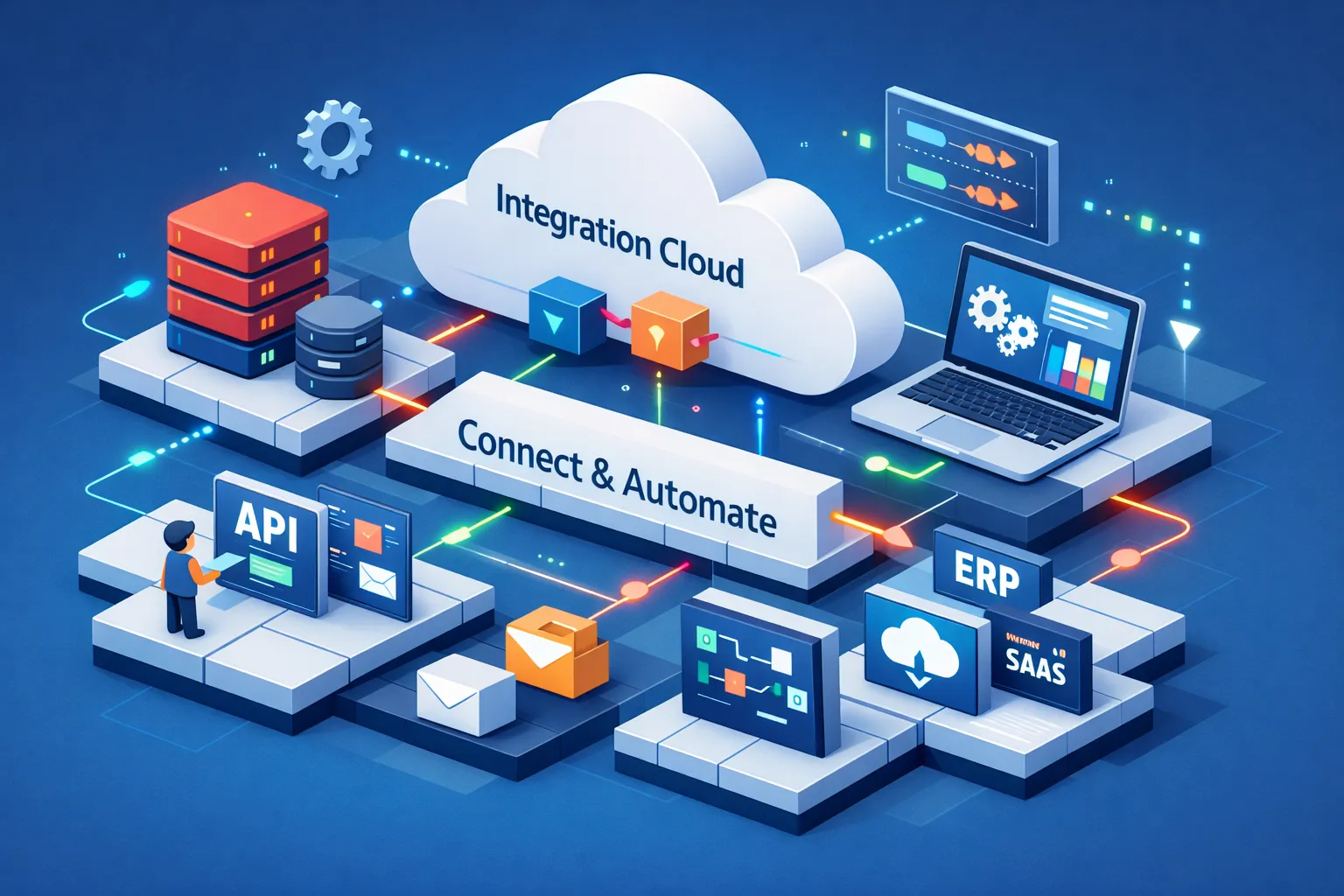
    At its heart OIC is a low‑code integration platform: triggers start flows, adapters connect systems, the visual mapper transforms payloads, and the runtime executes with optional on‑prem connectivity via an agent. Think of it as the conductor between apps, databases, and files.

    Component Purpose
    Adapters / Connections Prebuilt connectors for SaaS, DBs, REST/SOAP, FTP, Kafka—abstract auth and operations.
    Integrations Visual flows: trigger → transform → invoke; supports orchestration and basic routing.
    Visual Mapper Drag/drop field mapping, XPath functions, and simple expression language for transforms.
    Process Automation Human tasks and approvals layered over integrations (when you need people in the loop — see Understanding Fusion Purchasing Approvals Hierachy).
    Connectivity Agent Outbound, SSL‑based bridge for on‑prem systems—no inbound firewall ports required. See Unable to Create Procurement Agent | Create A Supplier for Procurement | Cloudshine for agent‑related troubleshooting notes.
    API/Management Expose integrations as managed APIs and apply lifecycle policies.

    Design time vs runtime: the console shows design‑time objects (integrations, connections, packages) while runtime exposes activity streams, traces, and endpoints. Expect different URLs for the design UI and execution endpoints; that separation matters for debugging and deployment automation.

    Generation note: Gen3 is the OCI‑native model with clearer design/runtime layering and better VCN options; Gen2 is legacy. Confirm which generation your tenancy uses before finalizing network design.

    Actionable takeaway: draw a simple box diagram—source → connectivity agent (if on‑prem) → OIC runtime → adapter → target—and use that as your deployment checklist.

    2) Provision an OIC trial and prepare a workspace (hands‑on)

    Provisioning a trial is quick and the fastest way to learn is by doing. The steps below are the minimal path I use to get a dev workspace ready. For a step‑by‑step guide to creating a trial instance, you can also create a free trial OIC instance following a community walkthrough.

    1. Sign in to cloud.oracle.com → OCI Console → Developer Services → Application Integration → Integration.
    2. Create an Integration instance: choose compartment and region, pick an edition (Enterprise for full adapters), select a small shape and message packs for trial, then create and wait for Active.
    3. Identity & access: configure an OCI/IDCS user with a developer role and create a service account for automation or CI/CD tasks; apply least‑privilege RBAC from the start.
    4. Connectivity basics: decide if you need the on‑prem connectivity agent or a VCN/service gateway; verify outbound TLS (port 443) from agent hosts and confirm any corporate proxy settings.

    CloudShine note: CloudShine’s practical sessions provide preconfigured instances and demo data so you can focus on mapping and testing rather than spending hours on networking setup.

    Quick verifications: confirm design/runtime URLs, create a test compartment, enable logging and tracing for the instance (dev only), and save credentials in the secure store.

    3) Choosing connectors and adapters — a practical decision flow

    Start with the prebuilt adapter if one exists for your application—it usually saves mapping time and handles quirks. If not, connect via REST or SOAP adapters. For files use FTP/File or Stage File, and for on‑prem DBs use the DB adapter combined with the connectivity agent.

    Oracle frequently updates the adapter portfolio; check official guidance on new adapters and connectivity enhancements to confirm availability and feature notes.

    Adapter categories covered in practice include Oracle SaaS adapters (ERP/HCM), third‑party SaaS (Salesforce, ServiceNow), database adapters, protocol adapters (REST/SOAP/FTP), messaging (Kafka, JMS), and specialty adapters for FHIR or e‑invoicing.

    Selection criteria to record before you create a connection: authentication method, expected payload size and throughput, transactional guarantees, attachment/binary support, and schema complexity. Treat this as the “connection contract” and store it in your design notes.

    4) Build, map and deploy a simple integration — step‑by‑step example

    Example: sync an Organization in Service Cloud to an Account in Sales Cloud. These are the concrete steps to follow in the OIC UI.

    1. Create two connections: source (Service Cloud) and target (Sales Cloud). Configure WSDL/OAuth as required and store credentials securely.
    2. Designer → Integrations → New Integration → choose Basic Map. Name the integration and place it in a package.
    3. Configure the trigger: pick the Service Cloud connection and select the event/resource that starts the flow; set response type (one‑way vs two‑way).
    4. Configure invoke: select the Sales Cloud operation (e.g., createAccount) and map the operation parameters.
    5. Map data with the visual mapper: drag fields, use simple transforms (concat, date formatting), and add expression logic for conditional mapping.
    6. Add error handling: wrap the sequence with a scope and fault handler; configure retries and a dead‑letter process (push to queue or table).
    7. Activate and test: enable the integration, send test payloads, and use the activity stream and trace tool to verify end‑to‑end behavior.

    Common gotchas: credential scope mismatches, WSDL version differences, missing required target fields, and connectivity agent offline. If a trace shows a 401 or 404, verify stored credentials and WSDL URLs first.

    5) Production hardening — security, error handling, monitoring and observability

    Security first: enforce least‑privilege IAM, enable MFA, prefer OAuth or client certificates, keep credentials in the secure store, and require TLS everywhere. Limit design‑time console access to trusted IPs or admin roles.

    Networking: use VCNs, NSGs and proper route tables; for reliable on‑prem connectivity prefer the agent with outbound TLS or FastConnect for high throughput scenarios. If you need installation guidance for the on‑prem agent, review the vendor documentation for connectivity agent installation steps. Avoid exposing internal systems directly to public internet.

    Error handling and resilience: implement retries with exponential backoff, idempotency tokens for safe replays, and a poison message strategy that moves failures to a dead‑letter sink for offline investigation.

    Monitoring & observability: enable activity stream logging, forward logs to OCI Logging Analytics, and create metric alarms for failed integrations per minute and latency percentiles. Use correlation IDs in payloads for end‑to‑end tracing across systems.

    Operational hygiene: adopt naming/versioning conventions, automate package exports for backups, stage changes in pre‑production, and plan controlled rollouts with rollback steps.

    Actionable readiness: before cutover verify credentials, network paths, SLA tests, tracing, and alerts are in place and tested. For API‑led designs consider Oracle’s official guidance on Application Integration to align with platform best practices.

    6) Enterprise patterns, troubleshooting checklist, and next steps (the CloudShine path)

    Common enterprise patterns work well in OIC:

    Event‑driven (near‑real‑time) — use business events from ERP/HCM to push updates downstream for order‑to‑cash or hire‑to‑retire flows.

    Adapter‑centric (system sync) — use app adapters for master data replication like customer or supplier syncs (see Oracle Fusion Self Service Procurement Important Roles for procurement role context).

    Batch/Stage File — use stage file or scheduled integrations for bulk imports (payroll, large HR exports).

    API‑led — expose integration logic as managed APIs to encourage reuse across projects.

    Troubleshooting checklist: ping the design/runtime endpoints, validate credentials, confirm the connectivity agent is online, check WSDL/schema versions, and inspect mapper validation and activity stream traces for error details. Many integration‑level issues map to application finance mappings — if you’re working on accounting flows, see Common Errors in Oracle Fusion Cost Accounting, CloudShine for typical mistakes and fixes.

    Next steps: pick a single use case in your environment and run the trial end‑to‑end. If you want guided practice, CloudShine runs live instructor‑led OIC sessions with preconfigured labs, a 60:24 training/lab split, and mentor feedback—designed to move you from “followed steps” to “delivered a production integration.” For finance‑focused integrations and role alignment, review Oracle Fusion Finance Important Roles | Roles in Fusion Applications | CloudShine.

    Conclusion & next steps

    Two concrete actions: provision a trial and build the Service→Sales mapping described above; then apply the production checklist in section 5 and run SLA tests. If you prefer guided labs, join CloudShine’s practical sessions to practice on live instances and get mentor feedback.

    FAQs

    What’s the fastest way to provision an OIC trial? Sign up for an OCI Free Tier/trial at cloud.oracle.com, go to Developer Services → Application Integration → Integration, and create a small Integration instance (5–10 minutes to become active).

    Can OIC connect to on‑premises databases and systems? Yes—install the OIC connectivity agent on an on‑prem host (agent initiates TLS outbound connections), or use a VCN/FastConnect pattern for private connectivity.

    What’s the key difference between Gen2 and Gen3? Gen3 is OCI‑native with a clearer design/runtime separation, microservices/runtime scalability, improved observability, and modern connectivity options; confirm your tenancy generation before finalizing network design.

    When should I use the REST adapter vs an app‑specific adapter? Use an app‑specific adapter when available (less mapping and built‑in operations); use REST/SOAP adapters when you need generic API access or the app has an open REST API.

    How do I monitor OIC integrations and set alerts? Enable activity stream logging, route logs to OCI Logging Analytics, create metric alarms for failures and latency, and include correlation IDs in payloads for cross‑system tracing.

  • E-Learning vs. In-Person Training for Oracle Fusion Manufacturing

    E-Learning vs. In-Person Training for Oracle Fusion Manufacturing

    In today’s evolving business environment, staying updated with the latest technologies is crucial for success. One such system is Oracle Fusion Manufacturing, designed to streamline production operations, manage supply chains and improve overall efficiency. Professionals aiming to master this comprehensive platform are faced with a major decision—whether to undertake their learning journey through e learning platforms or traditional in person training.

    Choosing the right training mode can significantly affect how well you understand the system, apply its functionalities in real-world scenarios, and grow your career in an increasingly competitive market.

    Understanding the Two Training Modes

    When it comes to learning cloud based Oracle courses like Oracle Fusion Manufacturing, two primary options stand out: self-directed e learning and conventional in person training.

    E learning provides the flexibility to study at your own pace from anywhere in the world. With recorded lectures, interactive labs, quizzes, and mentorship available remotely, it is particularly suited for busy professionals who cannot commit to fixed schedules. It also enables revisiting complex modules multiple times, ensuring a deeper understanding.

    Conversely, in person training delivers a structured and immersive experience. This method promotes immediate clarification of doubts and peer-to-peer learning, often accelerating the understanding of the subject.

    For a holistic learning experience that extends beyond manufacturing into broader Oracle ecosystems, enrolling in Oracle Fusion applications training can be very valuable, offering exposure to several business modules.

    Key Differences Between E-Learning and In-Person Training

    The ongoing discussion of in person learning vs online learning often circles factors like flexibility, cost, engagement, and effectiveness.

    E learning offers unparalleled freedom: learners can study during lunch breaks, weekends, or late nights, adapting education to their lifestyles. The content is often updated quickly to align with Oracle’s latest software releases, ensuring learners stay current.

    On the other hand, in person training creates a highly engaging environment where learners are encouraged to interact, ask questions, and participate in team activities. The immediate feedback loop accelerates learning, while networking opportunities often lead to professional growth and collaboration even after the course ends.

    Modern programs like Oracle Cloud training online have bridged many of the gaps previously found in remote education, offering live instructor sessions, cloud-based labs, and collaborative project work.

    Does Online Training Result in More Learning?

    When comparing in person learning vs online learning, it’s essential to evaluate effectiveness, not just convenience.

    E learning has gamified elements, video simulations, real-world projects, and adaptive assessments that enhance understanding by appealing to different learning styles.

    However, success in e learning needs a proactive mindset. Without the structured accountability of regular classes, learners need strong discipline and intrinsic motivation to complete modules and apply concepts practically.

    In contrast, in person training naturally enforces discipline through fixed schedules, face-to-face mentor guidance, and collective goal-setting with peers.

    Pros and Cons of Each Approach

    E-Learning for Oracle Fusion Manufacturing

    Advantages:

    • Accessibility: Learn anytime, anywhere, without geographical barriers.
    • Cost Efficiency: No travel or accommodation expenses.
    • Personalised Learning Pace: Focus on topics that need more attention.
    • Regular Content Updates: Immediate updates align with Oracle’s software advancements.

    Limitations:

    • Self-Motivation Required: No external push to keep up.
    • Limited Face-to-Face Interactions: Harder to build immediate professional relationships.
    • Technical Challenges: Requires stable internet and compatible devices.

    In-Person Training for Oracle Fusion Manufacturing

    Advantages:

    • Immediate Doubt Resolution: Real-time clarifications help avoid conceptual gaps.
    • Enhanced Networking: Direct peer and mentor interaction.
    • Structured Environment: Encourages routine and focus.

    Limitations:

    • Higher Cost: Includes tuition, travel, and possibly lodging.
    • Rigid Scheduling: Limited flexibility for busy professionals.
    • Location Dependency: Access may be limited to urban areas with training centres.

    Professionals seeking specialised integration skills alongside manufacturing expertise could also consider enhancing their profiles with Oracle Integration Cloud certifications, combining best practices from both learning modes.

    Choosing the Right Training Mode for Oracle Fusion Manufacturing

    Selecting between e learning and in person training depends largely on your lifestyle, goals, and personal learning preferences.

    If you value flexibility, affordability, and the ability to customise your learning journey, e learning is a strong choice. It’s particularly beneficial for working professionals, individuals with families, or those who prefer learning independently at their own pace.

    If, however, you learn best through immediate interaction, structured classes, and practical teamwork, traditional in person training could be more suitable. Direct interaction with mentors often accelerates problem-solving and strengthens practical expertise far more effectively.

    Another approach is a blended learning model—beginning with self-paced e learning courses to learn the basics, followed by focused, in-person workshops for sharpening advanced skills through real-world application. Regardless of the method chosen, building expertise in Oracle Fusion Manufacturing is bound to give long-term professional benefits across multiple industries.

    Industry Trends and Recommendations

    The rising preference for e-learning reflects how organisations are leveraging technology to streamline training expenses, minimise operational interruptions, and expand access to a wider, geographically dispersed workforce. Online learning platforms, powered by cloud technology, offer realistic, hands-on practice environments where learners can simulate end-to-end manufacturing scenarios all by themselves.

    However, many companies continue to value the effectiveness of in person training for complex topics that demand deeper interaction. Companies are realising that this human touch is magical, for sure. As a result, organisations are increasingly offering a mix—starting with foundational Oracle Fusion Cloud training online modules, followed by in-person boot camps for advanced, collaborative work.

    Microlearning, gamification, and cloud-based simulations are shaping how professionals master platforms like Oracle Fusion Manufacturing. Those who adapt quickly to these blended learning models will be better positioned to lead digital transformation initiatives within their organisations.

    In summary, whether you prefer the independence of e learning or the engagement of in person training, the ultimate goal is mastery over Oracle Fusion Manufacturing—a skill highly sought after in today’s dynamic industries.

    CloudShine understands that no two learners are alike. With flexible programs tailored to various learning styles and professional needs, seasoned instructors, updated courseware, and robust support systems, attendees, without a doubt, receive top-notch training—online or in person.

    If you’re ready to accelerate your career with expert-led cloud based Oracle Fusion training, explore the possibilities at CloudShine today. For more information contact our team at +91-7587 123 123

  • How Oracle Fusion SCM Training Can Boost Your Career

    How Oracle Fusion SCM Training Can Boost Your Career

    Supply chain management has evolved into a critical pillar for organisational success. Managing the end-to-end flow of goods, information, and finances requires suave technology and highly skilled professionals. This is where Oracle Fusion SCM steps in. As one of the most powerful cloud-based supply chain management platforms, it offers companies the flexibility and insight they need to thrive. But how can Oracle Fusion SCM training India transform your career? Let’s explore.

    What is Oracle Fusion SCM Training?

    Oracle Fusion SCM training is an in-depth course with various modules on the Oracle Fusion SCM suite.

    The training equips you to handle supply chain management interview questions with ease and ensures you stand out in an increasingly competitive job market. Whether you’re an experienced professional or a fresh graduate, enrolling in a recognised Oracle SCM cloud training course can open doors you never imagined.

    Career Benefits of Oracle Fusion SCM Training

    When you pursue Oracle Fusion SCM training India, you invest in a career path packed with opportunities:

    • High demand for SCM professionals: As businesses move to cloud-based solutions, companies across industries seek experts proficient in Oracle Fusion SCM.
    • Global career opportunities: Skills in Oracle Fusion SCM are recognised internationally, widening your reach abroad.
    • Excellent salary prospects: Certification and expertise in Oracle Fusion SCM often translate into lucrative compensation packages.

    Skills Gained Through Oracle Fusion SCM Training

    The skill set you develop through structured Online Oracle Cloud training is vast and multifaceted. Here, you can learn:

    • Comprehension of SCM workflows: Understand the supply chain process, from procurement to shipping.
    • Problem-solving and analytical skills: Learn how to optimise supply chain operations by interpreting and acting on data.
    • Technical expertise: Master navigation through the Oracle Cloud platform, integration with other modules, and automation of key supply chain tasks.
    • Effective communication for SCM: Translate complex processes into actionable strategies — a critical ability when responding to supply chain management interview questions.

    Furthermore, you’ll be equipped to tackle even the toughest interview questions with confidence and expertise.

    How Oracle Fusion SCM Training Stands Out

    Oracle Fusion SCM training India focuses on one of the industry’s leading platforms.
    What makes this training truly special?

    • Tailored, role-specific learning: Whether you aim to become a procurement specialist, inventory manager, or supply chain analyst, Oracle SCM cloud training aligns with your career goals.
    • Hands-on labs and simulations: Practical exposure is prioritised to ensure you’re ready for the job and the interview questions and answers.
    • Updated curriculum: As Oracle Fusion SCM evolves, so does the training, incorporating the latest tools, best practices, and industry standards.

    Steps to Get Started with Oracle Fusion SCM Training

    Thinking about beginning your journey with Oracle Fusion SCM? Here’s a roadmap to success:

    1. Research thoroughly and identify training programs offering the best value — like those from CloudShine.
    2. Understand your career goals and pick a training path that matches — procurement, logistics, inventory, etc.
    3. Choose the right learning mode— whether you prefer in-person classes or Online classes for Oracle Cloud training.
    4. Dedicate time for practice through live projects, case studies, and mock interviews.
    5. Prepare for certification exams that will validate your skills and enhance your resume.

    By following these steps, you’ll not only become proficient in Oracle Fusion SCM, but you’ll also be ready to handle any supply chain management interview questions thrown your way.

    Enroll in CloudShine SCM Training Courses Today!

    If you’re serious about levelling up your career with Oracle Fusion SCM training India, CloudShine is a great place to start. With top-tier Oracle Cloud training online, CloudShine combines expertise and hands-on learning to maintain a successful track record.

    Their curriculum prepares you for interview questions and answers. Additionally, they provide flexible learning options, personal mentorship, and cutting-edge resources designed for the real-world challenges of supply chain management.

    Don’t wait for the right opportunity — create it by enrolling today with CloudShine!

    In an economy run by efficiency and innovation, a robust understanding of supply chain management through Oracle Fusion SCM cloud service can be your golden ticket.

    With guidance from a premier provider, CloudShine, and consistent effort, you can transform your career, future-proof your skills, and confidently walk into any interview.

    Start today — because your future in Oracle Fusion SCM is waiting!

  • A Step-by-Step Guide to Implementing Oracle Integration Cloud

    A Step-by-Step Guide to Implementing Oracle Integration Cloud

    Today’s fast-moving digital landscape demands that businesses be agile, connected, and smart. Oracle Integration Cloud (OIC) is designed precisely to meet these needs. OIC streamlines integration with its pre-built adapters and low-code tools. Companies can innovate faster without facing complex technicalities.

    With Oracle Integration Cloud service, corporations can drastically lessen operational silos and enhance their decision-making abilities.

    Pinpoint Business Requirements and Objectives

    Before rushing into implementation, audit existing systems, and processes, and recognise the pain points. Identify which applications should communicate and why. Clear goals ensure focused efforts.

    Defining precise integration objectives early allows you to tailor your approach, selecting features within Oracle Fusion integration that align perfectly with business outcomes.

    Explore Oracle Integration Cloud Features

    Oracle Integration Cloud service brings a powerful set of features to the table. Designed for IT specialists and business teams, OIC empowers organisations with intelligent process automation, effortless API orchestration, insightful predictive analytics, and real-time performance tracking — all housed within a robust cloud-native environment.

    By integrating robotic process automation (RPA) and embedded AI/ML capabilities, businesses can move beyond simple connectivity, into fully adaptive, smart ecosystems. Having a deep grasp of these features through Oracle Integration Cloud online training empowers teams to unleash the full potential of OIC.

    Craft a Comprehensive Integration Plan

    A well-crafted plan can be done by mapping every critical application and understanding the nature of the data exchanges needed. Identify dependencies, risks, and potential bottlenecks. Break the implementation into phases, focusing first on high-impact integrations.

    Assign clear ownership to each phase, ensuring accountability across technical and business teams. Leveraging the architecture flexibility in Oracle Integration Cloud ensures that even as business needs evolve, your integration backbone remains future-proof.

    Initialise Oracle Integration Cloud Setup

    Once the plan is firm, it’s time to initialise your OIC setup. Provision your instance via Oracle Cloud Infrastructure (OCI). Choose the right size and region that matches your operational footprint. Configuration at this stage includes setting up user roles, network connections, and identity management.

    Establishing high-availability clusters ensures that mission-critical integrations stay resilient even during unexpected outages. Implementing best practices for Oracle Integration Cloud security right at the start is crucial to safeguard sensitive data flows.

    Establish and Configure System Connections

    With the environment ready, you can start establishing system connections. Oracle Integration Cloud service makes this remarkably straightforward through its ready-made connectors.

    Adapters handle authentication, data transformations, and error handling automatically, reducing development time dramatically. Handshake testing at this stage ensures your connections are robust and resilient under real-world conditions.

    Build and Customise Integration Workflows

    After connecting systems, it’s time to build your workflows. Using Oracle Fusion integration, you can visually design integrations with drag-and-drop simplicity. Define triggers, set up routing rules, map fields across systems, and create conditional logic without writing complex code.

    Customisation is key here. No two businesses operate alike, so your integrations must reflect your unique processes. Smart features like business indicators and real-time tracking let you monitor workflows closely.

    Set Up Security Protocols and Monitoring Tools

    Security must be baked into every layer of your integration. With Oracle Integration Cloud security, you can configure secure APIs, restrict roles based on least-privilege principles, and establish compliance monitoring.

    OIC’s native dashboards give you visibility into traffic, errors, and performance trends. Alerts can be configured to warn about anomalies, helping your team respond proactively to potential issues. Regular security reviews and updates keep your integration ecosystem safe from emerging threats.

    Run Rigorous Testing and Validation Procedures

    Before moving to production, every integration should undergo rigorous testing. Start with unit tests to verify each integration individually. Later, conduct system integration testing (SIT) to ensure seamless interoperability.

    Document every test case and result meticulously. This validation process often becomes easier after comprehensive Oracle Integration Cloud service online training, where real-world examples are covered in depth.

    Implementing Oracle Integration Cloud is a strategic move towards achieving digital maturity. However, success requires the right technology and expertise. That’s where CloudShine steps in.

    At CloudShine, our Oracle Integration Cloud service training guides you from planning to post-deployment support. Our hands-on approach ensures that your teams become proficient in real-world skills that drive real results.
    Serious about learning OIC and accelerating your digital transformation? Partner with CloudShine today!

  • Integrating On-Premise Applications with Cloud Services

    Integrating On-Premise Applications with Cloud Services

    Are you planning on integrating cloud and on-prem applications? Well, integrating cloud solutions with on-prem applications can offer you a lot of perks. It can increase the performance and reliability of your solution. It can save you some costs to run your environment. Here, we will talk about the various aspects of integrating on-prem applications with cloud-based solutions.

    Understanding on-prem applications and cloud services:

    On-prem applications refer to the hardware infrastructure that you have in your environment. These applications are mainly used to host internal software and data. These on-prem applications offer you greater control over your system. Also, all your sensitive data remains stored within the boundaries of your organisation.

    On the other hand, cloud services refer to the resources that are hosted on remote servers. These servers can be accessed over the network. These solutions are known for their increased scalability and reliability. They are also a lot more cost-effective as compared to on-prem infrastructure. One such reliable cloud solution is Oracle Integration Cloud services

    Integrating in-house environments with cloud services comes with certain challenges along with various perks. An in-depth understanding of the various systems in your environment can help you to decide on cloud integration.

    Challenges associated with integrating on-prem infrastructure with cloud solutions:

    Legacy system compatibility: A lot of companies have old and outdated systems in their environment. These legacy systems often lack Application Programming Interfaces (APIs) or offer limited API support. This restricts their ability to communicate with cloud solutions seamlessly.

    Data security and compliance concerns: Data security is a multifaceted challenge in cloud integration. As companies exchange huge volumes of data between various cloud applications and services, maintaining data security and compliance can be highly challenging. Any discrepancy can cause huge compliance issues for organisations.

    Latency and performance issues: Latency can be a serious issue for cloud integration. It can significantly impact the speed and efficiency of data transfer. This can bring about performance issues in your system. It can also impact business deliverables and restrict your ability to perform business operations smoothly.

    Key Benefits of the integration:

    There are multiple benefits associated with on-prem app integration cloud service:

    Enhanced scalability and flexibility: Cloud services offer excellent flexibility and scalability for your data needs. You can easily scale up during peak demand or scale down during a slower period using cloud resources. This ensures that you are only paying for how much you consume. This helps in reducing costs and increasing business efficiency.

    Enhanced collaboration: By integrating on-prem applications with the cloud, you get to ensure better collaboration among the team members. Data and insights can be accessed from anywhere and by any person. This helps in making maximum use of data. The various business processes can also be streamlined.

    Disaster recovery and business continuity: Cloud-based systems come with robust disaster recovery capabilities. This ensures that your data remains safe and can be restored quickly even during a disaster. This helps in business continuity planning.

    Data security: Cloud platforms offer robust security features that are more comprehensive than what’s possible in on-prem systems. The security measures like encryption and access control help to keep your data safe at all times.

    Real-time analytics: The cloud platform supports real-time analytics. This allows your business to adapt faster to changing conditions. This is especially true in the case of the fintech industry where real-time insights can offer you a competitive advantage.

    Common Integration Methods:

    APIs and middleware solutions: You can easily make use of Application Programming Interfaces (APIs) and middleware programs to allow effective communication between on-prem infrastructure and cloud services.

    Hybrid cloud models: These models are used to integrate both on-prem systems and cloud solutions. That way, you can enjoy the benefits of cloud services while still retaining connectivity to the on-prem infrastructure.

    Enterprise Service Bus (ESB) and integration platforms: This method of integration consists of rules for how applications can connect to a communication bus middleware. Once an application connects to the bus, it can transform its data and share it with any other connected application.

    Best Practices for Successful Integration:

    Here is a list of some of the best practices that you must follow:

    • Understand the workings and the compatibility of the various systems in your environment.
    • Check for compliance and data security-related issues.
    • Bolster network efficiency to prevent any kind of latency issues.
    • Carefully choose between APIs and File Transfer Protocols.

    You can also opt for Oracle integration cloud service training to know more about the best integration practices.

    Real-World Use Cases:

    Listed below are some of the real-world examples of on-prem infrastructure integration with cloud services:

    Netflix: Netflix happens to be one of the biggest video service streaming service providers. It needs a huge amount of storage to store its various contents. During peak hours, the traffic and demand for its various web services increase. For this, Netflix required scalability. To handle this situation, it has integrated Amazon Web Services into its on-prem infrastructure. Based on the traffic, AWS scales the resources significantly.

    This helps save a huge amount of money on infrastructure costs. It also improves the streaming experience of the users.

    Airbnb: Airbnb has also integrated AWS with its on-prem infrastructure to scale its web applications based on user traffic during peak hours. Before switching to the cloud, the user satisfaction rate was not that high as the site would frequently go down. However, this problem was easily dealt with after integration with AWS. Now the traffic is managed more efficiently and the downtime is also reduced. This has helped in improving the overall experience of the users.

    NASA: NASA has also integrated cloud-based services for data processing and analytics into its on-prem infrastructure. This has been done for its various space exploration missions. These missions require huge amounts of data that need large storage and huge computation power. The integration of cloud-based solutions with on-prem infrastructure has allowed for faster processing and analysis of data. This helps in the decision-making process.

    Conclusion:

    In this dynamic business scenario, companies are rapidly shifting to cloud-based services from on-prem infrastructure. So, if you are willing to integrate into the cloud, then it is high time that you implement Oracle Integration Cloud Services at your organization. This will allow you to ensure that the entire integration process takes place smoothly without leaving any business impact.

  • Navigating the User Interface of Oracle Integration Cloud

    Navigating the User Interface of Oracle Integration Cloud

    Oracle Integration Cloud serves as an extremely powerful platform that helps organizations to seamlessly connect their applications and processes across different environments. The platform comes with various tools and technologies using which you can easily create workflows and streamline business processes. With OIC, you can also streamline your modern digital transformation efforts.

    Main Components of the OIC Dashboard:

    OIC comes with an user-friendly dashboard with real-time visibility into your processes and integrations. The user interface comes with various key performance indicators and metrics. This allows the users to monitor the health and performance of integrations at a glance.

    Key tools and features for users:

    Here are some of the main features that OIC offer to its users:

    Activity Stream: The Activity Stream offers a chronological view of integration activities in your integration cloud service. It displays details of the executed integrations and processes. You can also find details of any errors or exceptions that might have been encountered during the process.

    Error management: OIC also comes with error management capabilities. It allows the users to view and analyse errors during the execution of integrations. It also offers insights into the root cause of the errors. You can get to know more about  OIC error management by opting for Oracle integration cloud service Certification.

    Performance monitoring: The oracle integration cloud service offers performance monitoring features. This helps track integration execution time and throughput. The information can also be used to optimise integrations for better efficiency.

    Reports and analytics: OIC comes with reporting and analytics features. This allows the users to generate custom reports and acquire deeper insights into various integration patterns and trends. You can also enjoy various advanced security features using oracle integration cloud security.

    Creating and Monitoring Integrations:

    Here are some of the basic steps that you need to follow in order to create and monitor integrations in OIC:

    Create the adaptor connection: First, you need to create the adaptor connection. This will help you to create connections between the source and target systems.

    Create the integration: The integrations can be created by clicking on the integration panel on the left. You can also use the orchestration option to create an integration of your choice.

    Design the integration: The integration can be designed using Triggers. You can also customise your integrations based on your exact requirements.

    Activate and run your integration: Next, it is time for you to activate and run your integration. This allows you to test the functionality of your integration.

    Monitor the integration: You can also monitor your integration from the activity stream on the dashboard. You also have the option to track performance metrics and investigate errors and exceptions.

    Customising and Configuring Settings

    There are different ways in which you can customise and configure the settings in oracle fusion integration. Here are a few options:

    Visual designer: You can use the drag and drop interface in order to create integration flows using different protocols and systems.

    Custom mapping: The custom mapping option lets you transform data between different structures and formats.

    Custom adaptors: You can easily design custom adaptors for specific systems and protocols using the advanced features of OIC.

    Alerts and notifications: You have the option to configure different alerts and notifications to acquire deep insights of your system.

    Real-time monitoring: OIC also allows you to monitor the health and performance of your integration on a real time basis.

    Conclusion:

    So, if you are willing to master the various components of the OIC interface, then it is high time that you opt for Oracle Fusion Integration Cloud (OIC) training from Cloudshine. Our expertise training will allow you to make the most of OIC training . You will also be able to create highly advanced workflows without any hassle. We also offer training on other modules of Oracle cloud including SCM, Finance, Oracle hcm cloud certification with hand-on training from the industry experts.

  • System Integration Flows: Best Practices and Techniques

    System Integration Flows: Best Practices and Techniques

    Oracle System integration serves as the most efficient technique used by companies to enhance business performance and reduce costs. It helps in integrating a wide range of business systems which includes applications and databases so that the data exchange can take place smoothly between the components. System integration can also cater to a wide range of business scenarios and applications.

    Here’s a look at how system integration flows help business operations to be carried out smoothly.

    Key Components of an Integration Flow

    An integration flow is made up of various crucial business components:

    Source/target systems: Source/target systems are the most crucial components of integration flows.

    Sources: These are the systems from which the data is generated. They can be of different types like applications, databases, APIs, etc.

    Targets: These are the systems where the transformed data is sent. They can also be of diverse types including applications, databases,  etc.

    Data transformation: This involves aligning the format and structure of the data from the source system so that they match the target system. It also includes the data validation process. This ensures that the data is of high quality and is also consistent before and after transition. Data enrichment is also a part of the data transformation process.


    Error handling: Handling errors is again an important part of system integration services. This involves ensuring that the data is of high quality. The data inconsistencies are identified and eliminated so that they do not compromise the quality of data. Various error-handling techniques are used based on the data being transformed.

    Best Practices for Designing Integration Flows:

    While designing integration flows, certain best practices can be kept in mind:

    • Modularity and scalability:

    It is important to maintain a modular approach while creating integration flows. This will allow you to maintain scalability. You can also add new modules and components to the system whenever required without having to disrupt the existing workflow.

    • Standardized protocols:

    It is also important to follow certain standardised protocols while designing the best integration platform. This will ensure that proper consistency is maintained. It will also reduce the chances of discrepancies and any kind of data handling errors.

    • Security measures:

    Certain security measures also have to be followed. This will help in ensuring that all the systems are compliant. It will also save organisations from having to pay heavy penalties. You can opt for oracle integration cloud training online to learn more about the security measures to be implemented while designing workflows.

    Techniques for Effective Integration

    Different types of integration techniques can be followed while integrating workflows in dynamic business environments:

    • API usage:

    With API integration, you can easily request specific tasks from another system and get results back immediately. This eliminates the need for you to understand the intricacies of that system. 

    • Real-time vs. batch processing:

    Real-time data integration provides immediate updates and responsiveness. This makes it ideal for dynamic environments. On the other hand, batch integration is used to process data at scheduled intervals. This ensures thoroughness and efficiency.

    Challenges and Solutions

    Several challenges may arise while you are trying to design system integration workflows. Here are two of the biggest challenges:

    Complexity: Integrating different systems is a complex process. This is especially true when the systems are using different technologies, data formats, and platforms. This challenge can be eliminated by shifting to the cloud.

    Data issues: Ensuring data security and quality during the integration process is again a challenge. This can be avoided by cleaning, transforming, and enriching the data before it is exchanged between the systems.

    Conclusion:

    And here’s how creating system integration workflows can benefit your business. This will make you aware of the various tools and techniques using which you can create highly advanced integration flows for your business.

    For more details on integration flows, you can opt for oracle Cloud training online at Cloud Shinero.

  • Mastering the Cloud: Your  Guide to Oracle Integration Cloud Service Certification

    Mastering the Cloud: Your Guide to Oracle Integration Cloud Service Certification

    In today’s digital world, mastering cloud technologies is a valuable employment skill. Oracle Fusion Cloud courses and certifications are intended to help professionals improve their knowledge and skills in cloud integration. It helps them to know about the cloud services in detail.

    These certifications provide professionals with the abilities required to use Oracle’s strong cloud solutions, which are essential for modern corporate operations. Further, the blog will enfold some important things to learn about Oracle Integration Cloud Service Certification

    1. Overview of the Oracle Integration Cloud Service Certification

    Oracle Integration Cloud Service Certification is a widely sought-after certificate for IT professionals who want to specialize in cloud integration. Cloud integration has now become an important part of any firm. Oracle SCM certification certifies your ability to build, deploy, and manage cloud-based integration solutions on Oracle’s powerful platform. You can learn about the Oracle integration from reliable training and certification sources.

    Earning this certification demonstrates your ability to automate operations, integrate applications, and manage data seamlessly across the cloud. You can easily get a hold of all the data of your firm that is present across the cloud. 

    2. Why do certification/training on Oracle Integration Cloud Service Certification(OIC)

    Certification in Oracle Integration Cloud Service opens the door to a variety of professional prospects. Companies are increasingly relying on cloud-based technologies to optimize their operations, and Oracle integration cloud allows them to easily integrate many applications. 

    OIC certification not only improves your technical abilities but also increases your marketability, ensuring your continued competitiveness in the ever-changing cloud business. You can have the upper hand from your competitors and learn about the market trends as well. 

    3. Learning the Core Concepts and Skills

    No matter what certification you want to get you need to know about the core concepts and skills. To comprehend the Oracle Integration Cloud, you must first understand fundamental concepts like application integration, process automation, and data mapping. This way you will be able to handle the procedures with more precision. 

    The OIC certification training focuses on hands-on experience with integration methodologies, pre-built adapters, API management, and integration flow monitoring. Mastery of these ideas will set you up for success in your certification exam and future career.

    Oracle Fusion

    → 10+ yrs exp trainer

    → Corporate training

    → Certification support

    → Flexible Timings

    → Real-World Projects

    → Free Cloud Instance

    4. Exam Strategies and Tips

    When preparing for the Oracle Integration Cloud Service certification, it is critical to grasp the exam structure and concentrate on important topics. The professional  Oracle integration cloud service training from Cloudshinepro will help you get the certification. With the help of the course details and instance access, you will learn about the strategies and tips to crack the exam.

    Practice tests are vital since they allow you to become comfortable with the types of questions you may face. Time management is also important; devote enough time to each question and carefully evaluate your responses. Remember to use Oracle’s official documentation as a study resource.

    5. Advanced Topics

    Beyond the fundamentals, OIC certification training includes advanced topics like error handling, exception management, and monitoring integration solutions. It prepares you for handling any situation and teaches you how to monitor the operations. These abilities are critical for developing robust and scalable integration systems. 

    With comprehensive knowledge of Oracle Integration Cloud, you’ll be able to develop and manage sophisticated workflows that ensure smooth application connectivity and data flow in large-scale systems.

    6. Job scope of Oracle Fusion Integration Cloud Service

    The demand for Oracle Fusion Integration Cloud Service-certified personnel is increasing. Cloud integration specialists, solution architects, and cloud administrators are in high demand. 

    Companies across industries are investing in cloud technology, creating a growing demand for professionals knowledgeable in integrating systems using Oracle’s cloud solutions. OIC certification improves your chances of landing employment with great growth potential and competitive remuneration packages.

    Conclusion

    Obtaining your Oracle Integration Cloud Service certification is an important step toward furthering your career in cloud technology. The certification offers you in-depth knowledge of cloud integration, enabling you to contribute to any organization’s digital transformation. 

    Want to master Oracle Integration Cloud Service? cloudshinepro skilled staff provides high-quality online OIC training, helping you through each step of the certification process. Join us today to learn the skills and knowledge you need to thrive in this exciting sector!

    Oracle Fusion SCM Cloud Training

    Weekday / Weekend Batches

  • Unlock Your Potential: Mastering Oracle Fusion SCM Training in no Time

    Unlock Your Potential: Mastering Oracle Fusion SCM Training in no Time

    Proper and effective supply chain management is essential for success in today’s fast-paced corporate environment. Every company wants their supply chain to work in the right manner.  Oracle Fusion Supply Chain Management (SCM) provides a sophisticated, integrated platform that enables enterprises to reduce their efforts in operations and streamline the process.

    By understanding Oracle Fusion SCM, you can expand your career options and drive operational excellence inside your firm. It is crucial to get the right Oracle fusion SCM training to master different skills and supply chain management. 

    1.Understanding Oracle Fusion SCM

    Oracle Fusion SCM is a comprehensive cloud-based solution for optimizing supply chain operations. It keeps a check on every process and ensures that it is done in the right manner. It handles everything from procurement to order fulfillment, with real-time insight and automation to boost efficiency. 

    By getting Oracle SCM cloud training, you will be able to learn the set of skills to handle the SCM well. Mastering this platform will allow you to better manage resources, collaborate with suppliers, and adapt to changing market demands. You will know how to change the working of the process and fulfill the market demands as per the requirements. 

    2. Comprehensive Training

    Oracle Fusion SCM training provides a detailed overview of the platform’s core modules. It helps to learn better about the core areas like inventory management, product management, and overall supply management. 

    Whether you’re a beginner or an experienced professional, training provides you with the knowledge and hands-on experience to handle supply chain tasks effectively. It provides detailed information about every process and how to handle it. Training courses often feature tutorials, case studies, and hands-on activities to help you achieve competency rapidly.

    3. Collaborative Supplier Relationships

    One of the most notable aspects of Oracle Fusion SCM is its ability to build collaborative supplier relationships. It helps to maintain good relationships with the suppliers and know about their demands and requirements in a better way. 

    Suppliers and stakeholders can collaborate more effectively by using platforms that allow for smooth communication and real-time updates. Through the training process, you will be able to learn how to use these tools that will boost supplier performance and strengthen collaborations.

    4. Process Automation

    Oracle Fusion SCM automates important supply chain activities, reducing manual work and errors. This reduces the chance of any human error and ensures that the process is done with precision. Automation allows organizations to cut expenses, enhance order accuracy, and streamline inventory management. 

    They can rely on automation and save their resources as well. Learning to use automation in Oracle Fusion SCM is critical for knowing the platform and delivering operational gains. You can learn many skills like inventory checkups, reviewing procedures, and many other things from reliable SCM training in India.

    Oracle Fusion

    → 10+ yrs exp trainer

    → Corporate training

    → Certification support

    → Flexible Timings

    → Real-World Projects

    → Free Cloud Instance

    5. Mastering Oracle Fusion SCM

    For mastering Oracle Fusion SCM it is crucial to learn about the terminologies and reach out to good training courses. Cloud SCM subject areas include Product Management, Inventory Management, Procurement, and Order Management, among others. You learn about all these topics in detail and use the right strategies and procedures to excel in supply chain management. 

    Also, it allows you to manage your supply chains most productively and cost-effectively, providing you an advantage in your career.

    6. Introduction to key concepts in Oracle Fusion SCM:

    • Procurement – Learn how to use integrated technologies to manage procurement processes, create purchase orders, and communicate with suppliers. You need to know how the procurement is done and how to be in contact with the suppliers. 
    • Inventory Management – Inventory management is very crucial, as it assures that you will be able to supply on time and in the right amount. Master inventory tracking, demand planning, and product fulfillment to ensure seamless supply chain processes. 
    • Order Management – When the orders are flooded, it is crucial to manage them properly to ensure that you don’t face any order issues. Gain hands-on experience managing orders from start to finish, guaranteeing accurate delivery.
    • Manufacturing – Learn how to streamline manufacturing operations, monitor production, and increase productivity. The manufacturing process requires a lot of precision as it ensures that the products are manufactured in the right manner and quality. 
    • Supply Chain Planning – Investigate forecasting and planning methods that help supply meet demand efficiently. You should anticipate and know how much supply will be needed and how it should be planned.

    7. Best Practices for Efficient Learning

    It is important to learn about the basics and get advanced knowledge about the SCM. Through Oracle Fusion SCM online training you can get wider knowledge about the essential skills and practices. When mastering Oracle Fusion SCM, use these recommended practices for efficient learning:

    Set Specific Goals: 

    Determine what you want to achieve with Oracle Fusion SCM training, such as boosting job performance or obtaining certification. By setting achievable goals you can help the firm to get desirable results.

    Hands-on Practice: 

    Applying what you’ve learned is essential for mastering the platform.

    Join Communities

    Participate in online forums and communities where experts share ideas, tips, and experiences connected to Oracle Fusion SCM.

    Utilize Training Resources: 

    Make use of the video lessons, case studies, and documents supplied throughout training. By using the well-informative training resources and platforms you will be able to get the most appropriate information. 

    8. Staying Updated and Continuing Education

    Oracle is constantly updating its Fusion SCM platform with new features and enhancements. Staying up to speed on the latest releases and extending your education with advanced courses will guarantee you remain adept in the platform and can take advantage of the latest improvements. 

    You need to be well-updated about the dynamics in the industry. Also, learning new courses can help you polish your skills and learn more.

    Conclusion

    Mastering Oracle Fusion SCM is an effective method to strengthen your supply chain management skills, increase operational efficiency, and take your business forward. You may maximize the potential of this complex platform by using an organized learning strategy and receiving extensive instruction.

    Are you ready to take the next step? Enroll in Oracle Fusion SCM Training with cloudshinepro today! Cloudshine’s industry-leading training can help you expand your skills and become a supply chain management specialist.

    Oracle Fusion SCM Cloud Training

    Weekday / Weekend Batches