CloudshinePro

Category: Articles

  • Navigating the User Interface of Oracle Integration Cloud

    Navigating the User Interface of Oracle Integration Cloud

    Oracle Integration Cloud serves as an extremely powerful platform that helps organizations to seamlessly connect their applications and processes across different environments. The platform comes with various tools and technologies using which you can easily create workflows and streamline business processes. With OIC, you can also streamline your modern digital transformation efforts.

    Main Components of the OIC Dashboard:

    OIC comes with an user-friendly dashboard with real-time visibility into your processes and integrations. The user interface comes with various key performance indicators and metrics. This allows the users to monitor the health and performance of integrations at a glance.

    Key tools and features for users:

    Here are some of the main features that OIC offer to its users:

    Activity Stream: The Activity Stream offers a chronological view of integration activities in your integration cloud service. It displays details of the executed integrations and processes. You can also find details of any errors or exceptions that might have been encountered during the process.

    Error management: OIC also comes with error management capabilities. It allows the users to view and analyse errors during the execution of integrations. It also offers insights into the root cause of the errors. You can get to know more about  OIC error management by opting for Oracle integration cloud service Certification.

    Performance monitoring: The oracle integration cloud service offers performance monitoring features. This helps track integration execution time and throughput. The information can also be used to optimise integrations for better efficiency.

    Reports and analytics: OIC comes with reporting and analytics features. This allows the users to generate custom reports and acquire deeper insights into various integration patterns and trends. You can also enjoy various advanced security features using oracle integration cloud security.

    Creating and Monitoring Integrations:

    Here are some of the basic steps that you need to follow in order to create and monitor integrations in OIC:

    Create the adaptor connection: First, you need to create the adaptor connection. This will help you to create connections between the source and target systems.

    Create the integration: The integrations can be created by clicking on the integration panel on the left. You can also use the orchestration option to create an integration of your choice.

    Design the integration: The integration can be designed using Triggers. You can also customise your integrations based on your exact requirements.

    Activate and run your integration: Next, it is time for you to activate and run your integration. This allows you to test the functionality of your integration.

    Monitor the integration: You can also monitor your integration from the activity stream on the dashboard. You also have the option to track performance metrics and investigate errors and exceptions.

    Customising and Configuring Settings

    There are different ways in which you can customise and configure the settings in oracle fusion integration. Here are a few options:

    Visual designer: You can use the drag and drop interface in order to create integration flows using different protocols and systems.

    Custom mapping: The custom mapping option lets you transform data between different structures and formats.

    Custom adaptors: You can easily design custom adaptors for specific systems and protocols using the advanced features of OIC.

    Alerts and notifications: You have the option to configure different alerts and notifications to acquire deep insights of your system.

    Real-time monitoring: OIC also allows you to monitor the health and performance of your integration on a real time basis.

    Conclusion:

    So, if you are willing to master the various components of the OIC interface, then it is high time that you opt for Oracle Fusion Integration Cloud (OIC) training from Cloudshine. Our expertise training will allow you to make the most of OIC training . You will also be able to create highly advanced workflows without any hassle. We also offer training on other modules of Oracle cloud including SCM, Finance, Oracle hcm cloud certification with hand-on training from the industry experts.

  • System Integration Flows: Best Practices and Techniques

    System Integration Flows: Best Practices and Techniques

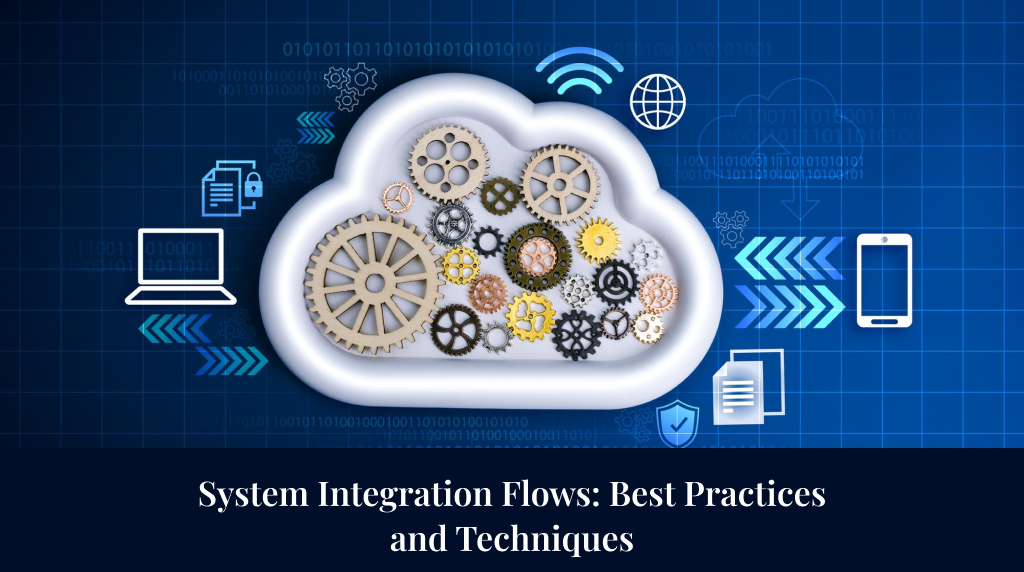
    Oracle System integration serves as the most efficient technique used by companies to enhance business performance and reduce costs. It helps in integrating a wide range of business systems which includes applications and databases so that the data exchange can take place smoothly between the components. System integration can also cater to a wide range of business scenarios and applications.

    Here’s a look at how system integration flows help business operations to be carried out smoothly.

    Key Components of an Integration Flow

    An integration flow is made up of various crucial business components:

    Source/target systems: Source/target systems are the most crucial components of integration flows.

    Sources: These are the systems from which the data is generated. They can be of different types like applications, databases, APIs, etc.

    Targets: These are the systems where the transformed data is sent. They can also be of diverse types including applications, databases,  etc.

    Data transformation: This involves aligning the format and structure of the data from the source system so that they match the target system. It also includes the data validation process. This ensures that the data is of high quality and is also consistent before and after transition. Data enrichment is also a part of the data transformation process.


    Error handling: Handling errors is again an important part of system integration services. This involves ensuring that the data is of high quality. The data inconsistencies are identified and eliminated so that they do not compromise the quality of data. Various error-handling techniques are used based on the data being transformed.

    Best Practices for Designing Integration Flows:

    While designing integration flows, certain best practices can be kept in mind:

    • Modularity and scalability:

    It is important to maintain a modular approach while creating integration flows. This will allow you to maintain scalability. You can also add new modules and components to the system whenever required without having to disrupt the existing workflow.

    • Standardized protocols:

    It is also important to follow certain standardised protocols while designing the best integration platform. This will ensure that proper consistency is maintained. It will also reduce the chances of discrepancies and any kind of data handling errors.

    • Security measures:

    Certain security measures also have to be followed. This will help in ensuring that all the systems are compliant. It will also save organisations from having to pay heavy penalties. You can opt for oracle integration cloud training online to learn more about the security measures to be implemented while designing workflows.

    Techniques for Effective Integration

    Different types of integration techniques can be followed while integrating workflows in dynamic business environments:

    • API usage:

    With API integration, you can easily request specific tasks from another system and get results back immediately. This eliminates the need for you to understand the intricacies of that system. 

    • Real-time vs. batch processing:

    Real-time data integration provides immediate updates and responsiveness. This makes it ideal for dynamic environments. On the other hand, batch integration is used to process data at scheduled intervals. This ensures thoroughness and efficiency.

    Challenges and Solutions

    Several challenges may arise while you are trying to design system integration workflows. Here are two of the biggest challenges:

    Complexity: Integrating different systems is a complex process. This is especially true when the systems are using different technologies, data formats, and platforms. This challenge can be eliminated by shifting to the cloud.

    Data issues: Ensuring data security and quality during the integration process is again a challenge. This can be avoided by cleaning, transforming, and enriching the data before it is exchanged between the systems.

    Conclusion:

    And here’s how creating system integration workflows can benefit your business. This will make you aware of the various tools and techniques using which you can create highly advanced integration flows for your business.

    For more details on integration flows, you can opt for oracle Cloud training online at Cloud Shinero.

  • Unlock Your Potential: Mastering Oracle Fusion SCM Training in no Time

    Unlock Your Potential: Mastering Oracle Fusion SCM Training in no Time

    Proper and effective supply chain management is essential for success in today’s fast-paced corporate environment. Every company wants their supply chain to work in the right manner.  Oracle Fusion Supply Chain Management (SCM) provides a sophisticated, integrated platform that enables enterprises to reduce their efforts in operations and streamline the process.

    By understanding Oracle Fusion SCM, you can expand your career options and drive operational excellence inside your firm. It is crucial to get the right Oracle fusion SCM training to master different skills and supply chain management. 

    1.Understanding Oracle Fusion SCM

    Oracle Fusion SCM is a comprehensive cloud-based solution for optimizing supply chain operations. It keeps a check on every process and ensures that it is done in the right manner. It handles everything from procurement to order fulfillment, with real-time insight and automation to boost efficiency. 

    By getting Oracle SCM cloud training, you will be able to learn the set of skills to handle the SCM well. Mastering this platform will allow you to better manage resources, collaborate with suppliers, and adapt to changing market demands. You will know how to change the working of the process and fulfill the market demands as per the requirements. 

    2. Comprehensive Training

    Oracle Fusion SCM training provides a detailed overview of the platform’s core modules. It helps to learn better about the core areas like inventory management, product management, and overall supply management. 

    Whether you’re a beginner or an experienced professional, training provides you with the knowledge and hands-on experience to handle supply chain tasks effectively. It provides detailed information about every process and how to handle it. Training courses often feature tutorials, case studies, and hands-on activities to help you achieve competency rapidly.

    3. Collaborative Supplier Relationships

    One of the most notable aspects of Oracle Fusion SCM is its ability to build collaborative supplier relationships. It helps to maintain good relationships with the suppliers and know about their demands and requirements in a better way. 

    Suppliers and stakeholders can collaborate more effectively by using platforms that allow for smooth communication and real-time updates. Through the training process, you will be able to learn how to use these tools that will boost supplier performance and strengthen collaborations.

    4. Process Automation

    Oracle Fusion SCM automates important supply chain activities, reducing manual work and errors. This reduces the chance of any human error and ensures that the process is done with precision. Automation allows organizations to cut expenses, enhance order accuracy, and streamline inventory management. 

    They can rely on automation and save their resources as well. Learning to use automation in Oracle Fusion SCM is critical for knowing the platform and delivering operational gains. You can learn many skills like inventory checkups, reviewing procedures, and many other things from reliable SCM training in India.

    Oracle Fusion

    → 10+ yrs exp trainer

    → Corporate training

    → Certification support

    → Flexible Timings

    → Real-World Projects

    → Free Cloud Instance

    5. Mastering Oracle Fusion SCM

    For mastering Oracle Fusion SCM it is crucial to learn about the terminologies and reach out to good training courses. Cloud SCM subject areas include Product Management, Inventory Management, Procurement, and Order Management, among others. You learn about all these topics in detail and use the right strategies and procedures to excel in supply chain management. 

    Also, it allows you to manage your supply chains most productively and cost-effectively, providing you an advantage in your career.

    6. Introduction to key concepts in Oracle Fusion SCM:

    • Procurement – Learn how to use integrated technologies to manage procurement processes, create purchase orders, and communicate with suppliers. You need to know how the procurement is done and how to be in contact with the suppliers. 
    • Inventory Management – Inventory management is very crucial, as it assures that you will be able to supply on time and in the right amount. Master inventory tracking, demand planning, and product fulfillment to ensure seamless supply chain processes. 
    • Order Management – When the orders are flooded, it is crucial to manage them properly to ensure that you don’t face any order issues. Gain hands-on experience managing orders from start to finish, guaranteeing accurate delivery.
    • Manufacturing – Learn how to streamline manufacturing operations, monitor production, and increase productivity. The manufacturing process requires a lot of precision as it ensures that the products are manufactured in the right manner and quality. 
    • Supply Chain Planning – Investigate forecasting and planning methods that help supply meet demand efficiently. You should anticipate and know how much supply will be needed and how it should be planned.

    7. Best Practices for Efficient Learning

    It is important to learn about the basics and get advanced knowledge about the SCM. Through Oracle Fusion SCM online training you can get wider knowledge about the essential skills and practices. When mastering Oracle Fusion SCM, use these recommended practices for efficient learning:

    Set Specific Goals: 

    Determine what you want to achieve with Oracle Fusion SCM training, such as boosting job performance or obtaining certification. By setting achievable goals you can help the firm to get desirable results.

    Hands-on Practice: 

    Applying what you’ve learned is essential for mastering the platform.

    Join Communities

    Participate in online forums and communities where experts share ideas, tips, and experiences connected to Oracle Fusion SCM.

    Utilize Training Resources: 

    Make use of the video lessons, case studies, and documents supplied throughout training. By using the well-informative training resources and platforms you will be able to get the most appropriate information. 

    8. Staying Updated and Continuing Education

    Oracle is constantly updating its Fusion SCM platform with new features and enhancements. Staying up to speed on the latest releases and extending your education with advanced courses will guarantee you remain adept in the platform and can take advantage of the latest improvements. 

    You need to be well-updated about the dynamics in the industry. Also, learning new courses can help you polish your skills and learn more.

    Conclusion

    Mastering Oracle Fusion SCM is an effective method to strengthen your supply chain management skills, increase operational efficiency, and take your business forward. You may maximize the potential of this complex platform by using an organized learning strategy and receiving extensive instruction.

    Are you ready to take the next step? Enroll in Oracle Fusion SCM Training with cloudshinepro today! Cloudshine’s industry-leading training can help you expand your skills and become a supply chain management specialist.

    Oracle Fusion SCM Cloud Training

    Weekday / Weekend Batches

  • Mastering the Cloud: Your  Guide to Oracle Integration Cloud Service Certification

    Mastering the Cloud: Your Guide to Oracle Integration Cloud Service Certification

    In today’s digital world, mastering cloud technologies is a valuable employment skill. Oracle Fusion Cloud courses and certifications are intended to help professionals improve their knowledge and skills in cloud integration. It helps them to know about the cloud services in detail.

    These certifications provide professionals with the abilities required to use Oracle’s strong cloud solutions, which are essential for modern corporate operations. Further, the blog will enfold some important things to learn about Oracle Integration Cloud Service Certification

    1. Overview of the Oracle Integration Cloud Service Certification

    Oracle Integration Cloud Service Certification is a widely sought-after certificate for IT professionals who want to specialize in cloud integration. Cloud integration has now become an important part of any firm. Oracle SCM certification certifies your ability to build, deploy, and manage cloud-based integration solutions on Oracle’s powerful platform. You can learn about the Oracle integration from reliable training and certification sources.

    Earning this certification demonstrates your ability to automate operations, integrate applications, and manage data seamlessly across the cloud. You can easily get a hold of all the data of your firm that is present across the cloud. 

    2. Why do certification/training on Oracle Integration Cloud Service Certification(OIC)

    Certification in Oracle Integration Cloud Service opens the door to a variety of professional prospects. Companies are increasingly relying on cloud-based technologies to optimize their operations, and Oracle integration cloud allows them to easily integrate many applications. 

    OIC certification not only improves your technical abilities but also increases your marketability, ensuring your continued competitiveness in the ever-changing cloud business. You can have the upper hand from your competitors and learn about the market trends as well. 

    3. Learning the Core Concepts and Skills

    No matter what certification you want to get you need to know about the core concepts and skills. To comprehend the Oracle Integration Cloud, you must first understand fundamental concepts like application integration, process automation, and data mapping. This way you will be able to handle the procedures with more precision. 

    The OIC certification training focuses on hands-on experience with integration methodologies, pre-built adapters, API management, and integration flow monitoring. Mastery of these ideas will set you up for success in your certification exam and future career.

    Oracle Fusion

    → 10+ yrs exp trainer

    → Corporate training

    → Certification support

    → Flexible Timings

    → Real-World Projects

    → Free Cloud Instance

    4. Exam Strategies and Tips

    When preparing for the Oracle Integration Cloud Service certification, it is critical to grasp the exam structure and concentrate on important topics. The professional  Oracle integration cloud service training from Cloudshinepro will help you get the certification. With the help of the course details and instance access, you will learn about the strategies and tips to crack the exam.

    Practice tests are vital since they allow you to become comfortable with the types of questions you may face. Time management is also important; devote enough time to each question and carefully evaluate your responses. Remember to use Oracle’s official documentation as a study resource.

    5. Advanced Topics

    Beyond the fundamentals, OIC certification training includes advanced topics like error handling, exception management, and monitoring integration solutions. It prepares you for handling any situation and teaches you how to monitor the operations. These abilities are critical for developing robust and scalable integration systems. 

    With comprehensive knowledge of Oracle Integration Cloud, you’ll be able to develop and manage sophisticated workflows that ensure smooth application connectivity and data flow in large-scale systems.

    6. Job scope of Oracle Fusion Integration Cloud Service

    The demand for Oracle Fusion Integration Cloud Service-certified personnel is increasing. Cloud integration specialists, solution architects, and cloud administrators are in high demand. 

    Companies across industries are investing in cloud technology, creating a growing demand for professionals knowledgeable in integrating systems using Oracle’s cloud solutions. OIC certification improves your chances of landing employment with great growth potential and competitive remuneration packages.

    Conclusion

    Obtaining your Oracle Integration Cloud Service certification is an important step toward furthering your career in cloud technology. The certification offers you in-depth knowledge of cloud integration, enabling you to contribute to any organization’s digital transformation. 

    Want to master Oracle Integration Cloud Service? cloudshinepro skilled staff provides high-quality online OIC training, helping you through each step of the certification process. Join us today to learn the skills and knowledge you need to thrive in this exciting sector!

    Oracle Fusion SCM Cloud Training

    Weekday / Weekend Batches

  • Oracle Fusion Integration: Strategies For Seamlessly Connecting Applications

    Oracle Fusion Integration: Strategies For Seamlessly Connecting Applications

    Are you willing to quickly integrate your organization’s different applications? Not sure how exactly you will achieve this goal? Well, Oracle Integration Cloud is your solution. With Oracle Fusion Cloud, you can easily create and administer application integration through different stages of development. This will ensure that you enjoy seamless connectivity for all the applications at your workplace. 

    Oracle Integration Cloud is a secure and robust integration solution that allows for seamless connectivity between on-premise and cloud-based applications. This lightweight platform allows you to maintain easy communication between your diverse range of applications. You are also offered enterprise-grade security and reliability while working on your applications.

    Key Features And Capabilities:

    Oracle Integration Cloud comes with numerous features and capabilities that facilitate easy integration between various applications. Listed below are some of the key capabilities of Oracle Integration Cloud services:

    Integration Flows:

    Oracle Integration Cloud allows the creation of integration workflows to connect various system services and applications. These integration flows can be designed using a visual interface. They also clearly define transformations, mappings, and business rules.

    Pre-Built Adapters:

    Oracle Integration Cloud comes with a huge library of connectors and adaptors, which you can use to simplify the integration process for a wide range of databases, applications, and technologies. The adaptors allow smooth connectivity and data exchange between the different systems in your organization.

    Process Automation:

    The Oracle Integration Cloud platform comes with features for process automation. It allows the end users to execute complex business processes easily without much hassle. OIC also supports the modeling of various complex processes using standard notation. This allows for easy automation of workflows.

    Data Transformation And Mapping:

    The platform also comes with powerful data transformation capabilities. You can also use OIC to map data across various systems. You will be offered with multiple graphical tools for defining data transformations and mappings. This helps maintain data consistency across your system.

    Benefits Of Oracle Integration Cloud Services:

    There are multiple benefits of availing of Oracle Integration Cloud services. Some of these benefits include:

    Enhancing business efficiency by streamlining the business processes:

    With Oracle Integration Cloud, you can easily automate complex processes and reduce manual interventions. This allows you to increase business efficiency to a considerable extent. You can also optimize the various operations, thereby increasing productivity and minimizing chances of error. With Oracle Integration Cloud, you can consolidate your integration platform efforts onto a centralized platform. This allows you to have better visibility over your organization’s different processes.

    Oracle Fusion

    → 10+ yrs exp trainer

    → Corporate training

    → Certification support

    → Flexible Timings

    → Real-World Projects

    → Free Cloud Instance

    Allowing seamless connectivity across the various applications:

    Oracle Integration Cloud supports a wide range of adapters and connectors. This allows you to integrate your on-premises and cloud-based applications with the Oracle Integration Cloud. You can also ensure a smooth exchange of data and information across the various Oracle Applications. The platform also comes with robust API management capabilities, using which you can manage your API significantly. You also get to enjoy real-time data synchronization between your organization’s different systems.

    Offering scope for adaptability and scalability for future growth:

    Oracle Integration Cloud offers enhanced scalability. You can handle growing volumes of data and transactions without having to bring about changes in your existing systems. As your business grows, your platform scales accordingly. Oracle Integration Cloud is also designed to adapt and evolve with changing business needs. It can easily accommodate new technologies and industrial standards. This helps you to enjoy long-term flexibility and compatibility. The management and maintenance process is also quite simple.

    Challenges And Considerations:

    There are certain challenges associated with Integrating Oracle Fusion Cloud into your existing system, like:

    Integrating legacy systems:

    Integrating Oracle Integration Cloud with your legacy system can be a complex affair. Companies may face challenges ensuring seamless connectivity and data synchronization between Oracle Integration Cloud and legacy systems.

    Change management:

    Implementing a new change often requires elaborate changes to be made in the process system. Workflow resistance to change from the employees of your organization is another common challenge that needs to be addressed.

    Security and privacy:

    Integrating applications and systems often involves the exchange of sensitive data, ensuring proper data privacy, security and compliance. Ensuring regulatory requirements is also an important factor.

    In order to overcome the challenges, organizations can develop multiple strategies, such as:

    Creating a plan:

    Develop a detailed integration plan that outlines the scope, objective, and timeline of the integration project. Identifying potential challenges and designing strategies to address them may also help.

    Conducting proper analysis:

    It is also important to analyze the existing system to identify and mitigate integration challenges. This helps you select the right adaptors and connectors for your systems.

    Training your employees:

    Before integrating Oracle Fusion Cloud in your system, you must offer your employees the necessary Oracle Fusion Cloud training so that they can explore the features of the Cloud Integration solution.

    So, if you are looking for the best organization offering Oracle Fusion HCM training in Hyderabad or Oracle Fusion SCM Training to become well-versed, then we have the experts to upskill you. Check https://cloudshinepro.com/#courses to know more about our courses.

    Oracle Fusion SCM Cloud Training

    Weekday / Weekend Batches


  • Oracle Fusion Security Best Practices For Consultants And Administrators

    Oracle Fusion Security Best Practices For Consultants And Administrators

    In today’s dynamic business landscape, maintaining data security has become extremely important. As companies increasingly rely on cloud-based applications, securing these applications and the sensitive data and information that they contain is crucial. This is especially true for companies that use Oracle Fusion Applications, which offer a plethora of cloud-based tools to manage business operations. Here, we are going to talk about the importance of implementing security policies for Oracle Fusion Cloud Security.

    Understanding Security: An Introduction

    Oracle Fusion Security is the security approach used in Oracle Fusion Applications. It includes various aspects of security like role-based access control, data security, function security, privacy access, provisioning identity management, segregation of duties and policies, and much more. Oracle HCM Security is the technology used to implement data security across applications. It supports the implementation of different security policies and roles that can address various business challenges and ensure that business operations are carried out safely and securely.

    Access Control Based On Roles

    The users are offered access to the various system resources through the roles assigned to them rather than directly. Roles can be used to provide access to data and functions. The Oracle Fusion Applications security approach involves different roles:

    • Abstract role: This role is assigned to users without specific jobs. It can be used by all organizational employees or managers.
    • Job role: It groups the users as per the principles of lead privileges by offering them access only in support of the duties that they perform.
    • Duty role: It defines the duties of a particular job as entitled to perform a specific function only.
    • Data role: It groups the users who have functional access through particular job roles with access to particular sets of data.

    Securing Functions And Data

    Data and functions are not accessible to users unless they are assigned the roles required to gain the necessary access. Function security offers users access to pages in the application user interfaces and the various actions that can be performed there. Data security allows the users to view the data that are present on those pages. Some data is not secured. These chunks of data can be accessed by any user, irrespective of the role assigned.

    Implementing Security Throughout Tools, Technologies, Data Handling, Access Modes, And Information Lifecycle

    The Oracle Fusion Applications security approach is quite a vast one. It involves the enforcement of security controls across technology infrastructure, tools, transformation of data, access methods, information life cycle and more. The basic infrastructure of an Oracle Fusion Applications development may differ from one tool to another. The deployment also varies according to the technology stack we use. 

    However, the security approach aligns with analytical and transactional security so that security controls and policies exist across various data transformations and access methods of enterprise information. Oracle HCM Cloud Security uses a single security policy statement through various data transformations needed for search optimization, dimensional analysis, and transactions.

    Oracle Fusion

    → 10+ yrs exp trainer

    → Corporate training

    → Certification support

    → Flexible Timings

    → Real-World Projects

    → Free Cloud Instance

    Oracle Fusion Applications can maintain proper security throughout the information lifecycle management policies that your enterprise users use. Oracle Database Vault and Transparent Data Encryption can be used to protect data at rest and in transit across the various phases of deployment and databases. This ensures that your data remains completely secure at various stages of the project implementation process.

    Aligning Oracle Fusion Applications Security With Business Needs

    Oracle Fusion Applications security must be implemented to fit the exact business needs. So, before you start with Oracle Fusion Applications implementation, it is important that you acquire a proper idea of your business needs and then begin the implementation phase. Oracle Fusion Applications supports an extensive predefined business protocol model. This model is secured by the implementation of various predefined roles and security policies. To know more about which Oracle Fusion Applications security model is appropriate for your business, you may contact our team offering Oracle HCM training in Hyderabad and Bangalore and acquire the necessary details on the same.

    Developing A Secure Model For Business Processes

    The business process model has four different levels, each of which has a different function related to security administration. The business process model levels, along with the relevant security administration examples, have been given below:

    • Level 1: Business process – Information Technology Management 
    • Level 2: Detailed business process – Set Up Information Technology Management 
    • Level 3: Activity – Define Security 
    • Level 4: Task – Manage Job Roles

    Security Reference Implementation

    The security reference implementation involves a set of predefined roles associated with the business process model levels. When these enterprise roles are assigned to users, they guide and control access to the various task flows of the business process model and the data that it contains. At the task Level, the task flows are used to define the business actions that can fulfill the exact purpose of the business process model.

    A security reference manual presents various predefined roles, role hierarchy, and business objects that the roles need to access, the segregation of duties and policies, jobs that can have conflicting duties as per the policies, etc. The reference implementation can easily be viewed through the integrated Authorisation Policy Manager and Oracle Identity Management user interface pages. These tools can also be used to manage the users, identities, and security policies manually.

    Security: Information

    The security information roadmap consists of the wide variety of available information resources that are needed for the relevant understanding of Oracle Fusion Applications security. The information resources cover areas like:

    • Oracle Fusion Applications
    • Oracle Fusion Middleware 
    • Application Access Control Governor in the Oracle Governance, Risk, and Compliance Controls suite
    • Oracle Database

    Differences In Security Terminology

    In various situations, the terminology used outside and within the Oracle Fusion Applications may differ based on different factors. Here are some instances to explain the same:

    Authorisation Policy Manager and Identity Management: These fall within Oracle Fusion Middleware. The middleware layers offer services that applications like Oracle Fusion Applications use. These tools can be used to manage authorisation policies and user identities within the middleware context.

    Application Access Controls Governor: This falls under governance risk and compliance controls. GRC mainly focuses on managing the company’s security aspects. These governance tools can be used to set access control specific to the Oracle Fusion Applications that reside within the GRC framework. For more details on Oracle Fusion Applications Security, you may check with professional consultants to get solutions based on your requirements.

    We at Cloudshine offer Oracle fusion training that will equip you with the necessary knowledge of the various modules of Oracle Fusion Cloud and will also allow you to give your career an excellent kickstart.

    Oracle Fusion SCM Cloud Training

    Weekday / Weekend Batches

  • Career Path of an Oracle Fusion Consultant: Skills and Challenges

    Career Path of an Oracle Fusion Consultant: Skills and Challenges

    Introduction:

    In order for companies to remain competitive and relevant in today’s rapidly changing business economy, they need to implement an Enterprise Resource Planning (ERP) system in their workplace environment. These ERP systems offer businesses numerous opportunities by means of which they can remain competitive. The ERP systems are extremely complex and require knowledgeable personnel to implement them into the organisational structure successfully.

    One such ERP solution which is in great demand in the market is Oracle Fusion. It comes with an enhanced set of features and functionalities meant to suit the varied needs of every workplace. However, to experience each of these features to the fullest, companies need to get in touch with qualified professionals for the required assistance on Oracle Fusion implementation. That way, they will be able to make the most out of their ERP solution, and the implementation process will also be carried out smoothly.

    Preparing the Career Path of an Oracle Fusion Technical Consultant:

    Oracle fusion technical consultants are in great demand these days. These technical consultants offer technical help and suggestions to customers using Oracle Fusion products. They are responsible for offering training and resolving issues related to Oracle Fusion middleware. They also help customers implement Oracle Fusion in the workplace environment.

    The technical consultants also offer any kind of technical assistance that may be required at any phase of the Oracle Fusion implementation process. So, companies planning on implementing Oracle Fusion in their environment mostly hire an experienced Oracle Cloud Consultants to help them with the implementation process. The consultants will carefully understand the exact nature of the business and offer the required services based on that.

    So, if you are willing to give your career as an Oracle consultant an excellent kickstart, then there are a number of courses that you can opt for. These courses will offer you the required skills to become a successful Oracle consultant. It will also help you in establishing your presence across multiple industries.

    • Oracle Apex
    • Oracle BI Publisher
    • Oracle PL /SQL
    • Oracle DBA
    • Oracle WebLogic Server

    You can opt for any of these courses based on your exact career goals.

    Skills Required:

    To become a successful Oracle Fusion Consultant, certain skills are required, such as:

    Oracle Fusion

    → 10+ yrs exp trainer

    → Corporate training

    → Certification support

    → Flexible Timings

    → Real-World Projects

    → Free Cloud Instance

    Analytical skills:

    Having strong analytical skills is really essential for the job role of an Oracle.Fusion technical consultant. You need to perform an in-depth analysis of organisational data and come up with an Oracle Fusion solution that will meet the exact business requirements.

    Analytical skills will help you to prepare charts and graphs based on business requirements. You will also be able to obtain valuable insights from business data and design the Oracle Fusion solution accordingly.

    Communication skills:

    Writing and speaking skills are also important for an Oracle Fusion technical consultant. You will have to communicate your findings to your customers either verbally or in writing. You may also have to use presentations to communicate your ideas to the clients.

    So, you need to start working on your communication skills at a very early stage of life. As long as you do not have very strong communication skills, you will fall back in this competitive world.

    Technical skills:

    Now, this is another skill that you are required to master on your journey towards becoming a successful Oracle Fusion Consultant. You need to be familiar with the various technical aspects of Oracle fusion systems, like data modelling, data administration, software development, business intelligence, etc.

    You also need to have complete knowledge of the different Oracle Fusion applications and modules. By upskilling your technical abilities, you will be able to troubleshoot problems easily. You will also find it really easy to integrate the system into the existing workplace environment. You can also opt for Oracle scm cloud training to upskill yourself.

    Strong leadership skills:

    The next skill that you are required to master is leadership skill. Unless and until you brush up your leadership skills, you will never be able to acquire success on your journey towards becoming an experienced Oracle Fusion technical consultant.

    The easiest way to brush up on your leadership skills would be to increase your grasp of the subject. You must also know how exactly you should deal with challenging situations. This will allow you to become confident about what you do. You will also be able to take up challenging job roles whenever required.

    Achieving business outcomes:

    As an experienced Oracle Fusion consultant, your ultimate aim would always be to achieve favourable business outcomes, and that can only be made possible when you have a clear understanding of the business requirements.

    Before you actually start to implement the ERP solution, you need to understand what the client demands from you. Based on that, you can design your solution.

    Conclusion:

    So, if you are willing to take up the job role of an Oracle Fusion Consultant, then it is high time that you visit the Cloudshine website and equip yourself with the necessary skills. At Cloudshine, you can opt for Oracle integration cloud service training and give your career an excellent kickstart. Contact us for more details.

    Oracle Fusion SCM Cloud Training

    Weekday / Weekend Batches

  • Oracle EBS To Fusion Cloud Migration? Best Practices For Consistent Reporting

    Oracle EBS To Fusion Cloud Migration? Best Practices For Consistent Reporting

    Do you wish to experience a consistent reporting experience across the various departments of your workplace? Well then, it is high time that you migrate from Oracle EBS to Fusion migration. This will not only offer you enhanced reporting and data analytics facilities, but your business operations can also be carried out smoothly. So, here’s why you should opt for Oracle EBS to fusion migration:

    Challenges in Oracle EBS:

    Here are some of the bottlenecks that you may experience while using Oracle EBS:

    Lack of integrated data: Oracle EBS cannot integrate data on its own. The stakeholders have to put in manual effort to integrate data from different sources. This might take hours and sometimes days. Manual data integration may also result in human error.

    Outdated insights: In Oracle EBS, users will only have access to the database in read-only mode. The database only updates itself once a day. So, the decision-making capabilities of the EBS system seem to be old and outdated. This again serves as a challenge for businesses.

    Reliance on IT: Because of the scarcity of reliable Oracle EBS reporting tools, companies have to rely on the services of IT teams for data analysis and extraction. Sometimes, the stakeholders may even have to wait for days before they get access to the desired data. This can reduce the business efficiency to a significant extent.

    Static Reports: Oracle EBS does not come with real-time reporting capabilities. This leads to the generation of static reports, which may have outdated information. This makes it difficult for companies to explore their business data and look for performance metrics. The decision-making process also becomes really difficult.

    Oracle Fusion

    → 10+ yrs exp trainer

    → Corporate training

    → Certification support

    → Flexible Timings

    → Real-World Projects

    → Free Cloud Instance

    How can Oracle Fusion Cloud mitigate these challenges?

    Oracle Fusion Cloud offers a lot of advanced features, which makes it a preferred solution for users out there. Some of the major features include:

    Scalability: Oracle Fusion Cloud applications come with enhanced scalability. Companies can easily scale their application features and computational power as required. Also, cloud applications do not require much upfront cost. As a result, companies are easily able to manage their hardware and software efficiently.

    Security: One of the biggest benefits of Oracle Fusion implementation is its enhanced security. Cloud can offer better security than traditional data centres. It also comes with various enhanced security features like data authorisation, enhanced protection against internal threats, access control, etc. You can also share your business data within minutes in a highly secure manner.

    Affordability: Unlike Oracle EBS, Oracle Fusion Cloud applications do not require businesses to buy and maintain hardware solutions. So, there are no upfront licensing fees involved. You can easily choose your software features and pay on a monthly basis. That way, you only pay for what you exactly need. This helps reduce unnecessary expenses. Your business operations are also taken care of smoothly.

    Future-proofing: Oracle Fusion Cloud is designed in such a way that it auto-updates itself regularly. This paves the path for future innovation. Because of their future-proofing ability, Oracle Fusion Cloud applications can offer customers excellent security, optimum performance, and improved workflows. Oracle cloud solutions are also designed using innovative technologies like blockchain, IoT, and AI. This allows for better data management.

    Migrating to Fusion Cloud from Oracle EBS:

    So, if you are planning to migrate from Oracle EBS to Fusion Cloud, then it is high time that you get yourself trained on the various features and functionalities of Fusion Cloud. Only then will you be able to make the most out of the Oracle Cloud system? Now, you must be wondering how exactly you are going to acquire the necessary knowledge of Fusion Cloud. Well, Cloudshine is your solution. By connecting with the experts at Cloudshine, you will be able to make yourself well aware of the functionalities of the software solution. You can also opt for the Oracle order management certification. This will help you to unlock the potential of Fusion Cloud in your environment and carry out all your business operations smoothly.

    So, go for the oracle fusion scm certification offered at Cloudshine today and equip yourself with the necessary skills. Contact us for any queries that you might have regarding any of our certifications.

    Oracle Fusion SCM Cloud Training

    Weekday / Weekend Batches

  • Oracle Fusion Integration Strategies: Connecting Systems for Seamless Business Processes

    Oracle Fusion Integration Strategies: Connecting Systems for Seamless Business Processes

    Oracle Fusion Cloud can completely transform how businesses work by offering them the required tools and technologies to streamline their operations.  By opting for oracle fusion integration into your business environment, you will be able to drive business efficiency and pave the path for innovation. So, here’s a quick look at what the diverse ecosystem of Oracle Fusion Cloud looks like:

    What is Oracle Integration Cloud used for?

    Oracle Integration Cloud Service is a complete, secure, and lightweight integration solution using which you can connect your application in the cloud. It allows you to enjoy all the benefits of the cloud. OIC also simplifies connectivity between the various applications of your organisation. 

    How Does Oracle Fusion OIC Integration Work?

    Oracle Fusion OIC Integration uses the “design and deploy” approach to allow the users to design integrations without writing complex lines of code. The platform offers different connectors and integration patterns. These features help users create integrations directly from the drag-and-drop interface. 

    The integration can then easily be uploaded to the Oracle Cloud Infrastructure to manage proper integration workflows. Oracle Cloud Integration also comes with various tracking and monitoring capabilities. This provides you with real-time insight into the integration performance. 

    Importance of Integration in Modern Business:

    You can use Oracle Integration Cloud services in your modern business environment to connect applications hosted on the cloud and on-premises. It provides enterprise-grade connectivity regardless of the type of applications that you are using. 

    OIC services can be used to design, monitor, and manage the connection between the different applications in your organisation. You can also use Oracle Fusion Financials to view your business data completely.

    Key Considerations for Oracle Fusion Integration:

    Here are some of the key considerations to be made before you opt for Oracle Fusion OIC Integration:

    • Data Security and Compliance

    Before implementing Oracle Integration Cloud in your system, you need to look at the security features. This includes secure communication protocols, data encryption techniques, access control, and compliance with various industrial regulations. Also, check whether your OIC aligns with your company’s security and compliance requirements.

    • Scalability and Performance

    You must consider the performance and scalability capabilities of oracle integration before you use OIC in your workplace. Evaluate whether your OIC solution can handle huge amounts of data within your organisation. You should also check whether the OIC solution offers you the required scalability options so that you have scope for future growth.

    • Data Mapping and Transformation

    You should identify various integration scenarios and check the data mapping and transformation requirements for each of the scenarios. Try to understand the data formats and structures of the various systems involved and make plans for data enrichment. Besides that, you must have a clear idea of simplifying the data mapping process using your OIC solution.

    • Real-time vs. Batch Integration

    Next, you must check whether your OIC system has batch integration or real-time integration capabilities. With batch integration, the users will receive data on a delay. However, with real-time integration, the data is processed, and it becomes available to the user immediately. So, acquire an understanding of integration in oracle fusion and then choose your OIC system based on your exact business requirements.

    • Monitoring and Error Handling

    Determine how your OIC system handles, logs, and resolves errors, exceptions, and failures within the integration flow and look for appropriate error notification mechanisms. It is also important for you to understand the monitoring capabilities of your OIC system so that errors can be identified on time and necessary actions can be taken without further delay.

    Oracle Fusion

    → 10+ yrs exp trainer

    → Corporate training

    → Certification support

    → Flexible Timings

    → Real-World Projects

    → Free Cloud Instance

    Benefits of Oracle Integration Cloud Services

    Some of the major benefits of Oracle integration cloud service have been listed below:

    • Streamlining business processes and enhancing efficiency

    Oracle Integration Cloud allows you to automate complex business processes to improve efficiency and reduce manual intervention. You will also be able to streamline workflows and optimise the various processes of your company. 

    With Oracle integration cloud (OIC), you can integrate all your business processes onto a single centralised platform. This offers you better control over your data and processes and you can eliminate chances of error.

    • Enabling seamless connectivity across systems and applications.

    Oracle Integration Cloud supports a variety of adaptors and connectors. This helps you to integrate on-premise and cloud-based applications seamlessly. You can easily exchange data across different systems and unify the critical business processes. 

    Oracle Integration Cloud also comes with enhanced API management capabilities. This allows you to generate new revenue streams for your business and increase the number of partner collaborations. You are also offered real-time data synchronisation facilities between the different systems.

    • Facilitating scalability and adaptability for future growth

    Oracle integration service provides enhanced flexibility, scalability, and adaptability. You can easily manage growing volumes of data effortlessly using your Oracle fusion Cloud applications. You will also be able to adapt to changing business needs.

    With OIC or Oracle fusion Cloud, you will no longer have to worry about accommodating new technology and maintaining industrial standards. Instead, you can maintain a seamless integration process and reduce the burden on your IT team.

    Best Practices for Oracle Fusion Integration:

    Planning and Design

    Before opting for Oracle integration cloud services, you must have a proper plan. Acquire a clear understanding of the various integration requirements of your system and proceed accordingly. You should also develop a comprehensive design. This should include the data mapping techniques and security protocols. Also, look for the scope of further growth and enhancement.

    Testing and Quality Assurance

    It is really important for you to regularly test your system to ensure that it is completely error-free. You should shortlist relevant test cases which cover various diverse scenarios. You can even use the inbuilt capabilities of Oracle fusion cloud to test your system and ensure data accuracy repeatedly.

    Deployment and Maintenance

    Try deploying your Oracle fusion cloud integration solution during the off-hours. This will ensure that there is minimal disruption to the existing workflow. You should also continuously monitor your system and ensure that you have a proper maintenance strategy in place.

    Continuous Improvement

    Having a continuous improvement strategy in place will allow you to ensure that your system remains up to the mark with the latest industrial standards. You need to make sure that you are updated with the latest trends. Regularly patching your system to reduce the scope of errors is also important.

    Future Trends in Oracle Fusion Integration


    A. Emerging Technologies and Integration

    Oracle plans to integrate artificial intelligence (AI) capabilities into the Integration Cloud. This will allow Oracle oic to use machine learning capabilities to streamline workflows. The integration landscape will also witness other emerging technologies like IoT and Blockchain.

    B. Industry-Specific Integration Challenge

    Integrating Oracle Fusion in legacy systems can turn out to be a challenge. This is mainly because of the technology, protocols, and data format differences. Ensuring that sensitive data remains secure during the integration process is, again, challenging.

    C. Predictions for the Future of Integration with Oracle Fusion

    In the upcoming years, hybrid integration solutions will acquire importance. There will also be an increased focus on the API-first approach, where companies will focus on developing APIs. Oracle Fusion’s robust API management capabilities and its ability to integrate with both on-prem and cloud applications will align with these trends.

    Oracle Fusion Cloud presents itself as a potential solution for businesses looking forward to unlocking the potential of integration.

    From Cloudshine we have trained more than 500 consultants through 45 batches in the last 3 years and provided corporate training for 50+ organizations. Our structured training, assessment, and practice support will help you or your company employees to become industry-ready within 60 hours of training. 

    Please call or whatsapp us @ +91-8908-123-123  or email us @ inquiry@cloudshinepro.com

    Oracle Fusion SCM Cloud Training

    Weekday / Weekend Batches
  • The Role of an Oracle Fusion Consultant in Successful ERP Implementation

    The Role of an Oracle Fusion Consultant in Successful ERP Implementation

    As organizations strive to stay competitive and relevant in today’s rapidly changing economy, the implementation of an enterprise resource planning (ERP) system can provide a powerful way to keep up with new business opportunities. Such systems are notoriously complex and require knowledgeable personnel to successfully integrate into an organization’s structure.

    Therefore, having qualified professionals available as Oracle Fusion consultants is essential for any organization looking to make the most out of its ERP investments. In this blog post, we will discuss how these experts play a vital role in ensuring a successful ERP application, from defining requirements throughout the entire project cycle leading up to launch.

    Key Responsibilities of Oracle Fusion Consultant

    Check out the key responsibilities that are expected to be fulfilled by an Oracle fusion consultant. 

    • Understanding the client’s business requirements and mapping them to the ERP capabilities.
    • Designing and configuring the ERP modules based on the client’s business requirements.
    • Installing and configuring the ERP software and database.
    • Setting up and configuring security policies, roles, and access controls for the ERP.
    • Conducting training sessions for end-users and administrators on the ERP system.
    • Developing custom reports, interfaces, and extensions (RIE) to integrate the ERP  with other systems.
    • Conducting functional and technical testing of the ERP modules to ensure the system meets business requirements.
    • Identifying and resolving issues related to the ERP implementation and ensuring timely resolution of issues.
    • Providing ongoing support and maintenance of the ERP system.
    • Keeping up-to-date with ERP technology advancements and recommending improvements to clients.

    Skills Required for an Oracle Fusion Consultant

    An Oracle Fusion Consultant is responsible for implementing and managing the ERP systems for clients. To be successful in this role, one must possess a range of technical and functional skills. Let’s explore those specific skills in detail below. 

    Technical skills

    Below are some technical skills that an Oracle Fusion consultant is expected to possess. 

    1.Knowledge of Oracle Fusion applications and modules

    Knowledge of Oracle Fusion applications and modules is a critical skill for an Oracle Fusion Consultant. An enterprise resource planning (ERP) software suite that includes a range of applications and modules, such as financial management, human capital management, supply chain management, and customer relationship management.

    A consultant must have a thorough understanding of the functionality, features, and capabilities of these modules to effectively design, configure, and implement the ERP system for clients. This includes knowledge of the underlying data structures, business processes, and integration points between modules.

    An Oracle Fusion Consultant must also stay up-to-date with the latest releases and updates to ensure they leverage the most current features and functionality in their implementations.

    2.Understanding of data structures and database management

    Understanding data structures and database management is crucial for an Oracle Fusion Consultant. A deep understanding of concepts such as data modeling, normalization, indexing, and query optimization is required to manage the complex database system that supports Oracle Fusion ERP.

    It helps to ensure that the ERP system functions optimally and that data is stored and retrieved efficiently. Consultants must also have a strong understanding of database security and be able to manage access controls and privileges to prevent data breaches or unauthorized access.

    3.Experience with software development and programming languages

    Consultants must be able to develop custom reports, interfaces, and extensions to integrate Oracle Fusion ERP with other systems. This requires a strong understanding of programming languages such as Java, PL/SQL, and JavaScript.

    Familiarity with software development methodologies, such as Agile, is also beneficial. Moreover, knowledge of software development tools and frameworks, such as Oracle Application Framework (OAF), Oracle Workflow, Unix/Linux, Oracle BI Publisher, and Oracle Application Development Framework (ADF) can help consultants to develop high-quality solutions for clients.

    Oracle Fusion

    → 10+ yrs exp trainer

    → Corporate training

    → Certification support

    → Flexible Timings

    → Real-World Projects

    → Free Cloud Instance

    Functional skills

    1.Understanding of business processes and workflows

    For an Oracle Fusion Consultant, understanding the client’s business processes and workflows is necessary for effectively implementing and managing the ERP systems. This requires a thorough analysis of existing processes, identification of any gaps or inefficiencies, and the design of customized solutions that meet the client’s business requirements.

    The consultant must also have knowledge of industry best practices and regulations related to business processes. Collaboration with the client’s team is important to make sure that the new system aligns with their unique workflows and business needs.

    2.Familiarity with industry-specific regulations and compliance requirements


    Different industries have different regulations and compliance requirements that must be adhered to when implementing and managing Oracle Fusion ERP systems. Consultants must be knowledgeable about these regulations and how they impact the ERP system.

    They must also be able to configure the system to meet these requirements, ensuring the client remains compliant with all relevant regulations.

    3.Ability to communicate effectively with stakeholders

    The consultant must be able to communicate with various stakeholders, including clients, team members, and end-users. They must be able to listen carefully to the client’s business requirements and effectively communicate how the ERP system can meet these requirements.

    Also, the consultant must be able to provide clear and concise instructions to team members, train end-users on how to use the system, and explain complex technical concepts in a simple, easy-to-understand manner. Strong communication skills help ensure a successful implementation and ongoing management of the ERP system.

    Benefits of Working with an Oracle Fusion Consultant

    Here are some benefits of working with an Oracle Fusion Consultant:

    • Access to expertise: Oracle Fusion Consultants have extensive experience and knowledge in implementing and managing ERP systems. They can provide valuable insights and best practices to optimize the system and improve business processes.
    • Customized solutions: Consultants can design customized solutions to meet the unique business needs and workflows of the client. This helps to improve efficiency, reduce costs, and increase productivity.
    • Smooth implementation: Consultants manage the entire implementation process, from planning to go-live, ensuring a smooth and successful implementation.
    • Ongoing support: Consultants can provide ongoing support and maintenance to the system, validating that it remains up-to-date and continues to meet the changing needs of the business.
    • Time-saving: Working with a consultant saves time for the client’s team, as the consultant manages the implementation and ongoing management of the system, allowing the team to focus on other priorities.

    Conclusion

    To summarize, Oracle Fusion Consultants provide much-needed support and guidance regarding the successful implementation of an ERP system. Not only do they oversee the entire process, but they also serve as specialists of sorts in managing data within the system.

    They provide invaluable analysis and insights that organizations may not be aware of, which can increase productivity, reduce operating costs and improve customer experiences significantly..

    At Cloudshinepro, we help in providing ERP implementation corporate training to your employees. Contact us today! Our team of training experts has the know-how to make sure you end up with a streamlined implementation process that is fast and reliable while optimizing performance across all departments in your organization. For more details, please contact +91-7968-158-458 or +91-8908-123-123.

    Oracle Fusion SCM Cloud Training

    Weekday / Weekend Batches