CloudshinePro

Author: csp@admin

  • The Role of an Oracle Fusion Consultant in Successful ERP Implementation

    The Role of an Oracle Fusion Consultant in Successful ERP Implementation

    As organizations strive to stay competitive and relevant in today’s rapidly changing economy, the implementation of an enterprise resource planning (ERP) system can provide a powerful way to keep up with new business opportunities. Such systems are notoriously complex and require knowledgeable personnel to successfully integrate into an organization’s structure.

    Therefore, having qualified professionals available as Oracle Fusion consultants is essential for any organization looking to make the most out of its ERP investments. In this blog post, we will discuss how these experts play a vital role in ensuring a successful ERP application, from defining requirements throughout the entire project cycle leading up to launch.

    Key Responsibilities of Oracle Fusion Consultant

    Check out the key responsibilities that are expected to be fulfilled by an Oracle fusion consultant. 

    • Understanding the client’s business requirements and mapping them to the ERP capabilities.
    • Designing and configuring the ERP modules based on the client’s business requirements.
    • Installing and configuring the ERP software and database.
    • Setting up and configuring security policies, roles, and access controls for the ERP.
    • Conducting training sessions for end-users and administrators on the ERP system.
    • Developing custom reports, interfaces, and extensions (RIE) to integrate the ERP  with other systems.
    • Conducting functional and technical testing of the ERP modules to ensure the system meets business requirements.
    • Identifying and resolving issues related to the ERP implementation and ensuring timely resolution of issues.
    • Providing ongoing support and maintenance of the ERP system.
    • Keeping up-to-date with ERP technology advancements and recommending improvements to clients.

    Skills Required for an Oracle Fusion Consultant

    An Oracle Fusion Consultant is responsible for implementing and managing the ERP systems for clients. To be successful in this role, one must possess a range of technical and functional skills. Let’s explore those specific skills in detail below. 

    Technical skills

    Below are some technical skills that an Oracle Fusion consultant is expected to possess. 

    1.Knowledge of Oracle Fusion applications and modules

    Knowledge of Oracle Fusion applications and modules is a critical skill for an Oracle Fusion Consultant. An enterprise resource planning (ERP) software suite that includes a range of applications and modules, such as financial management, human capital management, supply chain management, and customer relationship management.

    A consultant must have a thorough understanding of the functionality, features, and capabilities of these modules to effectively design, configure, and implement the ERP system for clients. This includes knowledge of the underlying data structures, business processes, and integration points between modules.

    An Oracle Fusion Consultant must also stay up-to-date with the latest releases and updates to ensure they leverage the most current features and functionality in their implementations.

    2.Understanding of data structures and database management

    Understanding data structures and database management is crucial for an Oracle Fusion Consultant. A deep understanding of concepts such as data modeling, normalization, indexing, and query optimization is required to manage the complex database system that supports Oracle Fusion ERP.

    It helps to ensure that the ERP system functions optimally and that data is stored and retrieved efficiently. Consultants must also have a strong understanding of database security and be able to manage access controls and privileges to prevent data breaches or unauthorized access.

    3.Experience with software development and programming languages

    Consultants must be able to develop custom reports, interfaces, and extensions to integrate Oracle Fusion ERP with other systems. This requires a strong understanding of programming languages such as Java, PL/SQL, and JavaScript.

    Familiarity with software development methodologies, such as Agile, is also beneficial. Moreover, knowledge of software development tools and frameworks, such as Oracle Application Framework (OAF), Oracle Workflow, Unix/Linux, Oracle BI Publisher, and Oracle Application Development Framework (ADF) can help consultants to develop high-quality solutions for clients.

    Oracle Fusion

    → 10+ yrs exp trainer

    → Corporate training

    → Certification support

    → Flexible Timings

    → Real-World Projects

    → Free Cloud Instance

    Functional skills

    1.Understanding of business processes and workflows

    For an Oracle Fusion Consultant, understanding the client’s business processes and workflows is necessary for effectively implementing and managing the ERP systems. This requires a thorough analysis of existing processes, identification of any gaps or inefficiencies, and the design of customized solutions that meet the client’s business requirements.

    The consultant must also have knowledge of industry best practices and regulations related to business processes. Collaboration with the client’s team is important to make sure that the new system aligns with their unique workflows and business needs.

    2.Familiarity with industry-specific regulations and compliance requirements


    Different industries have different regulations and compliance requirements that must be adhered to when implementing and managing Oracle Fusion ERP systems. Consultants must be knowledgeable about these regulations and how they impact the ERP system.

    They must also be able to configure the system to meet these requirements, ensuring the client remains compliant with all relevant regulations.

    3.Ability to communicate effectively with stakeholders

    The consultant must be able to communicate with various stakeholders, including clients, team members, and end-users. They must be able to listen carefully to the client’s business requirements and effectively communicate how the ERP system can meet these requirements.

    Also, the consultant must be able to provide clear and concise instructions to team members, train end-users on how to use the system, and explain complex technical concepts in a simple, easy-to-understand manner. Strong communication skills help ensure a successful implementation and ongoing management of the ERP system.

    Benefits of Working with an Oracle Fusion Consultant

    Here are some benefits of working with an Oracle Fusion Consultant:

    • Access to expertise: Oracle Fusion Consultants have extensive experience and knowledge in implementing and managing ERP systems. They can provide valuable insights and best practices to optimize the system and improve business processes.
    • Customized solutions: Consultants can design customized solutions to meet the unique business needs and workflows of the client. This helps to improve efficiency, reduce costs, and increase productivity.
    • Smooth implementation: Consultants manage the entire implementation process, from planning to go-live, ensuring a smooth and successful implementation.
    • Ongoing support: Consultants can provide ongoing support and maintenance to the system, validating that it remains up-to-date and continues to meet the changing needs of the business.
    • Time-saving: Working with a consultant saves time for the client’s team, as the consultant manages the implementation and ongoing management of the system, allowing the team to focus on other priorities.

    Conclusion

    To summarize, Oracle Fusion Consultants provide much-needed support and guidance regarding the successful implementation of an ERP system. Not only do they oversee the entire process, but they also serve as specialists of sorts in managing data within the system.

    They provide invaluable analysis and insights that organizations may not be aware of, which can increase productivity, reduce operating costs and improve customer experiences significantly..

    At Cloudshinepro, we help in providing ERP implementation corporate training to your employees. Contact us today! Our team of training experts has the know-how to make sure you end up with a streamlined implementation process that is fast and reliable while optimizing performance across all departments in your organization. For more details, please contact +91-7968-158-458 or +91-8908-123-123.
    Oracle Fusion SCM Cloud Training

    Weekday / Weekend Batches

  • Oracle Cloud ERP: Benefits, Challenges and best practices in Implementation

    Oracle Cloud ERP: Benefits, Challenges and best practices in Implementation

    Oracle Cloud for Business

    Oracle Cloud has turned out to be an inevitable part of multiple organizations because of various reasons. It allows businesses to easily scale their infrastructure according to their specific needs.It also eliminates the need for organizations to invest in expensive hardware and software devices. The Oracle ERP implementation process is also an easy one.

    Oracle Cloud also offers highly robust security features that can be used to protect critical business data. In addition, Oracle Cloud can be accessed anytime, anywhere. This allows your business to operate more efficiently. It will also blend quite easily with your existing infrastructure, thereby allowing you to carry out all your business operations in a smooth and streamlined manner. 

    One such integral component of Oracle Cloud is Oracle Fusion Cloud ERP. It is a comprehensive cloud-based enterprise resource planning system which again offers a huge range of benefits to the customers. It provides a unified platform for project management, procurement, financial management and other key business functionalities. It is also highly flexible and can meet your unique business demands. 

    Oracle Fusion Cloud ERP also comes with highly advanced analytics capabilities which allow you to acquire a deeper understanding of your business. It can automate routine tasks and help you to save a lot of time and money on your business operations. You can also make use of Oracle Fusion Cloud ERP to acquire real-time insights into your business.

    Oracle Cloud Implementation Challenges

    Just like any other form of technology, Oracle Cloud is not without its challenges. So, here are some of the major challenges that organizations face from time to time while implementing Oracle Cloud solutions:

    Resistance to change

    Now this is one of the biggest challenges that companies face during oracle hcm cloud implementation. They experience resistance from the employees who are used to working under traditional conditions. This resistance mainly occurs because of a lack of clear understanding of the new system, fear of losing their jobs, or simply because they are accustomed to working in their old ways.

    To overcome the challenges, organizations need to provide proper training to the employees so that they have a clear understanding of the implementation process. They will also welcome the change instead of shying away from it.

    The regulatory environment changes:

    Another challenge that companies face while implementing Oracle Cloud is the need to comply with the changing regulatory environment. Different locations have different regulatory requirements and organizations need to ensure that their Oracle Cloud implementation meets all these requirements. This may involve bringing about changes to data management, processes and reporting. 

    Therefore, every organization should have a clear understanding of the required regulatory environment changes to ensure that the implementation meets the business requirements.

    Move from siloed systems to fully integrated:

    Many organizations have traditionally used siloed systems to manage different functions such as finance, human resources, and supply chain. Oracle Cloud provides a fully integrated platform that can manage all these functions in one place. The challenge for organizations is to migrate data from existing systems to the new platform and ensure that all data is accurately captured and integrated. This may involve significant data cleaning and restructuring efforts. However, all these hindrances can be avoided by taking the help of oracle cloud implementation partners.

    Oracle Fusion

    → 10+ yrs exp trainer

    → Corporate training

    → Certification support

    → Flexible Timings

    → Real-World Projects

    → Free Cloud Instance

    What are the best practices involved in Oracle ERP Cloud Implementation?

    If you want your Oracle cloud implementation process to be a highly successful one, then here are a few best practices that you need to follow:

    Prepare for Oracle Cloud ERP Implementation:

    First, you are required to prepare for the Oracle Cloud ERP implementation. This includes conducting in-depth research on the chosen Oracle ERP system, setting up a highly competent team, and also identifying the system requirements. 

    The project team will handle a wide range of responsibilities related to oracle erp cloud implementation. This may include creating the project plan, assigning the target dates, ensuring that the required resources are allocated for different processes, making different design decisions and regular project management.

    Examining Oracle Cloud ERP Implementation:

    Once your plan is ready, it is time to begin the development phase. In this phase, you will be configuring your Oracle Cloud ERP systems and making the necessary customizations wherever required. Here you will also require to integrate the Oracle Cloud ERP solution with your existing business infrastructure. 

    Other than development, you will also have to prepare the required training material so that the users can understand the functionalities of the new system. During this phase, new workflows will be designed for the Oracle Cloud ERP system. You will also have to remove inconsistent and duplicate data from the existing systems. You may also have to collaborate with an oracle training partner for making yourself as well as the users aware of the different features of Oracle Cloud.

    Planning for the Oracle Cloud ERP Production Deployment:

    The production deployment plan should include a detailed timeline, resource allocation, and a risk management strategy to minimize any potential disruptions. It is also important to plan for data migration, system integration, and user training. 

    During this phase itself, the system and resource requirements will have to be addressed properly. You will have to provision the users by configuring their usernames, passwords and other related information. Companies should also make sure that everyone is onboarded smoothly and efficiently so that there is no hindrance in the overall process. You may also require Oracle partner training to make the users familiar with Oracle Cloud implementation.

    Design the Oracle Cloud ERP Implementation:

    During the design phase, the project team should work closely with the organization’s stakeholders to design the system architecture, data model, and security protocols. This phase is critical to ensure that the implementation aligns with the organization’s requirements and objectives. During this place, new workflows will be designed for the Oracle Cloud ERP system. 

    It is also important to involve the users in the designing phase so that they have a clear understanding of the different processes involved. This will help them feel more welcome and ready to adapt to the changes. This phase also involves providing the required level of customisation to the Oracle Cloud ERP software so that it meets the exact business requirements.

    Configure & Test your Oracle Cloud ERP Implementation:

    In this phase, the Oracle Cloud ERP system is configured based on the design specifications, and testing is conducted to ensure that the system is functioning as intended. It is essential to conduct comprehensive testing to identify and address any potential issues before moving to production. First, you need to conduct initial testing of the basic functionalities of the software. Next, you need to go for rigorous testing of the entire system. You should also allow some of the employees to test their systems for all their regular activities.

    The testing phase should include testing the migrated data and offering introductory training to the users. You should go for System Integration Testing (SIT) to ensure that the third-party applications that are connected to the Oracle ERP system are working fine. The SIT should be followed by User Acceptance Testing (UAT) which makes sure that the users can make use of the available system in the best way possible.

    Deploy Oracle Cloud ERP Implementation:

    During the deployment phase, the system is rolled out to production, and end-users are trained on how to use the system. It is also important to establish a support structure to address any issues that may arise post-deployment. Basically, during the deployment phase, the readiness of the new Oracle Cloud ERP will be determined. You will also be able to have a clear understanding of whether the system is ready to Go-Live or not. 

    The project team will still be responsible for the ERP system during this phase but their main focus will shift to user feedback and the system will be adjusted according to that. The team will also make sure that the users can achieve all their business objectives with the newly available system.

    Implementing Oracle Cloud ERP can be a complex and challenging process, but the benefits of doing so can be significant. By following the best practices, businesses can successfully implement Oracle Cloud ERP and streamline their back-office operations, resulting in improved efficiency, cost savings, and better decision-making capabilities. However, in order to become aware of the Oracle Cloud best practices, you may need to get in touch with an Oracle Implementation partner.

    You can also opt for the courses at Cloud Shine to have a complete understanding of the Oracle Cloud ERP implementation process. Cloud Shine is undoubtedly the best Oracle fusion training and consultancy company in India. It offers a wide range of Oracle Fusion Implementation courses to the employees including Oracle Fusion SCM training, Oracle Fusion HCM training, Oracle Fusion Financial Implementation training, and much more. By opting for these courses, you will find no problem at all in implementing Oracle Cloud in your existing business infrastructure. To know more about the range of courses, you must navigate to Cloud Shine and get yourself enrolled in a course of your choice.

    Oracle Fusion SCM Cloud Training

    Weekday / Weekend Batches

  • Why Is Oracle ERP Cloud Important For Modern-Day Businesses?

    Why Is Oracle ERP Cloud Important For Modern-Day Businesses?

    Do you want to improve workplace productivity, save money, and gain competitive leverage by staying updated with the latest market trends? Wondering how? Oracle ERP cloud software makes it possible for businesses to reap maximum benefits. Read on to discover more.

    What Is Oracle ERP

    As the name suggests, Oracle Enterprise Resource Planning (ERP) software helps companies manage all resources and assets. The contemporary cloud ERP suite allows business owners to automate and manage end-to-end processes (like manufacturing, sales, finance, HR, etc.) and eradicate all manual tasks that slow down employees. The cloud-based ERP solution offers real-time analytics for competitive advantage and keeps you up-to-date with the latest technologies to achieve customer satisfaction.

    How Does It Work?

    Oracle ERP Cloud combines multiple technologies via a high-speed internet connection hosted on a provider-owned server. This helps trim down the cost of maintaining company-owned servers. Moreover, employees just need login IDs and passwords to access the data or software available on the cloud, whereas its safety is handled by the ERP providers. A wide range of important business-related tasks are efficiently run on the cloud, accessible to users on multiple devices like smartphones, desktop computers, or laptops. Since the entire system is automated, the team can focus on other important aspects of business, like generating sales and enhancing customer experience. It also hoards huge volumes of confidential data such as customer information, finances, HR files, sales histories, supply chain statuses, and operating metrics. These are regularly updated without staff intervention.

    This cloud-based ERP solution grew more popular in the post-COVID business landscape as it offered safe and easy access from remote locations and allowed the staff to focus on the right metrics for achieving their business goals.

    Why Should Organizations Switch To Oracle Fusion Cloud ERP

    With Oracle Fusion Cloud ERP, it’s possible for businesses to:

    • Predict, detect, analyze, and act on business problems with the ML-based predictive planning & forecasting feature.
    • Enhance work productivity with the AI-powered digital assistant that sends reminders and allows employees to manage personalized tasks.
    • Eradicate manual business tasks by effortlessly managing large data volumes, irrespective of its type.
    • Improve agility to seize new opportunities by using independent reporting systems that allow seamless internal sharing of information and collaboration between different departments to meet time-sensitive goals.
    • Identify and launch new business models using the ML insights, predict future challenges, and find relevant solutions.
    • Observe, manage, and maintain cash flow by keeping an eye on the working capital, investments, and operating expenses.
    • Adopt to-the-point solutions that cater to specific operational needs and integrate multiple applications to manage different tasks.

    Thus, Oracle Fusion Cloud ERP is a helpful and reliable tool for all businesses, no matter their type and nature.

    Oracle ERP Modules That Are Critical for Businesses

    Nearly all the cloud-based ERP solutions include core accounting, financial, and HR functions. The newer and better versions may offer more Oracle ERP modules & services, such as:

    It’s important to check the Oracle ERP modules list before hiring the service from the provider. It enables businesses to select the modules or functions that are required while avoiding the extra costs associated with booking the entire package.

    There are different types of Oracle ERP cloud software to meet the specific requirements of the customer. For instance:

    • Single-tenant SaaS 

     It’s best-suited for one organization and is hosted on private servers.

    • Multi-tenant Saas

    This software can serve multiple organizations and is hosted on the same server. However, one organization can’t access another organization’s data.

    • Private Cloud

    This service is strictly confined to a single department, branch, or organization for handling confidential data. 

    • Public Cloud

    This service is owned by multiple cloud providers and allows public accessibility. Some widely known applications include Google Cloud, Amazon Web Services, Microsoft Azure, etc. 

    • Hybrid ERP Software

    As evident from the prefix, this service integrates private software with private or public clouds for storage, computing, and sharing of data & services.

    Users must thoroughly check the Oracle ERP cloud tutorial before using the software so they’re familiar with each module and know how to use it.

    The Benefits Of Using Oracle Fusion Cloud ERP

    • It’s easier to set up and run a business on the Oracle ERP Cloud than on-premises.
    • Business owners have to pay a high upfront cost for an on-premises ERP service as it includes additional expenses for private servers, consultancy, backup, IT staffing, security, etc. All these extra expenses could be avoided with a cloud-based ERP software.
    • Since managers don’t need to spend time and effort on setting up the software or training the IT staff for management, they can judiciously use this time to manage their projects.
    • Cloud-based ERP solutions ensure greater scalability by avoiding the challenge of adding more servers.
    • They allow business owners to make quick decisions as the data is readily available at their fingertips.
    • The software allows flexibility as businesses grow and evolve. Owners can customize the Oracle ERP module list as per their requirements.
    • All upgrades, compliance, security updates, and troubleshooting services are automatically managed.
    • Despite the ease of accessibility, the software is safe to use and keeps all the confidential data secured.

    Looking for the best Oracle ERP cloud software solutions near you? Get in touch with an Oracle cloud expert at Cloudshine and get complete information on Oracle ERP modules and choose a service that suits all your business requirements.

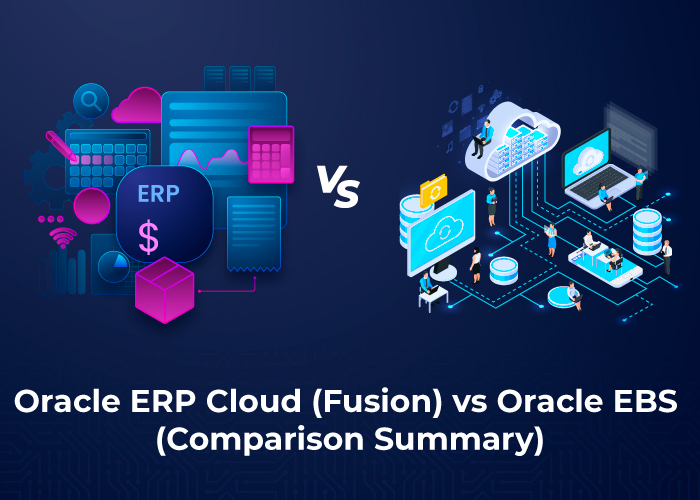
  • Oracle ERP Cloud (Fusion) vs Oracle EBS (Comparison Summary)

    Oracle ERP Cloud (Fusion) vs Oracle EBS (Comparison Summary)

    Oracle is one of the tech-colossal in administering the solutions for Enterprise business processes & customer relations. It has been an excellent practical choice for many large & mid-size organizations and now with Software-as-a-Service (SaaS) offering, makes it more attractive to startups. Well, Oracle applications have undergone various updates over the years in which Oracle Fusion applications and Oracle Enterprise-Business Suite (EBS) are two of the most popular Oracle business software platforms. 

    However, selecting the right one for the business needs can be proven challenging. This is especially true for the stakeholders and decision-makers that lack technical knowledge. Let’s examine Oracle Fusion applications versus Oracle EBS and should you opt for EBS R12 or Fusion applications? 

    Oracle Fusion V/s Oracle EBS R12

    Oracle offers two viable options, either upgrade to the latest EBS R12 (either 12.1.3 or 12.1.2) or switch to Fusion applications (Now as Cloud ERP). It’s easier for SAP users who have a single core ERP product to choose from but still, it is a dilemma for quite a few organizations to select the right decision. 

    Oracle has promised to make significant investments in Oracle EBS and has pledged to offer Premier Support throughout at least till 2032, with yearly updates and revamps. Being a part of Oracle’s continuous innovation model and part of the App’s Unlimited Initiative, Oracle EBS release 12.2 is the last major upgrade that EBS clients ever have to make.

    Now, listing the benefits of upgrading your EBS to release version 12.2X:-

    • The upgrade to R12.2 is direct, which makes the shifting process easy and seamless. Furthermore, you’ll be staying within your same instance platform, with no need to move to a completely new system, as it would happen if the decision was to move to Fusion applications. 
    • R12.2 offers advanced improvements, enhancements and strengthened security. Under Premier Support, Oracle EBS clients can rest assured that their instance will continue to receive the new updates, fixes, and security updates that maintain the systems and allow them to run optimally as well as securely. 
    • While upgrading to R12.2, no significant technological change is required. The learning curve is minimal and there is no need to adopt & incorporate the latest technology changes. 
    • Just like Fusion applications, R12.2 runs on Fusion Middleware. Thus, you can immediately enjoy the most valuable ERP functionality available as soon as you upgrade to it. 

    Here are some of the key aspects of Fusion that one should consider when comparing it against EBS R12.2:-

    • Oracle Fusion applications are positioned as the next-generation Business Application solutions by Oracle. It has a low cost of ownership and leads to faster ROI with standard architecture tools for setup and deployment modules. 
    • Fusion applications are built on service-enabled architecture and are full of SaaS models. Enterprise applications are easily integrated into a service-oriented architecture. 
    • Fusion applications are encompassed with best-in-class enterprise solutions acquired by Oracle. 
    • Fusion applications can run in a cloud computing environment or a company data centre and can be used across multiple areas including customer relationship management, human capital management, supply chain management etc. 

    Read more: Oracle ERP Cloud vs Oracle EBS Which is best

    Difference between Oracle EBS & Oracle Fusion for the Following Modules

    On the Basis of Comparison  Cloud Applications EBS Applications 
    Onhand Inventory Picture Provides a single inventory picture workbench for capturing and requesting transactions. To gather the complete inventory picture & transaction, multiple screens & drill downs are required.
    Inventory Lot Reassignment/ Correction Allows reusing of existing Lot number with a different item after disabling Lot number item combination Required data fix/miscellaneous transaction
    Inventory Transactions Based on Material Status Control It simplified control to restrict specific transactions based on material status. Status control is controlled using item attributes spread across multiple tabs. 
    Reserving Supply Against Demand Inventory reservations can be initiated directly from Supply or Demand (both current and future) Reservations could be created only from a demand.
    Product Recall Support recall notice for products Functionality not available.
    Shipment Transaction Functions Picking & Shipping transactions are moved from shipping executions to inventory roles. Picking and Shipping transaction were tied to Shipping Execution Responsibility
    Overpicking for Staging/ Processing Allows overpicking to bring inventory to staging area/ processing Over picking can be done upto a maximum of shipping tolerance
    Acknowledgement for Material Transfers It provides the ability to acknowledge material transfer using pick slip documents. The feedback for material transfer is not available. 
    Transaction Capture Using Scanning Devices No Oracle cloud solution available. Oracle has a Mobile Supply Chain Application (MSCA) which can be used for transaction capture.
    Controlled Miscellaneous Transactions Provides control on miscellaneous transactions through approvals.  Custom solutions to control such transactions through the approval process. 
    Budgetary Control Budgetary control and encumbrance accounting cloud can be used to monitor and control inventory transactions Inventory transactions were not subject to budgetary control/ encumbrance accounting
    Inventory Management Dashboard It has easily configurable interactive and actionable dashboards.  No standard dashboard available in application
    Default Lot and Serial Numbers Lot/ serial number can be defaulted from the supplier’s ASN/ ASBN while receiving Functionality not available.
    Integration with External Applications Integration available using Web Services and Oracle Integration Cloud Integration is only available using Oracle APIs and ETL applications.
    Reports Highly flexible reporting providing excellent data visualization are available using Oracle Transactional Business Intelligence (OTBI). Limited standard reports availability and requires development of custom reports


    • SCM Manufacturing
    On the Basis of Comparison  Cloud Applications EBS Applications 
    Work Order Transaction Processing MS Excel based templates have been provided Standard Templates are not available
    Work Order Operation Resequencing Production operator can now resequence operations during execution A work order always enforced completion of operations in a linear and sequential manner. 
    Enabling Manufacturing Process Both discrete and process manufacturing can be enabled for the same factory/plant Only one type of manufacturing process either Discrete or Process manufacturing, is associated with an Inventory organization.
    Standard Operation Yields This feature is not available in fusion applications to meet requirements of high tech industries Yields can be set up at individual standard operations in OSFM
    Error Fixing for Work order Imports End-user can identify and fix errors independently This feature in EBS requires applications support team to identify and fix errors individually
    Shrinkage This feature is not available in fusion applications Shrinkage factor can be set up at item level.
    Work Order Conversion MS Excel based templates have been provided Standard templates are not available in EBS.
    Product Geneology Advanced traceability with lot and serial genealogy from raw material to finished goods. Simpler lot genealogy is available.
    Item Structure Conversion MS Excel based templates have been provided Standard forms to key in the text manually.
    Work Definition Conversion MS Excel based templates have been provided Standard forms to key in the text manually.
    Real-Time Factory Insights The application integrates with factories using Machine Learning and IoT models. Highly intuitive This feature is not available in EBS
    Material Picking for Work Order Schedule the material picking request based on:- Partially picked order,Work order range, Work order operations and Hours behind.  Scheduled requests based on picking rules.
    Manufacturing Dashboard Easily configurable interactive and actionable dashboards No standard dashboard available in the application
    Reports Highly flexible reporting providing excellent data visualization are available using Oracle Transactional Business Intelligence (OTBI) Limited standard-reports availability and requires development of custom reports


    • SCM Cost Accounting
    On the Basis of Comparison  Cloud Applications EBS Applications 
    Cost Organization A single or group of inventories within same profit center business unit Always represents a single inventory organization by itself
    Valuation Structure Option to enable costing at granular levels The only option is to enable costing at the Inventory Organization level.
    Costing by Cost Book Multiple cost representations of same transaction is available using cost books Transaction can be costed using only one costing method configured at Inventory Organization level 
    Cost Profile Combination of valuation structure, cost elements and costing method that can be assigned to each item. Not applicable for discrete manufacturing.
    Cost Elements Unlimited cost elements can be configured and grouped under Material, Overhead, Resource, Adjustment, Profit and Inventory cost element types. Only Material, Material Overhead, Resource, Outside Processing, Overhead cost elements can be configured. 
    Cost Analysis Better cost comparison between one or more cost scenarios. The cost type comparison report is not as effective. 
    Expense Pools Expense accounts that can be absorbed as overhead costs. Resources and overheads had a single absorption account and no allocations.
    WIP Accounting Class This WIP accounting class feature has been replaced with transaction based account mapping. WIP transactions are costed using the accounts defined under WIP accounting class.
    Inventory Accounting/ Cost Groups This feature has been replaced with transaction based account mapping. Inventory transactions are cost using the accounts defined at inventory organization, subinventory and cost groups.
    Ability to Change Accounting Account mapping can be changed at any point of time Most of the accounts are frozen once transactions are recorded.
    Cost Import MS Excel based templates have been provided Standard templates are not available in EBS
    Reports Highly flexible reporting providing excellent data visualization are available using Oracle Transactional Business Intelligence (OTBI) Limited standard reports availability and requires development of custom reports
    Costing Dashboard User interactive and actionable dashboards are easily configurable No standard dashboard available in the application.


    • Order Management 
    On the Basis of Comparison  Cloud Applications EBS Applications 
    Order Orchestration Configure order fulfilment workflow using –

    • Steps
    • Dependencies
    • Process Planning
    • Change Management
    Workflow linked to Order Transaction Types determine order processing
    Pricing Configure Pricing Matrix using – Customer Profile, Pricing Segment & Pricing Strategies. 

    Price List on Sales Order determined by Pricing Matrix

    Without Advanced Pricing, limited functionality is available.
    Monitor and Manage Orders Configure Jeopardy Thresholds and Priority in Order Orchestration. Real-time summary dashboard for managing orders –

    • Orders on Hold
    • Orders Past Due
    • Orders on Backorders
    • Orders in Errors
    Here, it is managed through custom reports and manual processes.
    Order Capture Order Hub’ to consolidate Orders from various sources. Configure Pre and Post transformation rules to progress the Order to fulfilment flow in Order Orchestration.  Order import interface.
    Drop Shipment/ Back-to-Back Orders Recalculates schedule dates based on incoming supply  Need manual process to keep the dates aligned
    Credit Card Payments Connects with Oracle Fusion Payments. Compliant with the Payment Card Industry Data Security Standard (PCI DSS) It is very difficult to set up and maintain PCI DSS compliance. The customers preferred implementing 3rd party solutions and integrating it.
    Integration with External Applications Pre integrated with Oracle commerce. Integration available using –

    • Web services
    • Business events
    • Order import by FBDI template
    • B2B
    Integration only available using –

    • Order import
    • B2B
    • Web services
    Order Management Dashboard Easily configurable interactactive and actionable dashboards No standard dashboard available in application
    Reports Highly flexible reporting providing excellent data visualization are available using Oracle Transactional Business Intelligence (OTBI) Limited standard reports availability and requires development of custom reports


    • Product Data Management V/S Item Transfer 
    On the Basis of Comparison  Cloud Applications EBS Applications 
    Workflow Utilizes the advanced Oracle Cloud PLM workflow. Only the Engineering module provides basic approvals for change orders. 
    Data Access and Security Additional Attributes defined for various item classes can be used to manage Access and Security of items. This feature is only available for Item Attributes and not available for Item Structures, Work Definitions etc. Functionality to restrict attribute updates selectively is not available. Changes are controlled based on Master/ Child organization and item status.
    Mass Updates Browse and select items for mass updates, make changes online or using spreadsheets. Use Oracle Standard EBS interface tables for mass updates.
    Item Revisions Oracle fusion improved to support 18 character revision with effectivity based sorting. This allows only 3 character revision with alphanumeric sort
    Integration with External Applications Integration available using –

    • Web Services
    • Oracle Product Data Hub Cloud
    • Oracle Product Development Cloud
    Integration only available using –

    • Oracle APIs
    • ETL applications
    Product Data Management Dashboard Easily configurable interactactive and actionable dashboards No standard dashboard available in the application.


    • Advanced Pricing 
    On the Basis of Comparison  Cloud Applications EBS Applications 
    Pricing Profile for Customers Enabling creation of Pricing profiles based on similar buying characteristics.  Functionality not available. 
    Pricing Strategy Enabling creation of Pricing strategies through defining rules to achieve profitability goals for selling and pricing of an item. Functionality not available. 
    Cost List Additional charges can be used, forming part of the item cost under the following heads:

    Sales

    Service

    Freight

    Cost list is not available. 
    Pricing Matrix With pricing matrix, a combination of Pricing Profile, Segments and Strategy, number of price lists to be created and maintained is minimized This functionality is not available.
    Margin Calculation Based on the item cost consisting of cost elements and additional charges, margin calculation is performed Margin calculation based on Item cost and tax.
    Integration Performance Pricing engine calls can be made using the integration provided. API for getting the price has a robust performance.
    Integration with External Applications Pre integrated with Oracle commerce. Integration available using: –

    • Web Services
    • Business Events
    • Price List import by FBDI template
    • Price List Update by FBDI template

    B2B

    Integration only available using –

    • Price List Import using API
    • Price List update using API
    • B2B
    • Web Services


    • Logfire Warehouse Management System 
    On the Basis of Comparison  Cloud Applications EBS Applications 
    Logistics Transactions Although all the transactions (Inbound, Inventory movement, Outbound) are available through pre-built OIC integrations now Integrated with the Oracle EBS Inventory module.
    Stock Reconciliation Cycle count using LPN Location Cycle Count using stock locators
    Order Creation Sales orders to be processed through WMS need to be interfaced Integrated with the Oracle EBS Order management module. 
    Inventory Item Master Data Item specific to cloud WMS have to be interfaced Integrated with Oracle EBS Inventory module
    Reports The reporting in WMS Cloud is a full-featured business intelligence solution. Users can build interactive tabular reports, visualizations, and dashboards using intuitive, specialized designers Limited standard report availability and requires development of custom reports.
    Cost Groups This feature has been replaced with transaction based account mapping in Inventory Cloud. Accounting based on cost groups can be generated.
    Integration with External Applications Integration available using Web services, FBDI Templates Integration only available using: –

    • Order Import
    • B2B
    • Web services


    • Financials 
    • General Ledger 
    On the Basis of Comparison  Cloud Applications EBS Applications 
    Ease in Defining/ Usage of Chart of Accounts Introduces COA structure instance, based on common COA but each instance can have different accounting segments Only individual Chart of Accounts can be configured.
    Single Screen Journal Dashboard Provides work bench, combining multiple screens from EBS Switching through multiple screens was required
    Workflow Notification Workflow notifications content can be modified for Journal Approval process Functionality not available
    Period Close Provides single view dashboard giving insights into the Period Close Process No visibility was available in the close process
    Integrated Applications Enterprise Performance Management (EPM) which provides for Advanced Reconciliations, Eliminations, Consolidation and Period Close Commonly integrated with Hyperion.
    Financial Dashboards Uses Infolets and Infotiles leveraging Oracle Transactional Business Intelligence (OTBI). This functionality was not available
    Reporting Enhanced reporting through Financial Reporting Center with excel compatibility using Smart View Provided report generation using Financial Statement Generator.


    • Accounts Payable 
    On the Basis of Comparison  Cloud Applications EBS Applications 
    Invoice Creation User friendly invoice creation process via spreadsheet EBS applications used Desktop Integrator
    Cross Currency Payments Currency in which payables invoice can be paid is not dependant on the currency in which the invoice is entered Invoice currency and payment currency are required to be the same for processing payments.
    Importing Invoices with Attachments Invoices can be imported with supporting attachments with details about the work performed, that can be used with workflow approval notifications This functionality not available
    Automated Invoice Imaging using Intelligent Character Recognition (ICR) Inherent Supplier Invoice Imaging feature is supported which provides automated capture of selected attributes from the invoice image in order to facilitate seamless processing and approval No integrated invoice imaging feature.
    Shared Service Center Model for Invoice and Payments Invoice of one business unit can be paid by a payment from another business unit This feature is not available in EBS.
    Open Invoice Conversions MS Excel based templates (File Based Data Import) have been provided Standard forms to key in the text manually
    Payables Dashboard User interactive dashboards and work areas with recommended daily actions and access to perform transactions can be easily configured No standard dashboard available in the application.
    Reporting Highly flexible reporting providing excellent data visualization are available using Oracle Transactional Business Intelligence (OTBI) Limited standard report availability and requires development of custom reports.


    • Accounts Receivable 
    On the Basis of Comparison  Cloud Applications EBS Applications 
    Processing payments received from customer using Smart Receipts Process to automatically match Receipts based on match recommendation score derived from matching rule weights No Smart Receipt feature in EBS, only a simple lockbox was available.
    Enhanced Auto Accounting for Bills Receivables Flexibility to derive accounts based on auto accounting rules for Factored (Brokered), Remitted and Unpaid bills receivable Only one option for Bills receivable to derive accounting is available in EBS
    Transaction Delivery Send printed documents using customer email options No standard functionality available in application
    Review Customer Account Details or Balances One screen to review customer transaction activities and balances across multiple business units Required switching between operating units even with MOAC
    Open Transactions and Receipts Conversions MS Excel based templates (File Based Data Import) have been provided Standard forms to key in the text manually or going through extensions.
    Reporting Highly flexible reporting providing excellent data visualization are available using Oracle Transactional Business Intelligence (OTBI) Limited standard reports availability and requires development of custom reports
    Receivables Dashboard User interactive dashboards and work areas for billing, receipts and revenue with recommended daily actions and access to perform transactions can be easily configured No standard dashboard available in the application.


    CloudShine is India’s Best Oracle Fusion Training & consulting company that offers competent and professional training in Fusion applications. With practical and theoretical training, we have offered corporate training for more than 50+ organizations & provided training to more than 500+ consultants. To learn more, contact us @ +918908123123 (or WhatsApp) or write to inquiry@cloudshinepro.com. Our team will get back to you shortly with the detailed information about the training.

  • Oracle ERP Cloud vs Oracle EBS Which is best

    Oracle ERP Cloud vs Oracle EBS Which is best

    Oracle ERP Vs. Oracle EBS

    Oracle ERP software is scalable and easy to integrate with other applications. In addition to scalability, cloud solutions provide a single, integrated solution for all your business needs. Here, we’ll compare Oracle Cloud ERP and Oracle EBS.

    For on-premises solutions, Oracle EBS is a more flexible option. It offers a fully secure, flexible environment with fewer risks and costs than on-premises ERP. Additionally, Oracle ERP Cloud is accessible from anywhere, at any time, and from any mobile device. In addition to being more secure, it’s also more customizable. For remote users, Oracle ERP Cloud’s mobility allows remote access.

    What is Oracle ERP Cloud, and How Does it Work?

    An ERP Cloud is an application that is hosted on the cloud and based on the same database as the on-premises version. The difference between the two is that the cloud solution is flexible, scalable, and receives regular software updates. In contrast, an on-premises system requires periodic upgrades, installation, and specialized services. In addition, Oracle ERP Cloud doesn’t require periodic updates as an on-premises solution does.

    A cloud-based ERP solution is easily scalable, easy to integrate with other cloud services, and supports massive data transfer. In addition, Oracle ERP Cloud reduces maintenance costs, as no IT staff is needed to create connections. This makes it ideal for businesses that use many applications. And with its centralized database and modern, intuitive interface, the new ERP system can be used from any device.

    What is Oracle EBS, and How Does it Work?

    The Oracle EBS suite of enterprise applications is a comprehensive suite of business applications that helps large companies introduce a complete suite of enterprise applications. These products include the HR module, iExpenses module, the supply chain management module, and the order entry module. In addition, organizations can receive support from Oracle for security patches and modernization. The Oracle support team can also provide specialized training and technical support.

    Oracle EBS is designed to make it easy for large companies to introduce a full suite of enterprise applications without requiring a huge investment. As an added benefit, Oracle EBS also comes with Lifecycle Management, a comprehensive list of functionalities, and the support and security patches from Oracle.

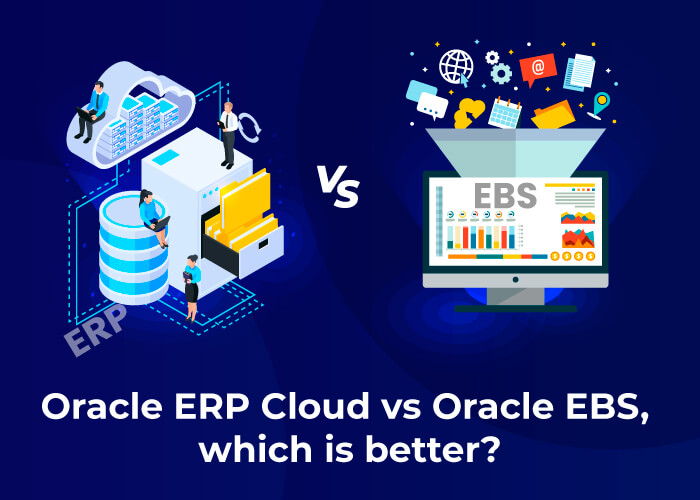
    Oracle ERP Cloud vs Oracle EBS, which is better?

    Comparing Oracle ERP Cloud and EBS is a difficult task. Both of these systems have their advantages and disadvantages, and you should consider your business needs before making a choice.

     1. Cost-effectiveness

    Oracle ERP Cloud costs less than Oracle EBS. According to Nucleus Research, on-premises ERP is five times more expensive than a cloud-based solution. Those costs include hardware, software, human resources, and training. Additionally, the Oracle cloud applications are better at data consolidation and analysis, helping you make sense of your business finance. With the ease of integration, companies can adopt these solutions faster and more efficiently.

    As a cloud-based service, you don’t have to worry about the cost. Compared to the on-premises versions, Oracle ERP Cloud requires minimal IT effort, and it is less expensive. The best thing about Oracle ERP Cloud is that it is available from anywhere and works on any device, including mobile phones.

    2. Scope

    The Oracle ERP Cloud offers better scalability, lower cost and faster time to value. The Oracle EBS offers end-to-end integration with social tools and other technologies. Oracle ERP Cloud is cloud-based, meaning that all users are connected by a device with an internet connection. The Oracle EBS is typically hardwired into the in-office computer, which presents a major barrier to remote working capabilities. 

    3. Value for time

    If you’re looking to reduce the IT time required for an on-premises ERP deployment, you can opt for Oracle ERP Cloud. This software uses a cloud infrastructure, allowing you to leverage the capabilities of partners and use the capabilities of partner services to reduce costs. On-premises versions of Oracle EBS require significant IT effort and are not suitable for businesses with a flexible work environment.

    4. Easily accessible

    Oracle ERP Cloud applications can be accessed with the help of a browser at any place and anytime. Therefore, allowing it to have greater flexibility for working remotely. Oracle EBS, on the other hand, offers web-based clients. Its users need a mobile gateway or Virtual Private Network (VPN) if they want to access outside the office, as their servers are deployed on LAN.

    5. Infrastructure

    With Oracle Cloud Infrastructure, you can deploy the best solutions for your business needs by leveraging partner capabilities. There is a limited number of application integrations possible with Oracle EBS.

    6. Automatic upgrades

    Oracle ERP cloud version, updates are automatic and can be performed anytime. This makes the cost of updating software much lower and less disruptive than with an on-premises version. With Oracle EBS, updates must be performed manually, which requires more time and effort.

    7. Integration and Scalability

    As a cloud-based solution, Oracle ERP Cloud can integrate with a broad range of applications, including third-party SaaS solutions. It also has a robust architecture capability. In contrast, Oracle EBS is typically hardwired into in-office computers, which creates a barrier to remote work. Although both ERP solutions have advantages, the cloud-based version is much easier to integrate than its on-premise counterpart. It provides seamless data synchronization and a variety of features that the on-premise version doesn’t.

    8. User Interface and Mobility

    While the EBS platform features robust security and ease of use, it has become a ‘legacy’ system with fewer updates. Oracle ERP Cloud is cloud-based and can be implemented quickly and easily. The application can be updated continuously and requires a single data centre. This reduces IT costs and disruption. Mobile applications exist for Oracle EBS, but they are limited in their actions, and additional configuration is needed for authenticating and accessing.

    9. Architecture

    Cloud-based Oracle ERP provides seamless application integration and secure architecture. It is difficult to integrate SaaS into Oracle EBS, which requires the IT department’s assistance to build and design the integrations.

    10. Maintenance

    IT departments can focus on their core competencies as they no longer need to handle the updates and maintenance manually. The Oracle ERP Cloud infrastructure handles all the maintenance, upgrades and updates. Update deployments and upgrades to fresh releases are time-consuming and costly and require the IT department to devote a greater amount of time and effort.

    11. Licensing

    Oracle ERP Cloud requires no upfront licensing fees and has a lower maintenance cost. Costs associated with Oracle EBS licenses and maintenance are higher.

  • Celebrating a milestone: Oracle completes its move to Fusion Cloud ERP

    Celebrating a milestone: Oracle completes its move to Fusion Cloud ERP

    In today’s day and age, business transformations have become imperative. Every organisation has certain goals and to constantly meet evolving customer expectations, innovation and technological upgrades are necessary. Just like any other organisation, Oracle has successfully achieved end-to-end automation of its processes, ranging from Human Capital and Supply Chain Management to Payroll, Finance, Sales, Recruitment etc. It has also migrated the Order-to-Revenue systems to Oracle Fusion Cloud ERP. 

    If you are keen to learn more about this process, Oracle ERP cloud training online can be extremely useful. 

    Highlights of the transformation timeline 

    The collaborative effort of IT and business teams made the migration efficient and undisruptive. With a 4-step analyse, plan, test and launch method, the transformation could be completed on time. The first phase of Oracle Fusion Cloud ERP was implemented in January, 2018. It helped to drastically modernise the expense processes. 

    By FY20-21, it helped to release earnings and swiftly close the books despite the challenges posed by the pandemic. To learn more about Oracle Fusion ERP applications, professionals can also take up a short training on Oracle Fusion Instance Access. Like Oracle, other organisations also can benefit from business transformations powered by Oracle applications. 

    The value of Order-to-Revenue in Oracle Cloud

    Order-to-Revenue migration enabled Oracle to integrate systems across the business. With end-to-end solutions, efficiency of teams increases. Visibility of processes also improve dramatically and it leads to the achievement of the following:

    • Significantly improves the coordination between channels and fulfilment sources
    • Enables faster execution of orders
    • Fail-to-pay automation
    • Better tracking and insight into customer actions and requirements
    • Increased visibility of actionable items on the Collections dashboard

    It also improved customer experience, resulted in quicker transactions and reduced paperwork. Order creation and fulfilment also became quicker. To get similar results, many companies are relying on Oracle ERP Cloud training online as an efficient method to implement the entire suite of Oracle applications that aid business transformation. 

    Putting it all together

    Oracle strives to constantly redefine business transformations with agility and innovation. Taking into consideration the rapid changes in the business environment, Oracle anticipates change and addresses issues to deliver better outcomes. The transformation has not only resulted in end-to-end integration of the business on the cloud, it helped them to further improve best practices and lessons learnt during the process. The lessons were shared with product teams as well as customers to help them take their next steps towards a transformative journey. 

    If you too are looking to embark on a journey of business transformation, Oracle Fusion Instance Access training for the employees can be a stepping stone in the right direction. It can equip people with the necessary tools and knowledge to implement changes that augur well for business growth and success.
    If you are looking around for an Oracle cloud training online program to up-skill, give us a call right away!

    Please call or whatsapp us @ +91-8908-123-123  or email us @inquiry@cloudshinepro.com

  • Oracle emerges as a winner of the 2021 Fast Company Best Workplaces for Innovators award

    Oracle emerges as a winner of the 2021 Fast Company Best Workplaces for Innovators award

    Oracle has recently been honoured with the ‘2021 Fast Company’s Best Workplaces for Innovators Award’. It encouraged the company’s ability to foster a workforce that strives to innovate, discover and explore new products, processes as well as new ways of doing business. Oracle continuously aims to uplift its employees with better methods of engagement that nurture creative thinking and innovation. 

    Oracle Cloud consultants around the world continue to inspire companies and people to apply similar thoughts to their work processes. To create industry-ready professionals, training institutes are also offering adequate training. 

    About CloudShine Pro

    CloudShine Pro is one of the leading institutes offering different types of Oracle Cloud Training Courses. Its comprehensive suite of training programs is designed for professionals looking to improve their career prospects. The company specialises in offering self-paced learning that allows students to grasp concepts and practically employ them in real-life situations. 

    Oracle Fusion Training modules offered by CloudShine are meticulously planned to provide the perfect blend of classroom training and practical application. Here is a list of courses offered by the institute:

    • Oracle Fusion Financials Training
    • Oracle Fusion HCM Training
    • Oracle Fusion Integration Cloud Services Training
    • Oracle Fusion Manufacturing Training
    • Oracle Fusion Order Management Training
    • Oracle Fusion Procurement Training
    • Oracle Fusion Product Management Training
    • Oracle Fusion SCM Training

    These courses are suitable for professionals as well as students. Depending on their area of expertise and their educational background, students can choose the most appropriate training. CloudShine also offers corporate training, whereby employees are given Oracle Fusion Training and are prepared to make a mark in an extremely professional environment. 

    The hands-on training proves to be extremely beneficial for people with limited or no experience in Oracle Cloud operations. As part of the corporate training process, CloudShine turns interns or other employees with no knowledge of fusion ERP into experts. More than 50 organisations have enrolled their employees in CloudShine’s targeted training programs. With a dedication to train students as per organisational requirements, the experienced trainers have so far offered their services to over 500 Oracle Cloud consultants in the industry. 

    Demo Sessions

    CloudShine also offers Demo Sessions to students who are interested in the courses. You can book a convenient timing and meet an Oracle Cloud expert to discuss your learning goals. They will help you to understand the process and provide detailed insight into the course module. 

    Key Differentiating Factors

    • Team of experienced trainers
    • Self-paced and instructor led training sessions
    • Unlimited access to course videos for 1 year
    • Opportunity for flexible learning
    • Case study based assignments
    • Placement support and referrals to MNC companies

    CloudShine is dedicated to providing learning that offers utmost satisfaction. Its certification training can be easily completed with the comprehensive resources delivered by the institute. Complete Oracle Fusion Apps training today to excel in the professional arena. 

    From Cloudshine we have trained more than 500 consultants through 45 batches in the last 3 years and provide corporate training for 50+ organisations.

    Our structured training, assessment, and practice support will help you or your company employees to become industry-ready within 60 hours of training.

    Please call or whatsapp us @ +91-8908-123-123  or email us @ inquiry@cloudshinepro.com

  • Workday HCM Tutorial

    Workday HCM Tutorial

    Workday is being largely used in the professional arena and interest about this technology continues to mount. The financial and human capital management software allows organisations to efficiently accommodate changes. It is a flexible solution that offers real-time insights and helps to make sound decisions. 

    Who should learn Workday?

    Anyone who is ready to deliver extraordinary results in a fast paced professional environment can learn Workday. But, people from the HR background tend to have an upper hand. People with knowledge of Oracle Fusion HCM training can also implement Workday in their organisations.

    Let’s take a look at some of the important factors that are necessary to master Workday. 

    1: Research about the topic

    You need to gather knowledge about the technology before using it. A basic idea about its features and users can go a long way in mastering Workday. 

    2: Prerequisites

    Although there are no specific requirements for learning Workday, knowledge of HTML, EIB etc. is useful for understanding and implementing advanced modules of Workday. 

    3: Search for Blogs and Videos

    To gather insight about the process as well as the technology, check out a few blogs and videos. Even if you cannot rely on it completely as an authentic source of information, it is useful for a basic understanding. Oracle HCM Cloud Certification holders can easily grasp the concepts and learn Workday quickly. 

    4: Duration to learn Workday?

    Reading a few documents or just preparing for it, does not make you a pro with Workday. Along with the theoretical knowledge, you need to practice simultaneously. With regular practice, you can learn it within a month. 

    5: Is training required to learn Workday?

    For working professionals, a short online course can be quite useful. It helps to manage time efficiently and enables students to practice daily. People enrolling for Oracle Fusion HCM training can also benefit from the program. 

    6: Interview Preparation

    After completing the training, you can start applying for appropriate job openings. A good understanding of the Workday technology and the ability to practically apply it can help you tide through interviews.

    7: How do I get Certification?

    Companies that partner with Workday are eligible for offering certificates to successful candidates.  

    8: Prospectus or Scope of Workday

    Companies continue to look for employees who can enhance efficiency. Therefore, candidates with Oracle HCM Cloud certification or Workday experience have good prospects in the professional arena. 

    9: Payscale

    In India, a Workday professional can expect a package of somewhere around Rs 15 lakh. However, it varies on the basis of your experience and the company you choose to work for. 

    10: Workday Partnered companies

    Some of the companies that partner with Workday are as follows:

    • PWC
    • Deloitte
    • Accenture
    • IBM
    • Capgemini 

    Workday is continuously gaining popularity and if you are looking to enhance career prospects, start your training now!

    Cloudshine has trained over 500 consultants in 45 batches over the last three years, and we have offered corporate training to over 50 organisations. Our structured training, assessment, and practise support will assist you or your company’s employees in becoming industry ready in as little as 60 hours.

    Our structured training, assessment, and practice support will help you or your company employees to become industry-ready within 60 hours of training.

    Contact us or whatsapp to +91-8908-123-123  or write to inquiry@cloudshinepro.com

  • How Supply Chain Disruptions Are Ruining Our Lives, And What You Can Do About It

    How Supply Chain Disruptions Are Ruining Our Lives, And What You Can Do About It

    Over the last year, the Covid-19 pandemic has brought about unprecedented challenges. Supply chain disruptions have also been extremely common. It has affected the supply of regular items and has caused a lot of hardships for people.

    Every company requires a streamlined supply chain to run its operation effectively. Oracle Supply Chain Management training enables professionals to implement effective methods for ensuring a steady flow of goods across the organizational network. As a result, modern companies are hiring supply chain experts to avoid an impact on their bottom line.

    Will It Ever End?

    While supply chain constraints have hit hard, it has also created awareness about the importance of simplifying the process. Customers have become aware of the process and companies are taking note of supply chain hazards. They are, therefore, devising methods to address consumer concerns and solve supply chain issues. Oracle Fusion SCM has also emerged as an efficient solution for companies seeking to automate and streamline the process.

    Adjust Supply Chain Planning

    In order to solve the imminent issues, adjustments in the supply chain are required. As consumers continue to modify their buying behaviour and start purchasing items in bulk or pre-order products, supply chain planning must also undergo similar changes. As a result, companies are also making their supply chains suitable for retail shopping and bulk orders. 

    Improve Inventory Management

    To improve supplies, it is also essential for companies to focus on inventory management. Efforts to automate the process will increase visibility and offer better control of materials and costs. With proper supply chain management, it can optimise costs and help to deploy advanced methods for implementing replenishment policies. 

    Automate Order Management

    Automated order management processes are the way forward. Oracle Fusion SCM can be deployed to manage orders through a single platform and automate processes ranging from procurement to after-sales care. Besides, companies have better control over the process. 

    Streamline Logistics

    To deliver products efficiently, logistic support is essential. If the process is automated through AI, companies can keep track of transportation networks, manage fleets and help to streamline logistics facilities.  

    Focus on Smarter Supply Chains

    Companies are now focusing on smarter supply chains and implementing intelligent tracking systems that provide end-to-end visibility. It not only helps to solve issues in a timely manner, it can also predict interruptions in the supply chain. 

    How can Oracle Help?

    Oracle Supply Chain Management has tools that facilitate brands to fulfil customer expectations. With its comprehensive suite of tools, it can effectively automate and manage inventory, logistics, order management and other processes. Therefore, Oracle has opened a new avenue of success for companies looking to simplify supply chain management. 

    Conclusion

    Oracle supply chain management training has emerged as a useful process for training new-age professionals. Companies continue to hire experts to seamlessly manage supply chains and therefore, the demand for online courses in supply chain management is gaining popularity.

    If you are looking around for an Oracle cloud training online program to up-skill, give us a call right away!

    Please call or whatsapp us @ +91-8908-123-123  or email us @inquiry@cloudshinepro.com

  • Unlocking the keys to continuous innovation: Takeaways from the Oracle Cloud SCM Virtual Summit

    Unlocking the keys to continuous innovation: Takeaways from the Oracle Cloud SCM Virtual Summit

    Supply chain management is one big concern for businesses across the globe. Fortunately, the tech biggies like Oracle have been addressing the concern through technology-led solutions and trends. At the recent Oracle Cloud SCM Virtual Summit, the experts acknowledged the growing SCM challenges, especially when the world is getting out of the pandemic phase. 

    Organisations of all sizes need to rethink and restructure how they manage supply chains to not just serve their existing markets, but also extend their limits to the new ones. It should include everything from extensive deployment of Oracle’s cloud-based SCM to more investments in Oracle Supply chain management training. 

    Continuous Updates

    The biggest advantage of Oracle cloud applications is its flexibility. It can be easily configured to meet the requirements of an organisation. It can also be modified to accommodate constant innovation and keep pace with changes in the business environment. As Oracle continues to reimagine new ways of doing business and adding efficiency to operations, Oracle Cloud SCM certification is helping professionals to build new capacities. 

    Oracle maintains a strong connection with customers and takes regular feedback on applications. Based on their observations and experiences, various product enhancements and upgrades are planned. It, therefore, helps to create products that are extremely useful for organisations. 

    Power of Sustainability

    The idea of running sustainable businesses now runs deep in organisational values. Every company is looking to inculcate methods that drive sustainability across its operations. With regard to the supply chain, it is important to take note of procurement and packaging policies. If companies undertake measures that reduce their carbon footprint, minimise energy consumption and reduce waste at the end of the product lifecycle, sustainability measures can be effectively practised.

    Oracle strives to embed sustainability in all its operations and is exploring ways to incorporate sustainability endeavours into its products. It is also believed that Oracle supply chain management training will play a crucial role in supporting the sustainability drive. 

    Smarter Manufacturing

    Manufacturing techniques are evolving at a rapid pace and Oracle is playing its part in incorporating innovative ideas in every aspect of organisational operation. With the help of Cloud technology, it is also supporting smart manufacturing facilities. Powered by Artificial Intelligence, Machine Learning and Robotics Automation, Oracle’s manufacturing solutions are smarter than ever before.

    Oracle’s IoT Applications enable smarter production and asset monitoring. It not only helps to predict machine failures but, also empowers companies to schedule timely maintenance, gather insight, avoid expensive downtimes and readjust production schedules. Large as well as small enterprises are faced with immense competition and it has, therefore, become necessary to proceed towards smarter manufacturing facilities that can offer seamless support to supply chain management. 

    Conclusion

    To benefit from Oracle’s Supply Chain Management products, companies need to hire professionals with Oracle Cloud SCM certification. It ensures seamless operation and efficient utilisation of resources across the organisational vertical.  

    Cloudshine has trained over 500 consultants in 45 batches over the last three years, and we have offered corporate training to over 50 organisations. Our structured training, assessment, and practise support will assist you or your company’s employees in becoming industry ready in as little as 60 hours.

    Our structured training, assessment, and practice support will help you or your company employees to become industry-ready within 60 hours of training.
    Contact us or whatsapp to +91-8908-123-123  or write to inquiry@cloudshinepro.com