Quick takeaway: If you need employer‑recognised certification and ongoing product updates, follow Oracle University’s learning subscription; if you need live‑instance practice, mentorship and placement help, choose a practical third‑party like CloudShine. This guide lays out which path fits your role, the certification roadmap, realistic costs, and sample 30/60/90 plans so you can enroll with confidence.
What you’ll get: a one‑line decision rule, role‑mapped certification sequence, cost/format comparison, realistic study timelines, lab exercises you can complete this week, an exam prep checklist and immediate next steps.
Official vs third‑party training — the quick decision
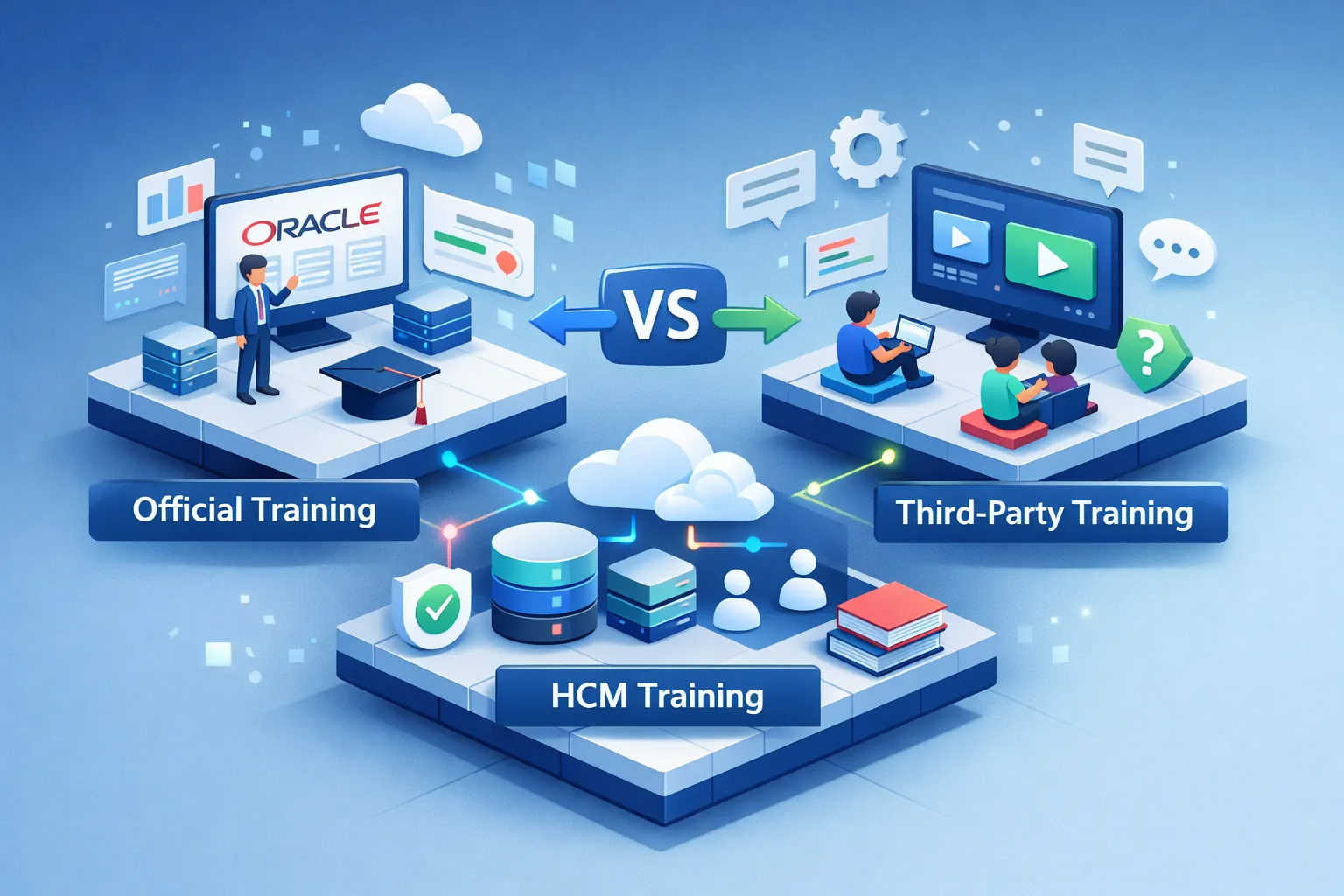
Takeaway: Oracle University = official product depth and continuous updates; third‑party providers = job‑ready, implementation‑focused practice and placement support.
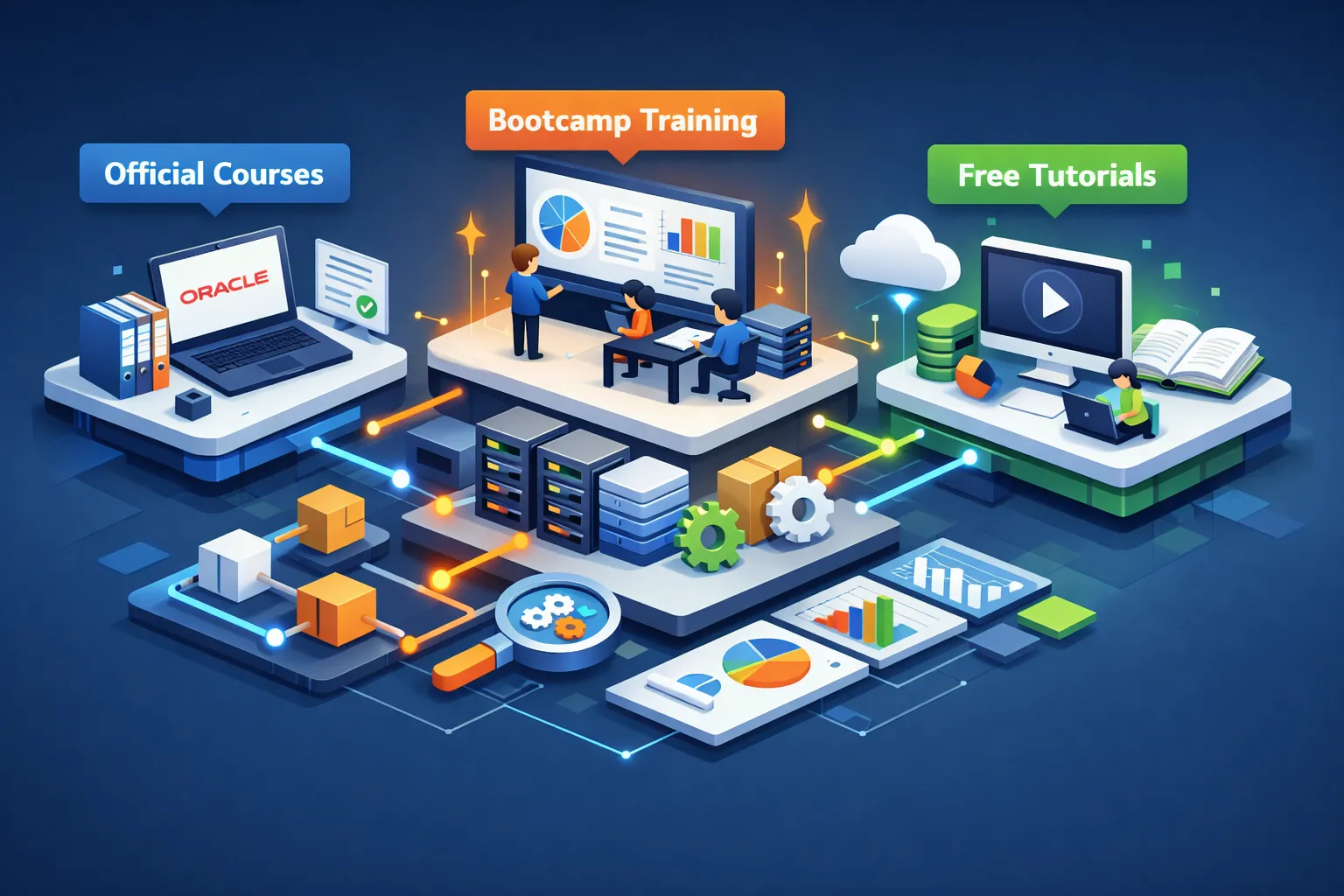
Oracle’s learning subscription is product‑centric: blueprints, updated exams, and official labs tied to MyLearn. It’s the right choice if your employer values Oracle University badges or you need guaranteed access to the latest product content. For context on Oracle’s full migration to Fusion Cloud ERP, see our post celebrating Oracle’s move to Fusion Cloud ERP. Third‑party providers focus on real projects, mentor feedback and interview prep — they matter when you must demonstrate live configs and implementation experience.
CloudShine spotlight: We structure training around live Fusion instances and real business cycles. Our 60:24 practical model (60 hours instructor‑led, 24+ hours of lab) forces you to produce artifacts — GL setups, P2P flows, OTBI dashboards — that show up on resumes. For many pivoters and early consultants, that hands‑on evidence is the fastest route to an interview.
Decision checklist (quick scan)
Budget: lower tolerance → self‑study/subscription; higher → instructor‑led with placement.
Time to hire: need a job in 2–3 months → third‑party practical path; longer runway → Oracle subscription.
Live labs: essential → third‑party or paid Oracle lab tiers.
Employer recognition: matters → include Oracle University badges in your plan.
Actionable one‑line rule: If you already have ERP experience, start with Oracle’s Foundations + the relevant module exam; if you lack hands‑on evidence, pick an instructor‑led CloudShine path with live instance practice.
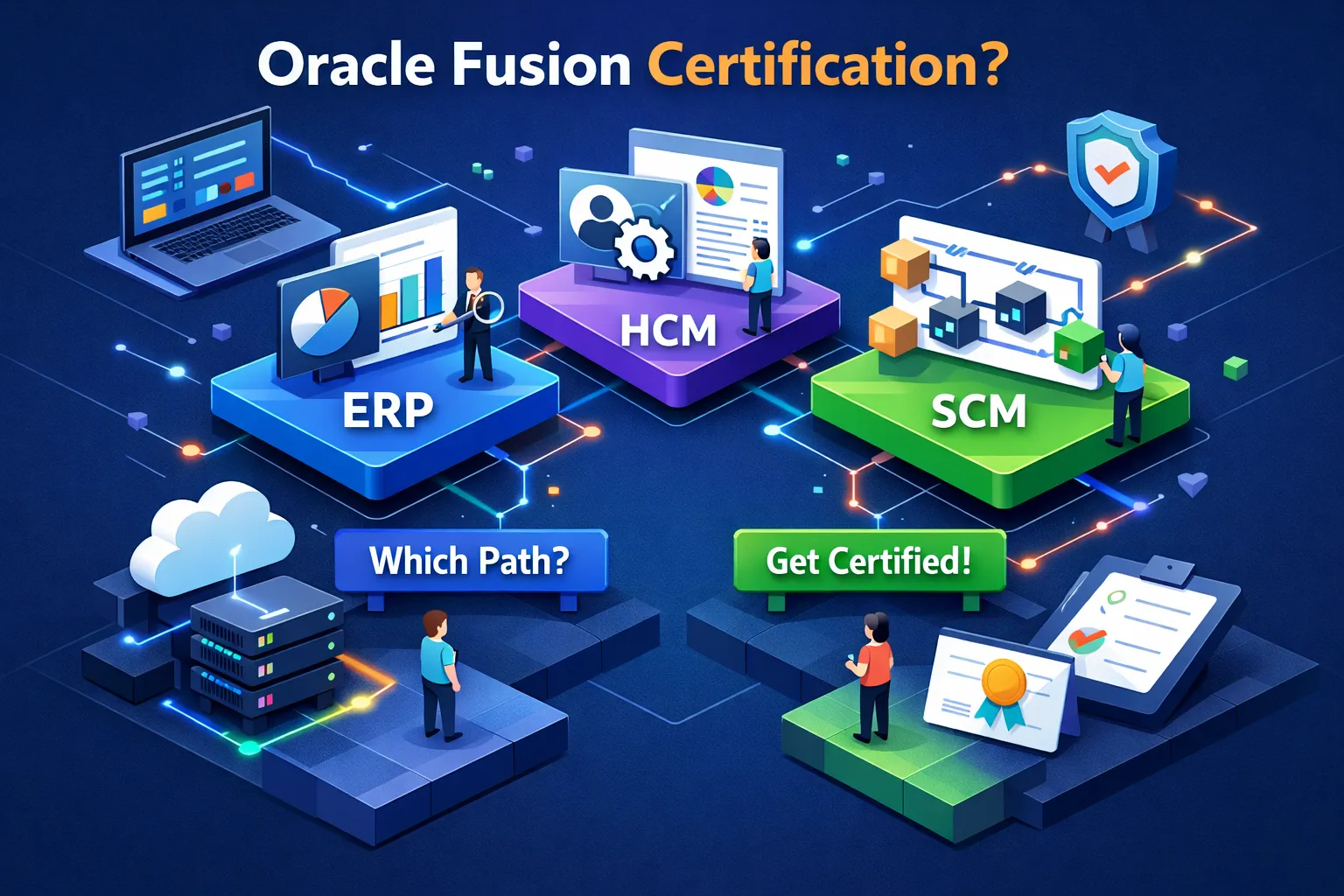
Certification roadmap by role: ERP, Financials, HCM and SCM
Takeaway: Follow a foundations→core→implementation progression. Foundations first, then module mastery, then implementation professional or specialty topics (reporting/integration/AI).
Financials / ERP: Start with Foundations (Associate). Then General Ledger (core anchor — 1Z0‑1054‑YY), followed by Accounts Payable (1Z0‑1055‑YY) or Accounts Receivable (1Z0‑1056‑YY). After core modules, pursue an Implementation Professional badge and OTBI/BI Publisher reporting skills.
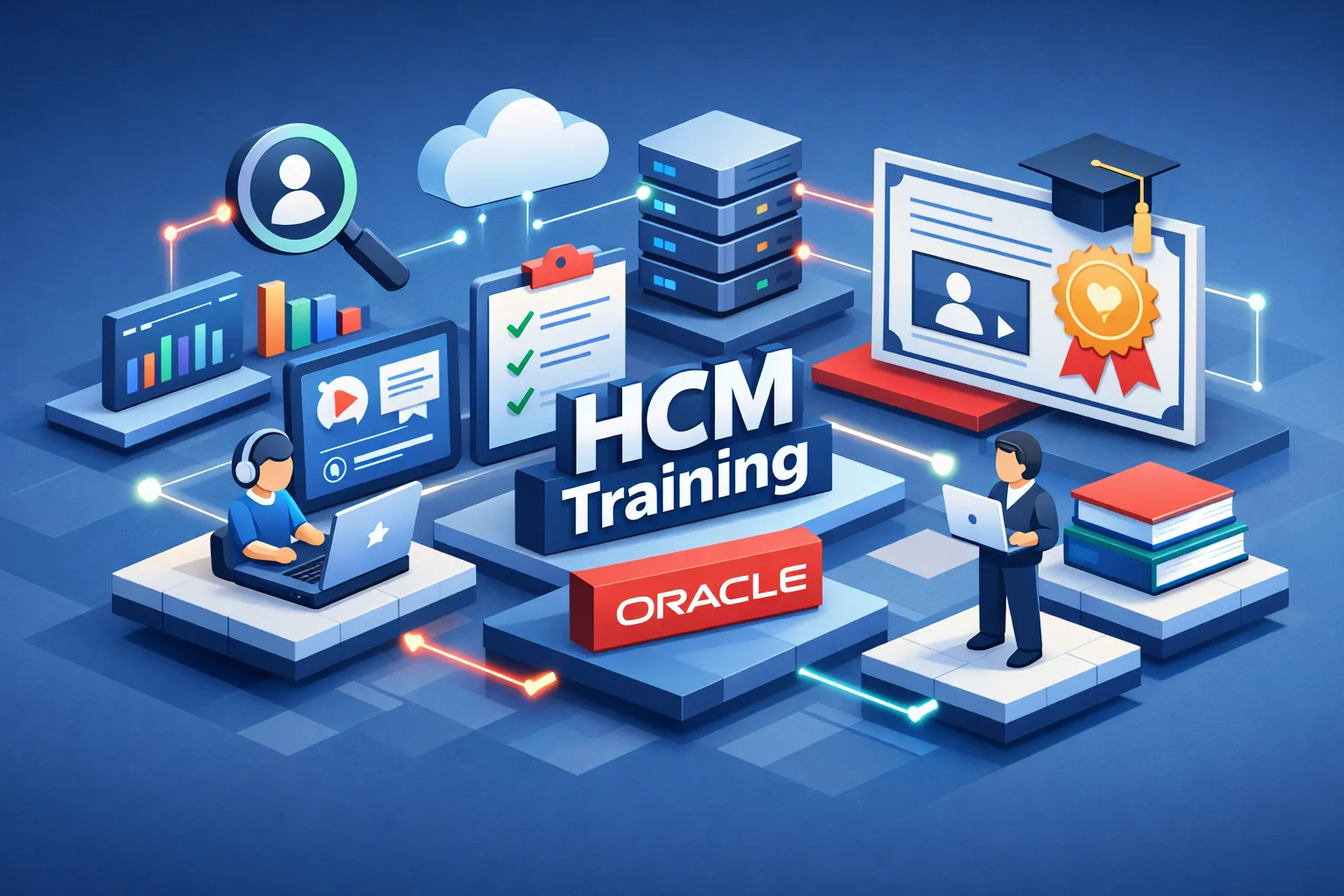
HCM: Foundations → Core HCM setup → Payroll/Time → Implementation Professional → AI Agent Studio or integration topics for advanced roles. For a deeper look at employee and HR capabilities, see our article on the benefits of Oracle Fusion Human Capital Management.
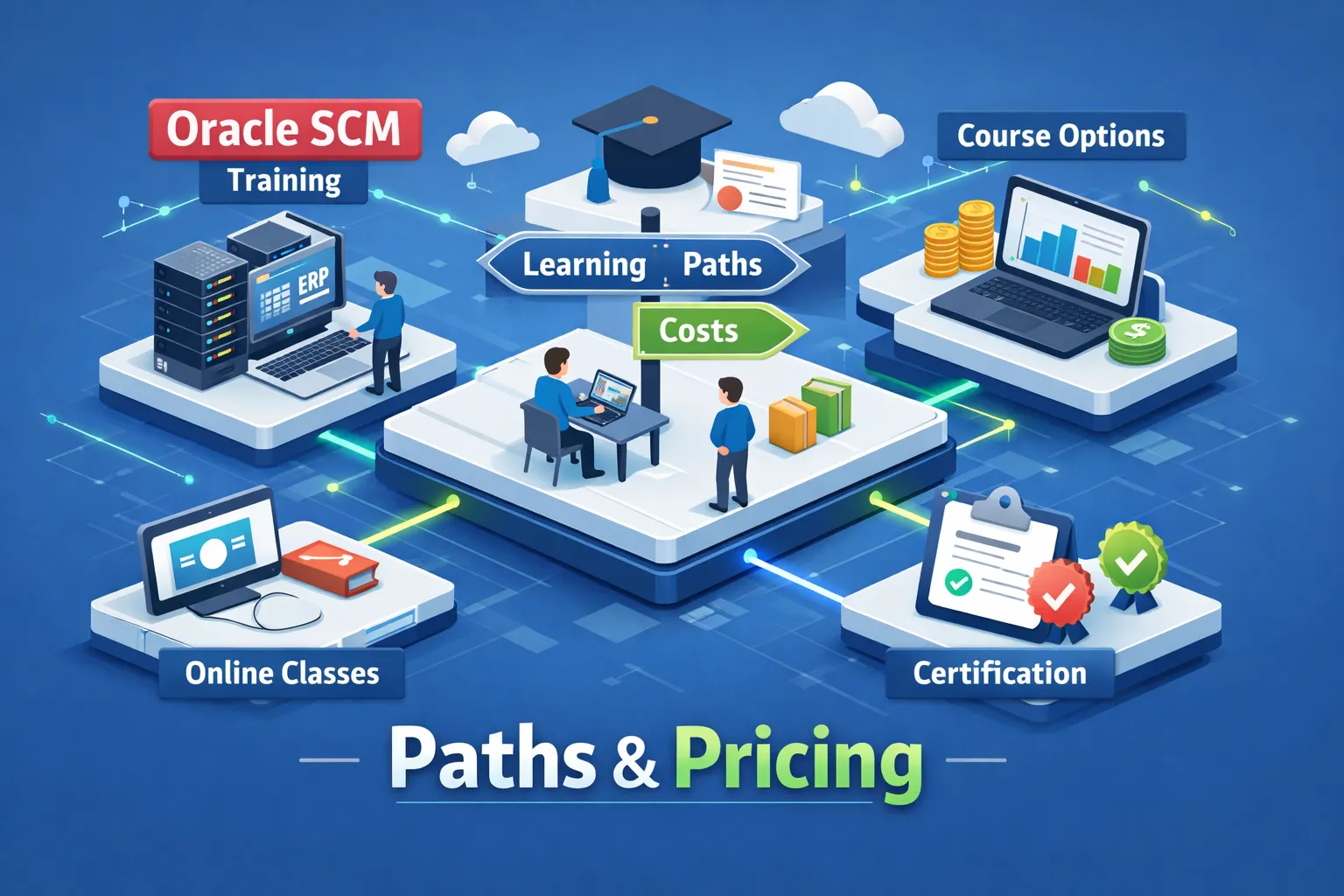
SCM: Foundations → Procurement / Inventory / Order Management → Implementation Professional → integration and process orchestration patterns.
Exams are usually online proctored multiple choice, sold and scheduled through Oracle MyLearn — see Oracle’s certification overview for current pathways and blueprints. Oracle periodically retires and updates exam codes; always verify the current codes before you book. No strict prerequisites for Foundations; implementation exams assume hands‑on practice.
Sequencing by job target: a functional consultant path is Foundations → GL → AP/Procurement → Implementation Professional (6 months of steady study and labs). An integration developer would add REST/OIC labs and an AI Agent Studio specialisation (4–6 months focused study).
Practical starter plan (this week): pick your role, choose Foundations or GL, schedule 6–10 lab hours this weekend to build a Chart of Accounts and post a test journal.
Costs, formats and time estimates — budget and delivery tradeoffs
Takeaway: Oracle University gives official currency and updates; expect subscription + paid lab tiers and exam fees. Third‑party providers add instructor time and placement — higher cost but faster employability.
| Provider | Format | Typical Costs (anchors) | Timeframe / Notes |
|---|---|---|---|
| Oracle University | Self‑paced + learning subscription, official labs | Lab tier ~$29/mo or $299/yr; exam attempts ~US$245 | Flexible; best for official badges and continuous access |
| Third‑party (self‑paced) | Subscriptions (videos + optional labs) | Examples: ~$18–$20/mo (annual) | Lower cost, limited live mentoring |
| CloudShine (instructor‑led) | Live instructor sessions + live Fusion instances + placement cell | Contact CloudShine for current tiers; blended packages available | Project‑based, demo/placement support, 60:24 practical balance |
Sample budgets (quick math): self‑study = $299/yr labs + $245 exam ≈ $550 first year. Instructor‑led with placement = course fee (varies) + exam + extra lab months; plan for 2–3x the self‑study budget when accounting for mentor time and placement support.
Three‑line budget template (paste into notes):
Course fee: $____; Lab access: $____/mo or $____/yr; Exam attempts: $245 x ___; Contingency (extra month lab/mentorship): $____.
Always verify current Oracle University pricing and published exam fees; Oracle University has a helpful post on what it costs to get Oracle certified which describes common fee items and subscription choices.
30/60/90‑day study plans and hands‑on lab exercises
Takeaway: Two practical itineraries: Beginners focus on UI, GL basics and a P2P capstone; Experienced folks concentrate on migrations, integrations and deployment runbooks.
Beginner 30/60/90 (2–3 hrs/day): 30 days — Foundations modules, UI navigation, one GL config lab; deliverable: Chart of Accounts + test journal. 60 days — AP/AR/Procurement basics and FBDI data load; deliverable: end‑to‑end AP→payment scenario. 90 days — Capstone: configure Procure‑to‑Pay and build an OTBI dashboard; deliverable: capstone checklist and screenshots for resume. For a practical example of order flows, see our Order to Cash Drop Shipment Flow walkthrough.
Experienced 30/60/90: 30 days — map EBS→Fusion processes and do a simple REST integration lab; see our comparison of Oracle ERP Cloud (Fusion) vs Oracle EBS for common migration considerations. 60 days — advanced reporting with BI Publisher and OTBI; performance tuning notes. 90 days — lead a capstone implementation runbook and record mock consulting notes for interviews.
Hands‑on lab exercises you should complete this month:
- Configure Chart of Accounts, create balancing segments and post journals.
- End‑to‑end AP: supplier setup → invoice → payment run.
- Procurement: set up business unit → create and receive POs.
- FBDI employee data load for HCM and a payroll sandbox run.
- Build an OTBI dashboard and a BI Publisher invoice report — see our notes on Oracle Analytics Cloud in finance applications for dashboard design tips.
- Simple integration: upload supplier CSV via FBDI and verify via REST/OIC.
Where to run labs: Oracle Cloud trial/labs are fine for initial work, but employers value uninterrupted access to live instances — the kind CloudShine provides — so you can reproduce tasks and save artifacts for interviews.
Actionable weekly checklist: Block 10–12 hours/week: 4 hours of lessons, 6–8 hours of labs. Deliver at least one artifact each week (GL config, AP payment log, OTBI dashboard screenshot).
How to pass the exams and be interview‑ready
Takeaway: Study the exam blueprint and spend 60–80% of your prep time on hands‑on practice. Exams test process understanding more than memorised settings.
Map every objective in the Oracle exam blueprint to a lab. Run each lab twice and store screenshots and short notes. Use timed practice exams to find weak domains and run 1‑week sprints to close gaps.
Exam day tactics: ensure a quiet, proctored environment, verify system requirements beforehand, allocate time so you can flag and revisit difficult questions, avoid overthinking distractors.
Interview readiness centers on three stories: an implementation task (scope, your actions, measurable outcome), a troubleshooting story (root cause, steps to resolve), and an optimization/reporting story (what improved and business impact). For each, keep one slide or a single page with screenshots and a TL;DR you can present in 90 seconds.
Resume hack: each Fusion entry should be three lines — scope (module & scale), action (config, data migration, integration) and impact (reduced month‑end time, improved payables accuracy, etc.). This format converts lab work into interviewable evidence.
Pre‑interview checklist (ready in one paragraph): Confirm live lab access and screenshots; export OTBI sample; prepare three 90‑second stories; update resume bullets; prepare one technical demo (BI Publisher or FBDI); compile references; schedule a mock interview within 48 hours before the live call.
Next steps: enroll, evaluate providers, CloudShine option and FAQs
Takeaway: Decide role and first exam, pick a training format, book labs and set a 30/60/90 calendar, then schedule mock interviews.
Enrollment checklist: Step 1 — Decide your role and pick the first exam. Step 2 — Choose format: Oracle subscription for badges or instructor‑led for hands‑on and placement. If you want to purchase official training or lab access directly, review Oracle’s training purchase options. Step 3 — Secure lab access and block a 30/60/90 calendar. Step 4 — Schedule exam and two mock interviews.
How to evaluate providers objectively: confirm syllabus coverage against Oracle blueprints; verify live lab hours and instance access; review trainer CVs (15+ years ideal); ask for placement stats and refund/guarantee terms.
Why consider CloudShine: Live Fusion instances, project‑based curriculum, 60:24 hands‑on balance, mentors with 15+ years of implementation experience, and a placement cell that provides resume building and mock interviews. Request a demo or placement consultation to review batch schedules and current pricing.
FAQs
Q: How long does it take to become Oracle Fusion certified?
A: Typically 3–6 months for one module with daily study and labs; accelerated bootcamps can compress this to 6–8 weeks at higher intensity.
Q: Do I need Oracle University to get certified?
A: No. Oracle administers exams; training may come from Oracle University or accredited third‑party providers. Choose based on your need for official badges versus practical experience. For a common exam example, the Foundations Associate exam is listed on Oracle’s site (example: 1Z0‑1160‑1 Foundations Associate).
Q: What does a practical learning plan look like?
A: A 30/60/90 plan with weekly lab deliverables: Foundations → Core module → Capstone (P2P or Hire‑to‑Retire) plus OTBI/BI artifacts for your portfolio.
Q: How much do exams and subscriptions cost?
A: Exam attempts are typically ~US$245; lab/subscription tiers vary (example lab tiers: $29/mo or $299/yr). Always verify current Oracle University pricing.
Two final points: 1) Pick the path you can show evidence for — badges help but live configs win interviews. 2) Use a 30/60/90 plan with tangible artifacts (GL, P2P, OTBI) and you’ll be ready for hiring managers.
If you want help turning this plan into a calendar or to demo our live Fusion instance workflow and placement process, request a CloudShine demo/consultation and ask for our 30/60/90 calendar template to get started.