CloudshinePro

Category: Courses

  • Pick the Right Oracle Developer Course: A Practical Guide

    Pick the Right Oracle Developer Course: A Practical Guide

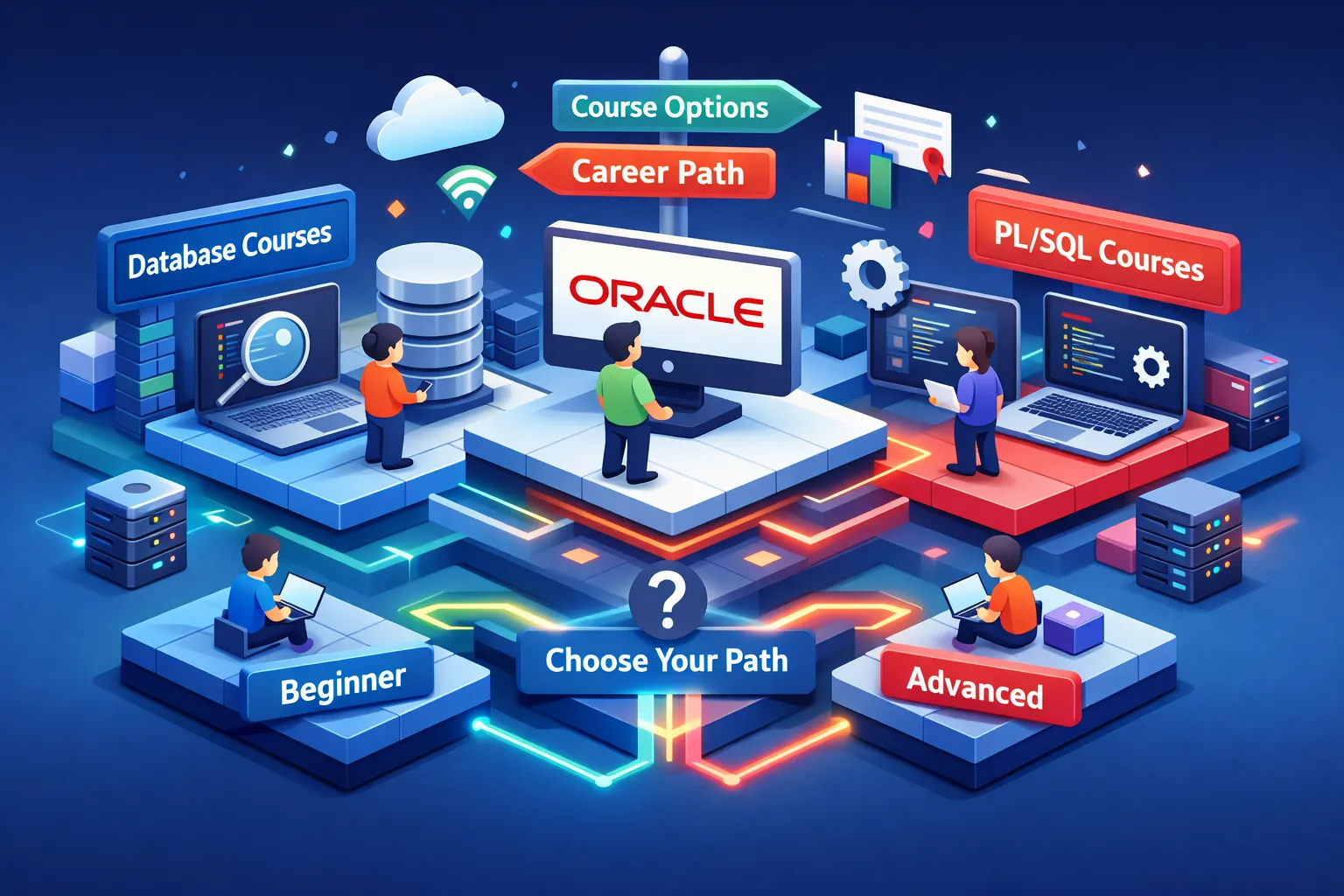
    If you want rapid entry into Oracle application development, pick an APEX-first oracle developer course (APEX Foundations → APEX Developer Professional → ship a portfolio app). If your goal is cloud-native development or microservices on Oracle Cloud, target the OCI Developer Professional path and pair it with PL/SQL plus a container/Functions capstone. For career pivots, combine structured labs, a deployable capstone, and targeted interview prep to move into production roles within 4–6 months.

    This guide is written for three reader types: the Aspirant (new graduate or entry-level), the Pivoter (ERP/DB professionals moving to cloud), and the Enterprise learner (teams or managers upskilling staff). Read on to compare providers, estimate time and cost, and follow a concrete study path you can start today. If you prefer a guided, bootcamp-style experience with live Oracle instances and placement support, CloudShine’s instructor-led option (60:24 practical hours, mentor access, mock interviews and resume help) is discussed where relevant.

    Which developer track fits your goal?

    Aspirant / New grad — Best short path: APEX Foundations + a solid SQL/PL‑SQL primer, then build one APEX app. You can reach a minimum hireable portfolio in ~90 days if you practice daily and publish a working app.

    Pivoter / ERP consultant — Best for established professionals: APEX Developer Professional plus a PL/SQL deep dive and basic OCI. Four to six months of structured study and migration projects will show employers you can modernize legacy systems.

    Cloud‑native developer — Best for microservices and DevOps: OCI Developer Professional (1Z0‑1084‑25) with a container/Functions project and CI/CD. Expect six months or more depending on prior container experience.

    Why these tracks matter: APEX dramatically shortens time-to-product because it’s low-code and database-native; PL/SQL remains the database backbone for complex business logic; OCI knowledge makes your work deployable and observable in production.

    Quick evaluation checklist (use this when scanning any course):

    • Hands-on labs with real Oracle or OCI instances (not just screenshots).
    • A capstone or deployable project that you can link on your resume.
    • Mentor or instructor access for Q&A and code review.
    • Placement support or interview prep (mock interviews, resume help).
    • Clear mapping between syllabus and certification objectives.

    How top providers stack up

    Oracle University

    What it is: Official learning paths, exam-aligned content, and sanctioned labs. Strengths are accuracy, up-to-date curricula, and direct exam mapping. Weakness: instructor-led pricing can be high and lab access may require subscriptions. Best use: final-stage certification preparation and hands-on exam labs.

    Coursera

    What it is: Structured specializations with deadlines, quizzes, and project submissions. Strengths include guided pacing and recognized course certificates; weaknesses are limited live mentorship and variable depth on platform-specific admin tasks. Best use: beginners who like guided learning and project-based assessments.

    Udemy

    What it is: On-demand video courses often focused on SQL, PL/SQL, and exam prep. Strengths are low sale prices and compact topic coverage; weakness is inconsistent quality—pick high-rated instructors and updated syllabi. Best use: targeted skill topping or exam-cram modules.

    Bootcamps / Private training

    What it is: Intensive mentor-led programs that combine labs, projects, and placement assistance. Strengths are speed-to-job and personalized feedback; cost is higher. Best use: career pivoters who want a fast, supported track into employment. For guidance on selecting a provider for enterprise or team engagements, see How to Choose the Right Oracle Implementation Partner: Key Considerations, CloudShine.

    CloudShine (practical option)

    What it is: A hands-on, placement-focused training provider with live Oracle/Cloud instances, practitioner mentors and a placement cell. Strengths include the 60:24 practical hours model (60 hours instructor-led + 24+ lab hours), resume and mock-interview support, and corporate-ready project scenarios. Best use: candidates who want instructor guidance plus tangible placement assistance rather than fully self-paced study. For an example training track you can review, see Master Oracle Fusion SCM Training Quickly: Your Path to Success.

    Pricing snapshot (approximate): Oracle lab subscriptions $29/month or $299/year; Oracle certification costs typically $245 per attempt; Udemy sale prices typically $10–$20; Coursera subscription around $49/month. Verify current rates before enrolling.

    Evaluate course quality beyond ratings by checking the syllabus for explicit exam-objective mapping, the presence of sample labs or capstones, and instructor background (industry experience >10 years is a useful signal).

    Certification map: APEX, OCI Developer, Database / PL‑SQL

    APEX pathway

    Core steps: APEX Foundations (~3 hours) then APEX Developer Professional (~22 hours). Typical certification: APEX Cloud Developer Professional (exam 1Z0‑771). Topics: low-code app builder, SQL Workshop, REST integration via ORDS, security, PWAs, and deployment on OCI.

    OCI Developer Professional (1Z0‑1084‑25)

    Exam format and focus: 90 minutes, multiple‑choice and scenario questions, emphasis on containers, Oracle Functions, API Gateway, Events/Streaming, observability and deployment patterns. Passing score commonly reported near 68%—verify on Oracle’s exam page before scheduling: OCI Developer Professional exam details. Hands-on lab practice with Functions, OKE, and API Gateway is essential.

    Database / PL/SQL certifications

    Coverage: SQL fundamentals and Oracle SQL specializations, PL/SQL programming, stored procedures, performance and optimization. These certifications remain core evidence of database competency for most Oracle roles and pair well with either APEX or OCI tracks.

    Costs and logistics: Plan for ~$245 per exam attempt, plus optional lab subscriptions ($29/month or $299/year) or the OCI trial credit ($300) to run hands-on scenarios. On test day expect scenario-style questions—practice time management and focus the last two weeks on labs and timed practice exams.

    Practical study plans and the hands-on lab checklist

    90‑day Beginner plan (Aspirant): Aim for 10–12 hours/week. Weeks 1–2: SQL basics and simple queries. Weeks 3–6: PL/SQL fundamentals and stored procedures. Weeks 7–10: APEX Foundations and a small CRUD app. Weeks 11–12: polish, deploy the app, take practice exams. Deliverable: a deployed APEX app and three clear resume bullets describing its business value.

    180‑day Pivoter plan: Deepen PL/SQL, complete APEX Developer Professional labs, add ORDS and REST endpoints, learn basic OCI services like Object Storage and Compute, and execute a migration capstone (legacy form → APEX). Deliverable: end-to-end app with data integration and deployment notes.

    270–365 day Cloud‑native path: Prepare for the OCI Developer Professional exam while containerizing parts of your app onto OKE, build serverless Functions and an API Gateway, and automate releases with a CI/CD pipeline. Deliverable: a microservices demo with observability and a README that explains architecture and deployment steps.

    Hands-on lab checklist (must-do items):

    • Create an OCI trial tenancy and enable the always-free resources for initial practice.
    • Provision an APEX workspace and build a CRUD application using shared schema objects.
    • Enable ORDS and expose one REST endpoint for your app.
    • Publish static assets or exports to OCI Object Storage and test public access.
    • Containerize one component, push to OCIR, and deploy to OKE or run as a Function.
    • Integrate basic monitoring/logging (OCI Monitoring and Logging) and collect metrics during a simple load test.

    Weekly time allocation example: 10–12 hours/week — allocate roughly 6 hours to labs and 4–6 hours to instruction, reading and practice exams.

    Employer lens: what hiring managers actually want

    Top skills listed first on job posts are APEX development, advanced SQL/PLSQL, REST APIs via ORDS, query performance tuning, and practical OCI familiarity. Java appears less often unless the role is explicitly cloud-native or microservices-focused.

    Titles and expectations: An “APEX Developer” should show deployed APEX apps and dashboards; a “PL/SQL Developer” must demonstrate stored procedures, packages and performance tuning examples; an “OCI Developer” needs a containerized app or Functions endpoint plus CI/CD evidence.

    High‑impact projects to showcase (describe in your repo and resume): an expense-management app with approval workflows; an approvals/workflow system with email notifications and audit trail; a reporting dashboard with parameterized queries; a REST-enabled backend using ORDS; a small containerized async worker using OCI Functions or a job queue.

    Interview prep: prepare to walk through your app architecture, justify design trade-offs, read basic execution plans for performance questions, show logs and monitoring during a demo, and rehearse common PL/SQL scenarios (bulk processing, exceptions, performance pitfalls).

    Final recommendation, immediate next steps, and FAQs

    Match your persona to the quickest path: Aspirant → APEX-first (90 days, low cost); Pivoter → APEX + PL/SQL + basic OCI (4–6 months); Cloud‑native → OCI Developer Professional + containers and CI/CD (6+ months). Cost ballpark: $0–$300 for self-study + exam fees (~$245) versus $500–$2,500+ for instructor-led or bootcamp options depending on provider and placement services.

    Three-step actionable plan:

    • Choose the right Oracle implementation partner and select your track (APEX / OCI / PL/SQL) and enroll in one course mapped to that goal.
    • Reserve hands-on time: activate an OCI trial, buy a one-month lab subscription if you need extended instances, and follow the 90/180/270 plan that fits your timeline.
    • Build and publish one capstone app, take a practice exam, then schedule the official certification attempt.

    CloudShine’s practical bootcamp-style option is designed for candidates who prefer live, mentor-led instruction with direct instance access and placement support—request a free counseling call via CloudShine’s contact page to discuss batch schedules and placement options.

    FAQs

    How much does certification cost and how long to prepare? Exam fees are typically around $245 per attempt. Prepare time ranges from 2–3 months for APEX beginners to 6+ months for OCI cloud-native roles depending on prior experience.

    Which is quicker to job-readiness: APEX or OCI? APEX is faster to ship production apps and often faster to job-readiness; OCI skills are higher-value for cloud-native roles but usually take longer to master.

    Can I pass with only Udemy/Coursera and self-study? Yes—many candidates certify through self-study, but success requires disciplined hands-on labs and at least one deployable project to show employers.

    What projects should I build to get hired? Build a business-facing APEX app with workflows, a REST-enabled backend using ORDS, and one containerized component or Function to demonstrate cloud readiness.

    How do I get affordable OCI/APEX labs? Use the OCI free trial ($300 credit + always-free tier) for initial practice, then consider Oracle’s lab subscriptions ($29/month) if you need sustained hands-on access.

    Actionable takeaway to copy-paste into your planner: enroll in an APEX or OCI course this week; activate an OCI trial; set 10–12 hours/week for hands-on labs; complete one capstone app by week 12; book a practice test and one mock interview before scheduling your official exam.

    Final note: pick a single track, focus on shipping one real app, and make your learning visible. Employers hire demonstrable results; certifications help, but a working, documented project will get you the interview. If you want guided, practical instruction and placement support, CloudShine’s practical bootcamp-style option is designed for exactly that outcome—get a free counseling call and start building.
  • Oracle Fusion Training: Complete Course, Cost & Cert Guide

    Oracle Fusion Training: Complete Course, Cost & Cert Guide

    If you need oracle fusion training that lands a job, pick a course with live lab access and a placement track. For consultants, go Implementation Professional; for freshers, start with Foundations + CloudShine’s placement program.

    CloudShine is a practical, hands‑on alternative that pairs live Fusion instances with placement support. Below I compare official vs third‑party options (cost, duration, labs, common exam codes) and give a clear 30/60/90 roadmap so you can enroll with confidence.

    Quick verdict: which Oracle Fusion training fits your role?

    Pivoter (experienced ERP/EBS or finance pros): Target an Implementation Professional track (Financials or HCM). Use Oracle University role paths for official content and add third‑party/live labs as needed — expect a 2–3 month focused program to move into cloud implementations.

    Aspirant (recent grads): Start with the Foundations Associate path, complete 60–80 hours of guided hands‑on work (CloudShine’s 60:24 model fits well), and build a placement‑ready project. Target 45–90 days depending on your starting point.

    Enterprise buyers: Buy Oracle University subscriptions for standardized learning and pair with a corporate upskill partner (CloudShine) to deliver bespoke labs and a Recruit‑Train‑Deliver model so new hires are billable quickly.

    Why this matters: Oracle certs provide recognition, but employers hire people who can configure flows and solve real issues. Official tracks + live instances balance credibility with job readiness.

    What Oracle University actually offers (paths, exams, and what’s included)

    Oracle uses a role‑based learning model: Foundations → Associate → Implementation Professional, with Implementation Professional often delivered as performance‑based, proctored exams. The learning subscription bundles digital courses, recommended paths and often some lab access.

    • Tier structure: Foundations Associate for basics, Associate for functional understanding, Implementation Professional focused on hands‑on scenarios and performance tasks.
    • Subscription & labs (approx): Oracle Cloud Learning Subscriptions typically run 12 months and may include three exam attempts. Self‑paced hands‑on labs are commonly listed at about $29/month or $299/year — confirm current pricing with Oracle.
    • Exam anchors (verify current codes): General Ledger — 1Z0‑1054‑26; Accounts Payable — 1Z0‑1055‑YY; Accounts Receivable — 1Z0‑1056‑YY. Implementation Professional exams may be performance‑based and proctored.

    Practical note: recent updates emphasize modernized processes (Redwood UI, AI‑assisted features). That means exam scenarios and employer expectations favor candidates who know the updated interfaces and end‑to‑end business flows, not just menus.

    Pros & cons: Oracle content is authoritative and certs carry weight, but official offerings can be expensive and sometimes sparse on continuous live instance time unless you buy extra lab subscriptions or partner training.

    Third‑party courses compared: labs, cost, and CloudShine’s practical edge

    Many learners pick third‑party providers to get more hands‑on time, lower cost, and a placement focus. When you evaluate vendors, confirm live instance access, real project labs, trainer industry experience, and placement support.

    Typical market offerings vary: providers run 30–80 hour programs; pricing depends on region and whether placement is included. Some vendors focus on conceptual modules, others on full cycle P2P/O2C or Hire‑to‑Retire lab projects.

    Provider snapshots (typical promise):

    • igmGuru — short to mid‑length ERP courses focused on module fundamentals (typical 30–40 hours).
    • OnboardERP — tailored end‑user and project training for corporate rollouts; emphasis on process adoption and documentation.
    • CloudShine — a 60:24 practical model (60 hours instructor + 24+ lab hours), live Fusion instances, resume and mock interview support, and a Recruit‑Train‑Deliver corporate option; trainers with 15+ years of experience and a track record training 500+ consultants.

    Why CloudShine’s model matters: access to live Fusion instances and scenario‑based labs means students can demonstrate full cycle work (configure a ledger, post journals, run payroll, set approval hierarchies) in interviews rather than reciting slides. The placement cell walks students through project summaries and mock implementations, which is what hiring managers actually ask for.

    Quick buyer tips: ask for a sample lab, request at least one mock interview, and confirm exam‑prep coverage (practice tests + performance task walkthroughs).

    How to choose: a practical checklist and role‑based recommendations

    Decision rule: pick the path that gets you to a demonstrable implementation task you can show on day one of an interview.

    Checklist (short): target role, time to hire, budget, employer sponsorship, required certification and level of live lab access. If lab time is critical, prioritize vendors that provide continuous instance access rather than occasional demos.

    Role recommendations:

    Finance/ERP implementer: Foundations → GL or Payables Implementation Professional. Focus on chart of accounts setup, period close and reconciliations (see Common Errors in Oracle Fusion Cost Accounting).

    HCM implementer: Foundations → Core HR + Payroll → HCM Implementation Professional. Build end‑to‑end hire‑to‑retire labs and payroll runs.

    New grad/aspirant: Foundations Associate + CloudShine placement track to get a CV‑ready project and 2–3 mock interviews.

    Corporate upskill: Oracle University subscription for standardized content + CloudShine corporate delivery for bespoke labs and Recruit‑Train‑Deliver execution (match training to specific procurement roles: Oracle Fusion Purchasing important roles).

    Example scenario: a payroll analyst moving into HCM — a focused 60‑day plan: Foundations (weeks 1–2), payroll configuration labs + 2 real payroll runs (weeks 3–6), mock implementation review and interview prep (weeks 7–8).

    Study plan, labs and exam prep (30/60/90 day roadmap)

    Day 0 checklist: pick your track, confirm the current exam code on Oracle’s site, register for Oracle MyLearn free modules, and reserve lab access (Oracle self‑paced labs or vendor instance). For a quick MyLearn guide see Oracle MyLearn: accelerating your path.

    30‑day sprint — foundations + core labs: Finish Foundations modules, complete 8–10 core labs (configure COA, create journals, basic OTBI report, run a payroll preview). Take an initial practice test to baseline gaps.

    60‑day ramp — configuration + mock projects: Complete full implementation flows (P2P, O2C, Hire‑to‑Retire), finish 2–3 full cycle labs, and present a short implementation playbook to a mentor. CloudShine’s placement track includes a mock implementation review at this stage.

    90‑day polish — exam & placement: Retake practice tests, book the certification window, record a one‑page project summary for interviews, and do 2–3 timed mock interviews with hiring‑grade feedback.

    Example lab task list to practice: configure a ledger and period close, create and post journals, configure pay elements, run payroll end‑to‑end, build an OTBI report, perform a data load with HCM Data Loader.

    Exam‑day tips: review a sample performance task in advance, allocate time to planning vs execution, know how to reference allowed Oracle docs during proctored tasks, and practice under timed conditions.

    Pricing snapshot, five next steps and FAQs

    Pricing (approximate): Oracle exam attempts — ~$245 per attempt; Oracle self‑paced labs — $29/month or $299/year (approx); Oracle Cloud Learning Subscription — request quote (Oracle lists enterprise subscription pricing); third‑party hands‑on courses — typically $500–$2,500 depending on region and placement services. CloudShine offers tiered, affordable packages with placement options — contact admissions for current rates.

    Five immediate next steps

    • Pick your track and verify the exact Oracle exam code for the current year on Oracle’s certification site.
    • Complete the free Oracle MyLearn Foundations modules to confirm the path.
    • Choose lab access: Oracle self‑paced labs or a vendor with live instances (CloudShine recommended if you need placement).
    • Build a 60‑day study plan and book a tentative exam window.
    • Schedule two mock interviews and a CV review (CloudShine placement cell or trusted peers).

    FAQs

    Do I need live instance access to pass Oracle Fusion certification? For Implementation Professional performance exams and real job readiness, yes — live labs make the difference between theory and implementation competence.

    How much do Oracle Fusion Cloud certification exams cost? Expect roughly $245 per attempt for many core exams; subscriptions may include exam attempts — verify current pricing before you book.

    Which certification should I take first as a finance professional? Start with Foundations, then General Ledger or Payables depending on where you want to specialize; move to Implementation Professional once you have hands‑on experience.

    Can third‑party courses replace Oracle University? They can for job readiness and labs, but official certs and Oracle’s role‑based paths come from Oracle — the most efficient route is a mix of official content plus vendor labs and placement support.

    Where can I find free Oracle Fusion Cloud introductory courses? Oracle MyLearn offers free Foundations and product essentials — use those modules to validate the track before paying for labs or paid courses.

    If you want a quick consult to pick the right track, CloudShine’s admissions team can map your profile to a 30/60/90 plan and share current batch pricing.

  • Workday Course Guide 2026: Official, Coursera, Bootcamps

    Workday Course Guide 2026: Official, Coursera, Bootcamps

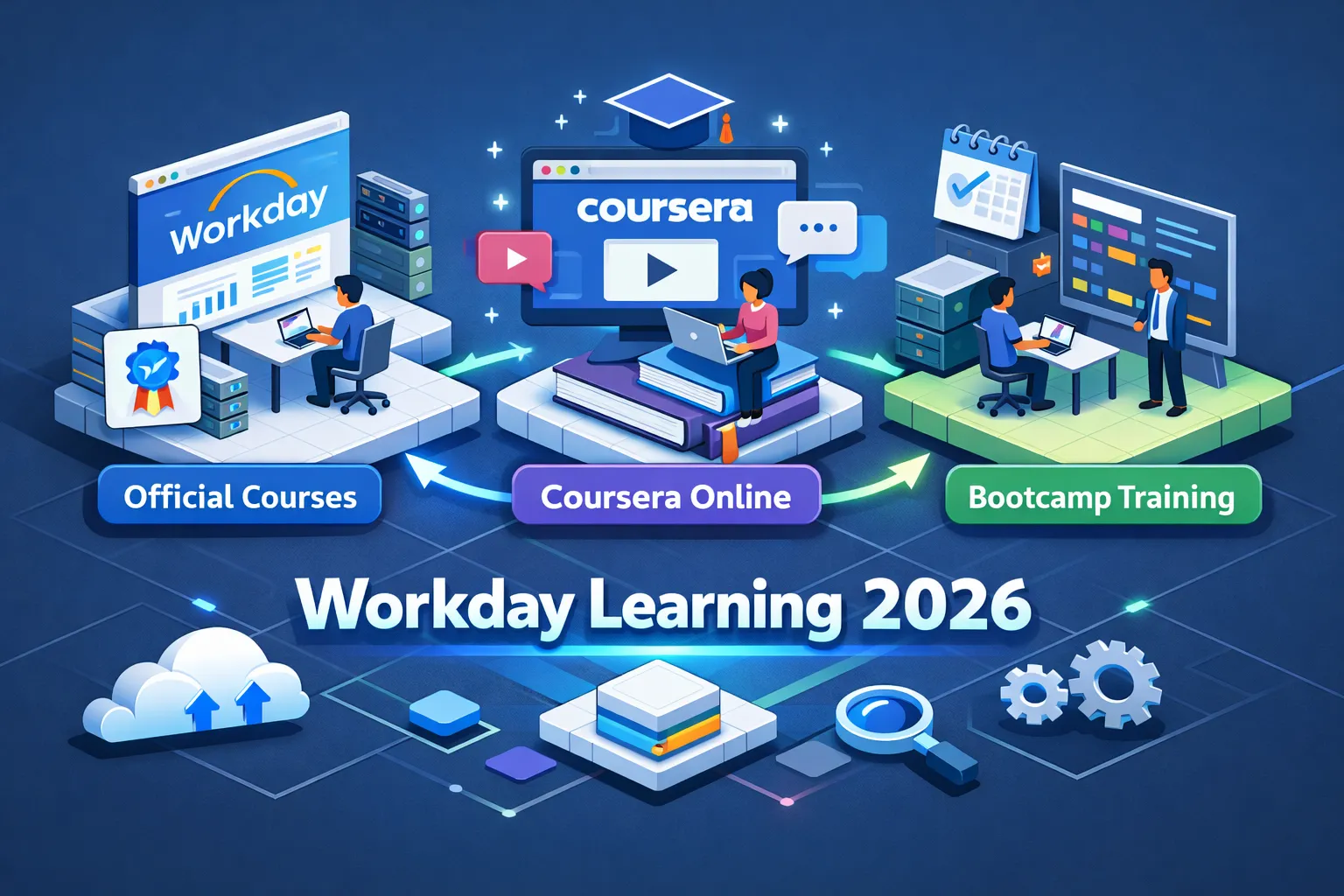
    Short answer: Choose the learning path that matches your immediate goal. Take a low‑cost Coursera/Udemy intro if you’re confirming interest. If you need certification or corporate credibility, pursue official Workday training and pro tracks. If you want to be interview‑ready within months, pick a hands‑on bootcamp with live tenant access, real labs and placement support. At CloudShine we follow a 60:24 instructor‑to‑lab model plus placement coaching because employers hire experience, not slides.

    Quick verdict — pick the right path for your profile

    • Beginner / career starter: Start with a Coursera or Udemy basics course to learn navigation and terminology, then add a short bootcamp later.
    • Pivoter (IT / HR pro): Choose an intensive bootcamp that includes live instance labs and placement support; add official modules later for certification credits.
    • Experienced consultant / corporate upskill: Use official Workday Pro tracks (when eligible) or a premium provider that maps training to certification exams.
    • Enterprise buyers / HR teams: Invest in official Workday training for compliance, deep product knowledge and standardized learning paths.

    This mapping aligns three variables: learning depth, hands‑on practice, and hiring signals. Concept courses teach what Workday is; official training proves product authority; bootcamps simulate the on‑the‑job experience employers look for.

    • Under $300 — take an intro course this week.
    • Need a job in 3 months — shortlist bootcamps with live tenant access and placement help.
    • Employer requires certification — budget for official Workday Pro tracks and exam fees.

    Head‑to‑head: official Workday training vs platform courses vs bootcamps

    There are three common categories: official Workday education (Workday Learn / Workday Pro), on‑platform courses (Coursera, Udemy, LinkedIn Learning), and third‑party bootcamps (ERP Cloud Training, Online IT Guru, CloudShine). Each has a specific role in a career path. If you’re comparing broader ERP platform approaches as well, see our overview What is Oracle Fusion Cloud and Why Does It Matter for context when moving between systems.

    Official Workday training (Workday Learn / Workday Pro)

    What it offers: role‑based certification tracks across HCM, Financials, Payroll, Reporting and Platform Administration. Workday Pro tracks are available in virtual, independent, on‑demand or hybrid formats (examples: ~42 hrs virtual, ~47 hrs on‑demand, ~102 hrs independent depending on the track).

    Strengths: authoritative content, employer recognition and direct mapping to certification exams. Limitations: higher cost, eligibility and access rules for some exams (often partner or customer sponsored) and limited placement services. For details on official track formats and timelines, review the Workday Pro roadmap.

    Price & timing note: official programs commonly run $2,000+ for organized tracks; 2026 exam attempts have been reported around $300–$800 (confirm on Workday Learn).

    Platform courses (Coursera, Udemy, LinkedIn Learning)

    What they offer: low‑cost, self‑paced videos and modules that introduce navigation, terminology and basic processes. These courses are the fastest way to build conceptual familiarity.

    Strengths: affordable and flexible. Limitations: usually no live Workday instance or deep configuration labs, which weakens the hiring signal for implementation roles. If you want a quick, structured starter, consider a beginner course such as the Workday basics course on Coursera before committing to a bootcamp.

    Bootcamps / third‑party providers (ERP Cloud Training, Online IT Guru, CloudShine)

    What they offer: instructor‑led sessions, live‑tenant or sandbox labs, scenario projects, interview coaching and placement support. Pricing varies widely — some providers price per module (ERP Cloud Training noted ~$549/module), while full bootcamps commonly fall in the $600–$2,500+ range.

    Strengths: practical, job‑focused training with portfolio artifacts. Limitations: quality varies — vet lab fidelity and trainer experience carefully. For comparisons of third‑party course options, see this Workday certification courses comparison, and review specific provider offerings such as the Workday HCM course from ERP Cloud Training when evaluating bootcamp syllabi.

    Category Cost (typical) Duration Lab access Certification & placement
    Official Workday $2,000+ 40–100+ hours (track dependent) Official demos; sandbox access varies Direct cert prep; limited placement
    Coursera / Udemy $10–$300 30–35 hours self‑paced None (demo videos) Good for basics; weak hiring signal
    Bootcamps (3rd party) $549/module → $600–$2,500+ 1–8 weeks Live tenant / sandbox (check hours) Often includes placement support

    Labs and projects — what real Workday training must give you

    Employers expect demonstrable experience: configuring business processes, resolving data issues and delivering reports — not just clicking through screens. A training program that lacks substantive labs will leave you unprepared.

    Module Essential lab tasks
    HCM Create a job requisition → candidate pipeline → offer → onboarding; configure compensation grades and business processes; perform a bulk data load.
    Finance Model a chart of accounts, post journals, handle period close tasks, run intercompany entries and build sample financial reports.
    Payroll Set up pay groups, process off‑cycle pays, apply tax cases, and integrate time tracking to payroll runs.
    Analytics / Reporting Build a custom report, schedule it, create a Prism dataset and design a simple dashboard for headcount or payroll cost analysis.

    Minimum lab expectations: look for at least 20–40 hours of guided, hands‑on labs for basic job‑readiness; serious bootcamps provide 40+ lab hours and downloadable lab guides. Critical features: live instance access, sandbox data, and permission to keep artifacts for your portfolio. If you are coming from an Oracle background and want cross‑reference material on role responsibilities, see our pieces on Oracle Fusion Financial Control & Reporting Important Roles, Oracle Fusion Finance Important Roles, and Oracle Fusion Inventory Management Important Roles for parallel role expectations. For example process mapping related to order flows, review Order to Cash Back to Back Buy Flow, Step 1: Order Creation, CloudShine.

    Validate labs during sales/demo — ask these questions:

    • Do students get time in a live Workday tenant or just simulated screenshots?
    • How many lab hours are included per student, and are those hours guaranteed?
    • Can I retain lab outputs (report files, config notes) for my portfolio?
    • Do you provide step‑by‑step lab guides and instructor recordings?
    • Can I run a sample configuration task during the demo or get a recorded lab to review?
    • Who manages the tenant (instructor or vendor) and what’s the uptime SLA?
    • Are labs aligned to certification tasks and do you include practice exams?
    • What happens if the lab environment is unavailable — refund or extended access?

    Cost, time‑to‑complete and certification ROI

    Realistic cost brackets: self‑paced basics cost $10–$300; third‑party bootcamps typically cost $600–$2,500+ (some providers list per‑module pricing like $549); official Workday courses and organized tracks commonly start around $2,000 and exam attempts are frequently reported in the $300–$800 range.

    Time commitments: a self‑paced basics path is ~30–35 hours. Bootcamps and instructor‑led programs usually run 4–8 weeks depending on intensity. Official Workday Pro tracks can require 40–100+ hours depending on format.

    How to think about ROI: if you need interview‑ready skills in 2–4 months, a bootcamp with live labs and placement support usually returns value faster than piecing together self‑study. If your employer will sponsor certification, official training is often worth the premium. If budget is tight, validate interest with a low‑cost course before committing to a bootcamp. For a practical comparison of third‑party offerings and local bootcamps, review the Workday training roadmap and provider comparisons when shortlisting options.

    • Budget < $300 → take an intro course and audit your CV.
    • Need job in 3 months → choose a bootcamp with guaranteed lab hours and placement coaching.
    • Employer requires certification → enroll in official Workday Pro track and confirm exam eligibility.

    How to enroll and prepare — checklist and 30/60/90 plans

    Enrollment checklist — ask before you pay:

    • Do you provide live Workday instance access? How many guaranteed hours?
    • What real projects and artifacts are included and can I keep them?
    • Trainer credentials and typical batch size?
    • What placement support is included (mock interviews, resume review, placement guarantees)?
    • Certification prep: practice exams, vouchers, eligibility guidance?
    • Refund/deferral policy and sample schedule?

    30/60/90 plans (scannable):

    Beginner: 0–30 days: finish a Workday basics course and learn navigation + business terms. 31–60 days: complete guided HCM labs and one reporting lab. 61–90 days: finish a small implementation project and 2 mock interviews.

    Intermediate (pivoting pro): 0–30 days: module deep dives and process mapping. 31–60 days: configuration labs, integration basics and data loading exercises. 61–90 days: capstone client simulation and certification practice exams.

    Advanced / consultant: 0–30 days: focus on integrations and reporting, design patterns. 31–60 days: run end‑to‑end tenant configuration and lead a mock cutover. 61–90 days: client simulation, advanced troubleshooting and interview leadership drills.

    How CloudShine fits: CloudShine’s model balances instruction and practice — 60 hours of instructor time paired with 24+ hours of dedicated labs, mentor support and a placement cell that helps with resume building and mock interviews. That structure is designed for pivoters and aspirants who need measurable interview readiness.

    First three actions to start today: audit your CV for ERP keywords, schedule a demo with one bootcamp that offers tenant access, and enroll in a short Coursera/Udemy module to confirm interest.

    FAQs

    Do I need Workday certification to land a job? Not always. Hands‑on experience and demonstrable project artifacts often matter more for hiring managers. Certification strengthens credibility, especially for consulting roles.

    How long to get job‑ready? Intensive bootcamps with daily practice can make you interview‑ready in 2–4 months. Self‑paced learners typically need longer and must add labs to the plan.

    Can individuals buy official Workday training and exams? Eligibility varies. Many official paths favor Workday customers and partners; check Workday Learn for current rules and exam access.

    Which modules are most in demand? HCM (Core + Payroll), Integrations, and Reporting/Analytics consistently show the highest market demand.

    Final recommendation: If you’re testing fit cheaply, start with a Coursera/Udemy basics course. If you need a job in three months or are making a career pivot, invest in a reputable bootcamp with live instance access and placement support — CloudShine follows a 60:24 hands‑on model built for that outcome. If certification is a hard requirement at your company, pursue official Workday tracks.

    Compare two programs this week: take a free bootcamp demo and review one official module. If you want a job‑focused, live‑instance Workday course with placement coaching, schedule a short consult with CloudShine to build a tailored 30/60/90 plan.